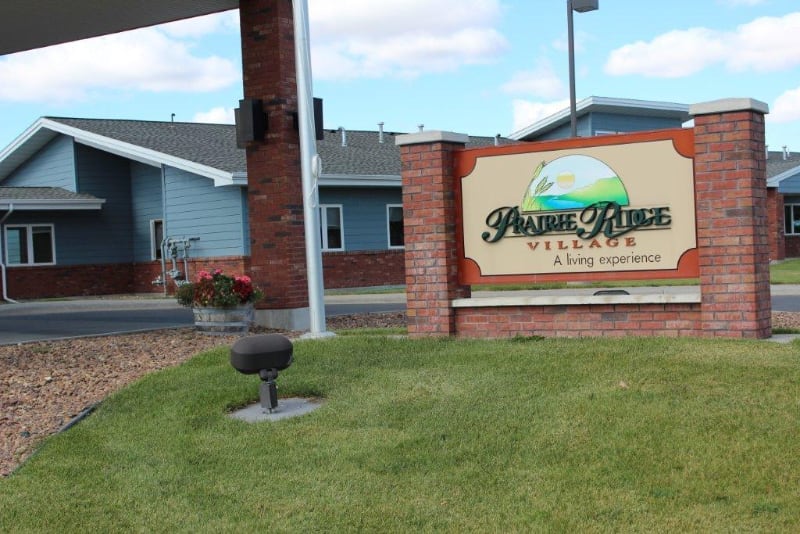

521 4th Avenue South, Glasgow, MT 59230
For more information about senior living options: (866) 208-4318
Prairie Ridge Village Costs & Pricing
Prairie Ridge Village offers competitive pricing for its residents, particularly when compared to the broader costs within Valley County and across Montana. For example, the monthly rate for a studio apartment at Prairie Ridge is $1,629, which aligns with the County's average but significantly undercuts the state average of $3,729. Similarly, the 1-bedroom apartments are priced at $2,100 - matching Valley County's rates but well below Montana's average of $3,468. The 2-bedroom accommodations also provide excellent value at $2,400 compared to both Valley County's price and Montana's higher average of $4,247. This positioning makes Prairie Ridge Village an attractive option for those seeking quality living arrangements without straining their budgets.
| Floor plans | Prairie Ridge Village | Valley County | Montana |
|---|---|---|---|
| Studio | $1,629 | $1,629 | $3,729 |
| 1 Bedroom | $2,100 | $2,100 | $3,468 |
| 2 Bedrooms | $2,400 | $2,400 | $4,247 |
Overall Review of Prairie Ridge Village
Pros
 It has been good so far.
- It is a very clean facility.
- They are very friendly.
- The friendliness is rated five stars.
Review
Prairie Ridge Village in Glasgow, MT is best suited for seniors who prize a clean, welcoming environment and a genuinely friendly staff, especially during the early stages of considering assisted living. For residents who want a low-friction transition with a tangible sense of community and comfort in day-to-day living, this campus delivers a workmanlike, easy-to-like atmosphere. It is not pitched as a high-touch medical center, but rather as a dependable, user-friendly option where the mood is calm and the ambiance is neat and inviting. Families seeking a reassuring first impression and straightforward daily living should consider Prairie Ridge Village as a strong starting point.
Those who may want to look elsewhere are families needing robust, verifiable care metrics or clear, transparent pricing. If continuing skilled care, memory support, or rigorous care outcomes are non-negotiable, this community should be weighed against facilities that publish performance data, staffing ratios, and explicit care plans. Similarly, if price transparency or a wider menu of care services at predictable rates are essential, other options with detailed pricing schedules and more visible value propositions deserve consideration. In short, lack of publicly documented care specifics and pricing means alternatives with stronger accountability deserve a close look.
The primary positives, cleanliness and staff friendliness, are meaningful and practical. A spotless environment reduces infection risk and creates an immediately reassuring backdrop for new residents and their families. Warm, approachable staff can meaningfully ease transitions, support social engagement, and foster trust in daily routines. These factors matter because they shape how residents feel about leaving a familiar home and entering a community setting. When combined, the clean, inviting surroundings and the evident friendliness form a solid foundation for comfort, even when care services details arenā€™t yet fully charted.
However, the absence of clear information about actual care services, care plans, and pricing represents a tangible gap. Pros offset concerns only to a degree because day-to-day ambiance and client-facing warmth cannot substitute for demonstrable care quality or value. Pros become most persuasive when paired with transparent conversations about who delivers care, what assistance is available, and how escalation for higher needs is managed. Until those specifics are available, families should approach a visit with targeted questions and a plan to verify alignment with long-term expectations.
Practically, a tour or trial stay should focus on what ultimately matters for ongoing living: how often staff interact with residents, what the care planning process looks like, and how needs are accommodated over time. Ask for a clear outline of what is included in the stated rate, whether there are add-ons, and how meals, activities, transportation, and personal care are structured. Observe common areas for cleanliness and resident engagement, speak with prospective residents about daily routines, and request current references from families who have navigated similar decisions. A candid discussion about pricing, care capabilities, and tailored care options will illuminate whether Prairie Ridge Village can scale with anticipated needs.
In sum, Prairie Ridge Village presents a practical, attractive option for those prioritizing a clean, friendly environment as a solid foundation for independent-to-moderate care. It stands out in its immediate, tangible comforts, making it a strong contender for families seeking peace of mind during the transition. That said, the decision should hinge on obtaining explicit assurances about care quality, staffing, and transparent pricing. For residents who foresee requiring significant medical support or who demand detailed, published care outcomes, explore alternatives with stronger demonstrated metrics. Prairie Ridge Village is worth evaluating, provided due diligence accompanies the tour to confirm that care expectations and budget align over the long arc of residence.
 21 resident community capacity
 Assisted Living
 Activities on-site
 Beauty salon
 Cable or satellite TV
 Devotional services off-site
 Dining room
 Fully furnished
 Garden
 Housekeeping services
 Indoor common areas
 Kitchenette
 Move-in coordination
 Outdoor common areas
 Restaurant-style dining
 Small library
 Telephone
 Wi-Fi/high-speed internet available
 24-hour call system
 Ambulatory care
 Assistance with bathing
 Assistance with dressing
 Assistance with transfers
 Diabetes diet
 Diabetic care
 Incontinence care
 Medication management
 Mental wellness program
 Special dietary restrictions

 Exploring the Contrasts Between Assisted Living and Skilled Nursing
 8 Key Indicators That Suggest It May Be Time to Transition from Assisted Living to Skilled Nursing Care
 Vibrant Senior Living: A Comprehensive Guide for Active Older Adults