
300 West Fairview, King City, MO 64463
For more information about senior living options: (866) 208-4318
Overall Review of King City Manor
Pros
 The staff is always friendly and the food has gotten better.
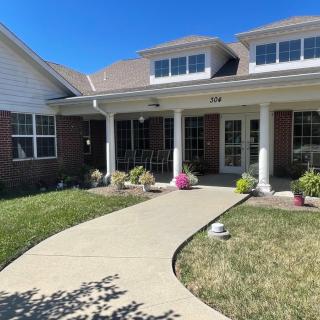
- It feels like each person or couple has their own individual apartment, not an average nursing home.
- They take care of medicines, laundry, and showers, making sure everything is covered.
- The facility is clean and offers social activities in the assisted side.
- The food is excellent.
- It’s a smaller farm community, good for people who grew up nearby, offering a familiar feel.
- There are distinct sections—a manor on one side and an apartment complex on the other—with single apartments available.
Review
King City Manor is best suited for seniors who want a private, apartment-based living arrangement with practical, day‑to‑day support in a small-town setting. The community is clearly built around individual living spaces, each person or couple can have their own one-bedroom apartment, paired with attentive staff and a tangible emphasis on personal dignity. This makes it a compelling choice for residents who prize privacy, routine, and a home-like atmosphere, while still requiring assistance with medications, laundry, showering, and other daily tasks. For couples or single seniors who want to maintain an independent living footprint without sacrificing reliable hands-on help, King City Manor presents a straightforward, low-stress option.
At the same time, some families may want to consider alternatives. The property operates with a two-section layout, an older section that provides more intensive care and another side that emphasizes assisted living with a social focus, so experiences can feel uneven depending on where a resident is housed. For seniors who expect a broad campus feel, a more expansive activities calendar, or deeper, around-the-clock medical oversight, other facilities may deliver a more comprehensive package. Those planning for memory care or more specialized needs should also assess whether this community’s structure and staffing align with evolving requirements, since the emphasis here remains on practical daily support within a relatively small, rural setting.
The strongest positives center on personalized care within a clean, approachable environment. Staff are repeatedly described as friendly and responsive, which translates into a sense of reassurance for families that their loved ones are greeted with courtesy and consistent attention. Food quality has been noted as improving, and the overall upkeep, clean rooms, well-kept spaces, and organized care routines, supports a dignified daily experience. The facility’s layout, with independent apartments and the option of an assisted side, helps preserve autonomy for residents who value their own living space while still enabling access to on-site support when needed. For families, these practical benefits often outweigh potential limitations.
Additionally, the facility’s structure, two distinct sections, offers a realistic path for gradual care transitions. One review highlights the older section as the segment focused on higher levels of care, with staff described as “really nice” and attentive; the other side provides social programming and an assisted environment that can help residents stay engaged. The rooms are consistently described as clean, and the presence of an independent apartment option demonstrates a recognition that some residents are most comfortable when they retain their own living arrangements. Taken together, these elements create a practical, phased approach to aging in place, where comfort, cleanliness, and attentiveness cohere with a realistic care plan.
From a decision-making standpoint, King City Manor makes sense for families prioritizing stability, privacy, and dependable daily support in a small-town, homelike setting. It is less compelling for those who demand a larger, more modern campus with an expansive social calendar or for residents whose needs are rapidly trending toward intensive, around-the-clock medical supervision. The two-section layout can be advantageous for gradual transitions, but it also necessitates clear expectations about where a loved one will reside and what level of programming is available in that space. Prospective residents should verify current offerings and observe both the independent and assisted environments firsthand to ensure alignment with long-term goals.
Practical next steps involve arranging a visit to see both sides of the community, including independent apartments and the assisted living section, to gauge daily routines and social opportunities in person. Request a meal sample to assess consistency in dining quality and inquire about medications, laundry, and personal-care routines to confirm how fully daily tasks are integrated into the care plan. Discuss with staff the typical cadence of activities, transportation options for local outings, and any upcoming changes to services. Finally, obtain a transparent view of pricing and what is included in independent versus assisted living, so that the family can judge whether the overall value matches the loved one’s priorities: autonomy, attentiveness, and a comfortable, home-like environment.
 60 resident community capacity
 Assisted Living
 Skilled Nursing Facility
 Air-conditioning
 Beauty salon
 Cable or satellite TV
 Computer center
 Dining room
 Fitness room
 Fully furnished
 Gaming room
 Garden
 Housekeeping services
 Kitchenette
 Move-in coordination
 Outdoor space
 Private bathrooms
 Restaurant-style dining
 Small library
 Telephone
 Wellness center
 Wi-Fi/high-speed internet available
 Community operated transportation
 24-hour call system
 Activities of daily living assistance
 Assistance with bathing
 Assistance with dressing
 Assistance with transfers
 Diabetes diet
 Medication management
 Special dietary restrictions
 Concierge services
 Planned day trips





 Beyond the Bingo Hall: 50+ Enriching Activities for Seniors in Assisted Living
 Understanding the Distinctions: Assisted Living and Memory Care Explained
 Guiding Elderly Parents Who Refuse Assisted Living: 6 Practical Steps