
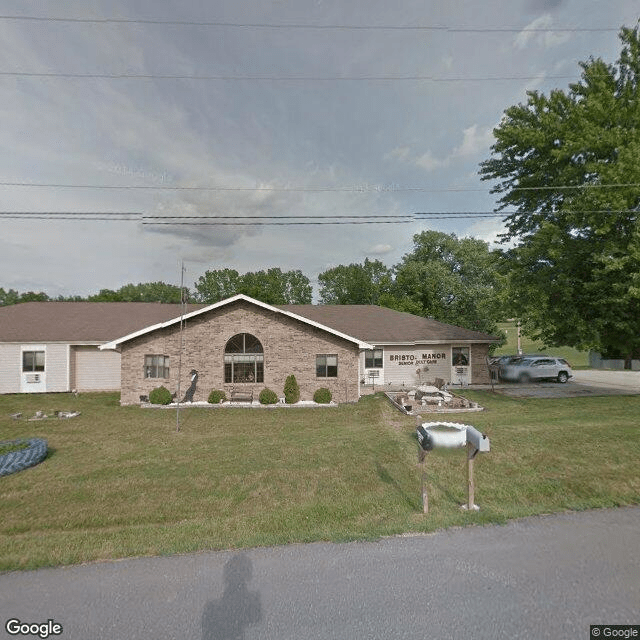
811 S 24th Street, Bethany, MO 64424
To contact a resident: (660) 425-7133
For more information about senior living options: (866) 208-4318
Bristol Manor of Bethany Costs & Pricing
Bristol Manor of Bethany offers competitive pricing for its residents, with costs that align closely with the broader market in Harrison County while remaining significantly lower than the state average in Missouri. For a studio apartment, residents can expect to pay $2,130 per month, which is consistent with the county's pricing but stands in stark contrast to the higher state average of $3,418. Similarly, the one-bedroom option is priced at $3,030 - again matching Harrison County's rate while still being more affordable than the statewide average of $3,349. This strategic pricing not only provides compelling value for potential residents but also reflects Bristol Manor's commitment to making quality living arrangements accessible in a competitive landscape.
| Floor plans | Bristol Manor of Bethany | Harrison County | Missouri |
|---|---|---|---|
| Studio | $2,130 | $2,130 | $3,418 |
| 1 Bedroom | $3,030 | $3,030 | $3,349 |
Assisted Living communities with a similar price nearby
-
from -$80 / mo
Bristol Manor of Princeton
$2,050 / month25.0 miles away
Overall Review of Bristol Manor of Bethany
Pros
 The family has been pleased with the facility.
- They report good meals and clean rooms.
- The staff are helpful and there is good communication.
- They offer daily activities and keep the community clean.
- They feel very confident in the in-house facility management.
- They would recommend this community.
Cons
 They experienced an unusual amount of employee turnover.
- Management began with enthusiasm but became demoralized by extended hours and eventually left their positions.
- There was little company support to provide activities for residents.
- Care services were described as poor.
- The facility was very dirty and understaffed.
- The resident needed more care than the facility was able to provide.
Review
Bristol Manor of Bethany is best suited for seniors who need help with daily tasks but do not require high-acuity medical care, and for families willing to tolerate potential staffing variability. The community offers a straightforward, affordable assisted-living setting with clean rooms, predictable routines, and meals that residents generally enjoy. It is not ideal for residents who demand constant medical oversight or a perfectly stable staffing rhythm, and it requires families to enter with honest expectations about how consistent care and activity programming will be. In short, this is a practical option for moderate care needs, provided the local management and staffing stay on stable ground.
Those weighing alternatives should note who may want to look elsewhere. Anyone seeking round-the-clock medical supervision, very high staffing consistency, or a robust, fully scheduled activity calendar may be better served by a facility with stronger, more reliable staffing across shifts. Families prioritizing aggressive care coordination, frequent on-site medical oversight, or highly structured programming should compare options carefully and not assume that a mid-range rating guarantees consistently seamless service.
On the upside, the strongest recurring positives are tangible: meals that residents tend to rate positively and clean rooms that contribute to a comfortable daily environment. Several families acknowledge helpful staff and open communication with management, plus access to some daily activities and a generally clean community. There is a belief, at least in some accounts, that the in-house management team can deliver steady leadership, which helps residents feel cared for day-to-day even when external factors complicate operations. These elements create a reliable daily life for many residents, particularly those who value a steady routine.
But the downsides are equally real and cannot be glossed over. The most persistent concern is unusually high employee turnover, which translates into inconsistent staffing and gaps in care at times. Reports range from understaffing to outright dirtiness in some cases, highlighting moments when the environment did not meet expectations. Add to that the perception of limited company-level support for activities, and the result is a facility where engagement and responsiveness can vary significantly with turnover and shift coverage. Those factors collectively temper the otherwise solid daily living aspects.
The interaction between these strengths and weaknesses matters deeply for families evaluating long-term placement. When meals are good and rooms are clean, life can feel comfortable and dignified; however, if care quality swings from one shift to the next, the advantage of pleasant dining and a tidy setting diminishes quickly. The presence of some positive management impressions is helpful, but it does not fully offset the risk posed by staffing instability and uneven care experiences. For residents with modest care needs who prize routine and predictability, the balance may tilt toward a reasonable choice, yet only if the facility demonstrates durable staffing stability and consistent programming.
In deciding for Bristol Manor of Bethany, a disciplined, informed approach is essential. Prospective families should conduct a thorough on-site evaluation focused on current staffing levels, care capabilities, and the consistency of daily life. Ask for recent activity calendars, observe meal service, and verify whether care plans are coordinated with typical daily routines. Speak with multiple staff members across shifts, and with current residents or their families about their experience during recent weeks. If the answers emphasize stable leadership, dependable care, and a steady cadence of meaningful activities, this community can be a good fit. If not, the contrast is sharp enough to justify exploring other options where staffing and care dynamics are more assured.
 12 resident community capacity
 Assisted Living
 Board and Care Home
 Day Program
 Independent Living
 Cats allowed
 Dogs allowed
 Air-conditioning
 Cable or satellite TV
 Devotional services off-site
 Dining room
 Fully furnished
 Garden
 Ground floor units
 Housekeeping services
 Indoor common areas
 Move-in coordination
 Outdoor common areas
 Respite or short term stays offered
 Telephone
 Wi-Fi/high-speed internet available
 24-hour supervision
 Ambulatory care
 Assistance with bathing
 Assistance with dressing
 Assistance with transfers
 Diabetes diet
 Diabetic care
 Incontinence care
 Meal preparation and service
 Medication management
 Special dietary restrictions
 Transportation arrangement (medical)
 Transportation to doctors appointments
 BBQs or picnics
 Birthday parties


 Understanding Medicaid Coverage for Assisted Living: A Comprehensive Guide
 How and When Medicaid May Cover Assisted Living Costs
 A Detailed Exploration of Assisted Living Medicaid Waivers Across the United States