For more information about senior living options: (866) 208-4318
3.5 from 60 reviews
5 stars
35
4 stars
2
3 stars
1
2 stars
4
1 stars
18
St Anthony Health Center Costs & Pricing
St. Anthony Health Center offers a range of accommodation options that present competitive pricing compared to both Ramsey County and the broader state of Minnesota. For instance, the monthly cost for a studio apartment at St. Anthony is $1,965, significantly lower than the county's average of $3,546 and the state's average of $3,617. Similarly, their one-bedroom units are priced at $2,250, which remains affordable in comparison to Ramsey County's $2,287 and Minnesota's $2,893 figures. In contrast, two-bedroom accommodations at St. Anthony are slightly higher at $2,880; however, they still fall within a reasonable range when looking at the county and state averages. Notably, for semi-private rooms priced at $3,450 and private rooms at $7,500, St. Anthony Health Center offers more premium services that exceed county averages but highlight their specialized care offerings. Overall, these pricing structures make St. Anthony Health Center an appealing choice for those seeking quality care with favorable financial considerations in mind.
Floor plans
St Anthony Health Center
Ramsey County
Minnesota
Studio
$1,965
$3,546
$3,617
1 Bedroom
$2,250
$2,287
$2,893
2 Bedrooms
$2,880
$2,312
$2,955
Semi-Private
$3,450
$3,915
$4,051
Private
$7,500
$5,162
$5,090
Assisted Living communities with a similar price nearby
Activities are a consistent highlight for residents and families.
Multiple reviews describe a steady schedule of things to do, from social gatherings to structured group events. Residents and families mention game nights, trivia, and music therapy, along with events like an ice cream social and birthday celebrations. Even when feedback is mixed, one reviewer still points to social get-togethers and entertainment, while another says rehab patients’ activities could be better.
caveat5 reviews mention this
Food quality is inconsistent
Food experiences range from fairly good to clearly frustrating.
Several reviews praise meals as very good or describe a well-balanced diet with frequent fresh fruit and desserts. Other reviewers are much more negative, describing food that is unappetizing or cold, meals that do not match dietary needs, and a generally terrible dining experience. With both viewpoints present, families may want to plan for follow-up if dietary preferences are a priority.
caveat4 reviews mention this
Cleanliness and safety concerns appear
Some reviews raise serious cleanliness and safety complaints.
While some families say the building is clean and describe the facility as peaceful, other reviews report more alarming issues. Complaints include a long-term care floor described as filthy with rodent traps, instances of residents left in bodily waste, and bed sores/infected sores tied to missed care. Taken together, cleanliness and safety come up as a clear divider in resident experiences.
caveat5 reviews mention this
Staffing and response time vary
Resident and family experiences with staffing and responsiveness differ widely.
Some reviews emphasize compassionate, attentive staff and say call lights were answered quickly. Others describe understaffing, delays in help, and communication problems during care. Negative reviews also mention missed or incorrect medication handling and falls attributed to not having enough staff. Because accounts span both ends, it’s worth asking how care coverage works during evenings and nights.
caveat3 reviews mention this
Room comfort and seating raise questions
Seating and room setup show up as a recurring concern.
A positive review mentions spacious rooms, and others describe the facility as clean and peaceful. On the other hand, multiple reviews say residents lacked an appropriate chair or reclining lift chair setup, leaving people in bed for long stretches or causing discomfort. If mobility and staying upright for meals are important, seating arrangements appear to be a key detail to verify.
How we summarize
Counts show how many written reviews mention each theme; a review can touch several themes, and only frequently mentioned themes are displayed.
Features
Types of Care
Assisted Living
Independent Living
Memory Care
Skilled Nursing Facility
Pets
Cats allowed
Dogs allowed
Amenities
Activities off-site
Activities on-site
Bath tubs
Beautician on-site
Devotional services off-site
Devotional services on-site
Indoor common areas
Outdoor common areas
Private
Respite or short term stays offered
Wheelchair accessible showers
Transportation
Minneapolis-St Paul International (11 miles away)
Care Services
Diabetic care
High acuity care
Incontinence care
Dining
Meals provided
Activities
Activities off-site
Activities on-site
Devotional activities offsite
Devotional activities on-site
Nearby Places of Interest
Located in St. Anthony, Minnesota, this neighborhood offers a range of amenities and services that cater to senior living needs. With several pharmacies nearby, including Walgreens and CVS Pharmacy, accessing medication and healthcare supplies is convenient. There are also cafes such as Starbucks for socializing and enjoying a cup of coffee. Dining options like Steele & Hops and Olive Garden provide opportunities for delicious meals close to home. For recreational activities, parks like Silverwood Park and Central Park Playground offer green spaces for leisurely walks or picnics. Additionally, there are medical facilities like Fairview Clinics and University of Minnesota Medical Center in the vicinity for healthcare needs. Overall, this neighborhood provides a well-rounded environment with easy access to essential services for seniors looking to live comfortably in St. Anthony.
Pharmacies
Walgreens (0.4 miles)
CVS Pharmacy (1.8 miles)
Walgreens (2.3 miles)
Walgreens (2.3 miles)
Walgreens (3.2 miles)
CVS Pharmacy (3.6 miles)
Target Pharmacy (3.9 miles)
Cafes
Starbucks (0.4 miles)
Starbucks (3.4 miles)
Roundtable Cof (4.9 miles)
Caribou Coffee (5.9 miles)
Dunn Brothers Coffee (5.9 miles)
Groundswell (5.9 miles)
Restaurants
Steele & Hops (0.6 miles)
Cowboy Jack's (2.2 miles)
Taco Bell (2.4 miles)
Olive Garden (2.4 miles)
McDonald's (2.4 miles)
Sociable Cider Werks (2.7 miles)
Bauhaus Brew Labs (2.9 miles)
Parks
Silverwood Park (1 miles)
Central Park Playground (3.4 miles)
Boom Island Park (4.1 miles)
Owasso Park (4.3 miles)
Mill Ruins Park (4.5 miles)
North Loop Dog Park (4.7 miles)
Snail Lake Regional Park (4.8 miles)
Physicians
Fairview Clinics (2.2 miles)
Cardiovascular Systems (2.4 miles)
Eye Care Center (3.4 miles)
Fairview Fridley Clinic (4.1 miles)
HealthPartners Health Center for Women Clinic St Paul (4.7 miles)
Entira Family Clinics (5.4 miles)
Aesthetic Reconstructive Plastic Surgery (5.5 miles)
Theaters
AMC Rosedale 14 (2.6 miles)
Places of Worship
North Heights Lutheran Church (3.4 miles)
Fridley United Methodist Church (4 miles)
Shepherd of the Hills Lutheran Church (4.3 miles)
Westminster Presbyterian Church (5.5 miles)
Elim Church Center (6.1 miles)
Transportation
Minnesota State Fair Transit Hub (4 miles)
Hospitals
University of Minnesota Medical Center - East Bank Campus (4.6 miles)
St. Anthony Health Center offers a range of accommodation options that present competitive pricing compared to both Ramsey County and the broader state of Minnesota. For instance, the monthly cost for a studio apartment at St. Anthony is $1,965, significantly lower than the county's average of $3,546 and the state's average of $3,617. Similarly, their one-bedroom units are priced at $2,250, which remains affordable in comparison to Ramsey County's $2,287 and Minnesota's $2,893 figures. In contrast, two-bedroom accommodations at St. Anthony are slightly higher at $2,880; however, they still fall within a reasonable range when looking at the county and state averages. Notably, for semi-private rooms priced at $3,450 and private rooms at $7,500, St. Anthony Health Center offers more premium services that exceed county averages but highlight their specialized care offerings. Overall, these pricing structures make St. Anthony Health Center an appealing choice for those seeking quality care with favorable financial considerations in mind.
Incontinence care at St. Anthony Health Center is designed to address the unique needs of residents experiencing memory impairments associated with dementia or Alzheimer's disease. This specialized care ensures that residents feel comfortable and dignified, minimizing anxiety or embarrassment related to incontinence issues. Trained staff members are equipped to provide compassionate support, employing strategies tailored to individual needs that can help manage incontinence effectively. This not only promotes physical well-being by reducing the risk of skin irritations or infections but also fosters a sense of security and stability for residents, allowing them to engage more fully in daily activities and social interactions without the fear of discomfort or accidents.
"Memory Care Pathways: A Holistic Guide to Dementia Support" outlines the complexities of dementia and its various types, emphasizing early detection, patient-centered care strategies, caregiver support, and long-term care options while addressing legal and financial considerations to enhance the quality of life for individuals with dementia and their families.
Sundown syndrome, or sundowning, is a phenomenon in dementia patients characterized by increased confusion and agitation during late afternoon and evening, influenced by factors like disrupted circadian rhythms and fatigue. Effective caregiver strategies include establishing routines and managing environmental light while addressing caregiver stress through support services.
Delirium is a rapidly onset, reversible cognitive disturbance often caused by acute medical issues, while dementia is a gradual and irreversible decline due to chronic neurodegenerative diseases. Accurate differentiation between the two is essential for appropriate treatment and management in older adults.
Get PricingAsk A QuestionSchedule A TourContact Senior Advisor
By clicking submit, you agree to our Partner's Terms of Use. You
also consent to receive calls and texts, which may be autodialed, from our Partner. Your consent is not a condition to
using our Partner's service. Please visit our Partner's Privacy Policy for information about their privacy practices.


 Assisted Living
 Independent Living
 Memory Care
 Skilled Nursing Facility
 Cats allowed
 Dogs allowed
 Activities off-site
 Bath tubs
 Beautician on-site
 Devotional services off-site
 Indoor common areas
 Outdoor common areas
 Private
 Respite or short term stays offered
 Wheelchair accessible showers
 Minneapolis-St Paul International (11 miles away)
 Diabetic care
 High acuity care
 Incontinence care
 Meals provided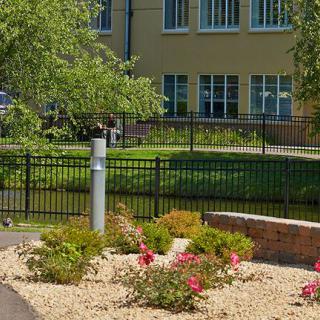
 Caring staff with good meals and engaging activities.




 Memory Care Pathways: A Holistic Guide to Dementia Support
 Comprehending Evening Confusion in Dementia: Causes, Manifestations, and Support
 Delirium and Dementia: Unraveling the Key Differences