
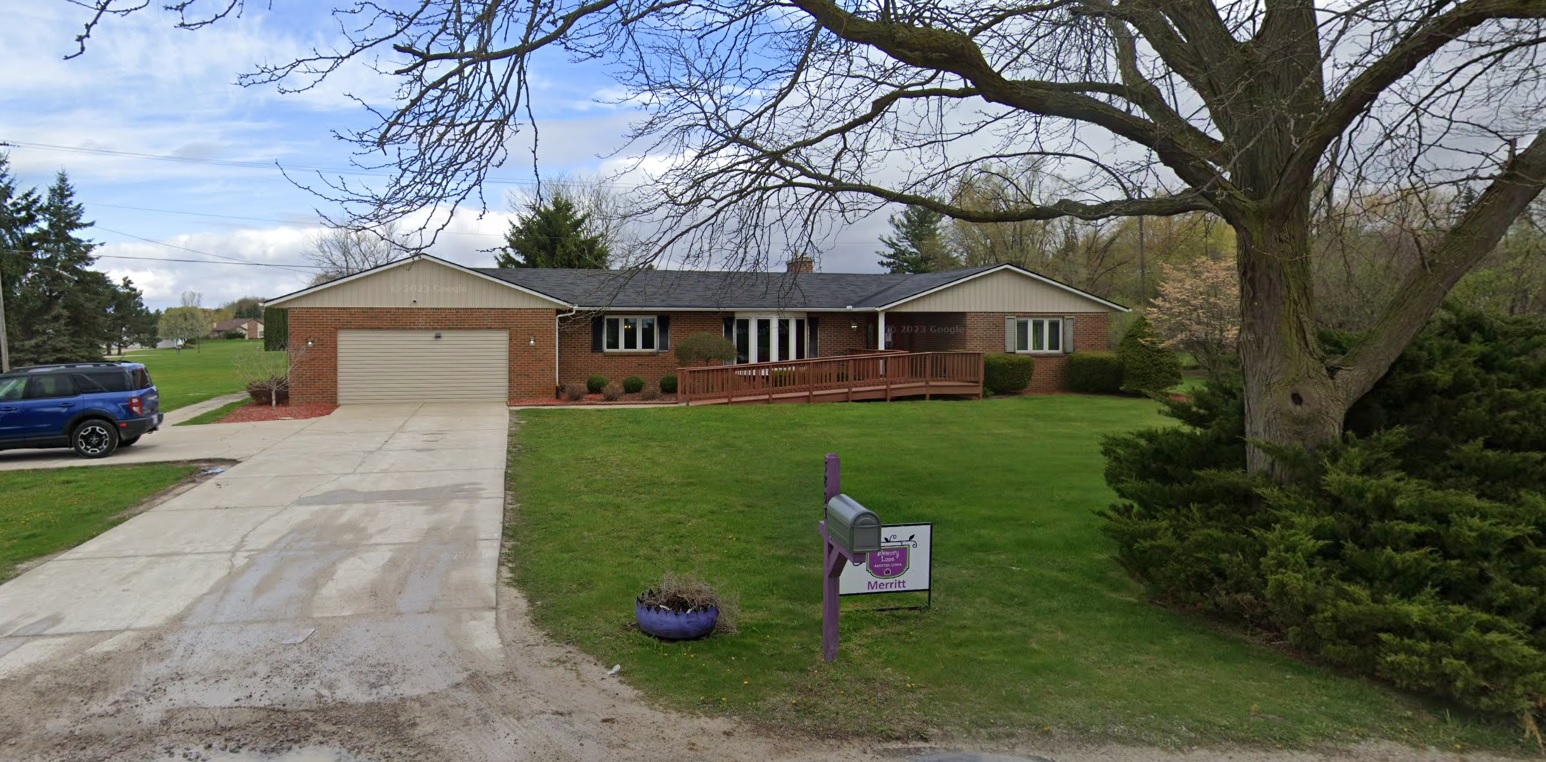
3893 Merritt Road, Ypsilanti, MI 48197
For more information about senior living options: (866) 208-4318
Overall Review of Memory Lane Merritt Assisted Living
Pros
 The staff are absolute gems who are well trained and passionately loving and caring with the residents.
- Memory Lane specializes in dementia care by tailoring to each resident’s individual needs.
- With only six residents per home, the caregiver-to-resident ratio is much better than in larger corporate memory care facilities.
- The founder, Joanna, has created a culture that aligns with their mission of providing loving, professional care.
- The family is pleased to have found this wonderful home for their wife and their grandkids’ Nana.
Review
Memory Lane Merritt Assisted Living in Ypsilanti is best suited for families seeking a small, dementia-focused home where residents are treated as individuals and care feels unmistakably handcrafted. With a six-resident-per-home model, the setting delivers a remarkably intimate, home-like atmosphere that translates into consistently attentive care. This is not a facility chasing volume or benchmarking against large campuses; it is a purpose-built environment where the daily experience of memory-impaired residents is designed around personal needs, routines, and dignity. For couples or single elders whose primary need is dementia care delivered in a calm, predictable rhythm, Memory Lane Merritt stands out as a practical and compassionate option.
The staff profile is the anchor of the offering. Descriptions from families portray care teams as “absolute gems,” highly trained and driven by genuine kindness. The emphasis on loving, professional interaction is not incidental here; it is woven into the daily cadence of staffing. Memory Lane Merritt explicitly centers dementia care, addressing a spectrum of forms with tailored approaches rather than applying a one-size-fits-all protocol. The founder, Joanna, is cited as the architect of a culture that aligns mission with practice, producing a consistent, mission-driven caregiving environment rather than a detached or generic program.
Where the model shines, the small scale cannot be overstated. The six-resident arrangement means caregiver-to-resident ratios are markedly stronger than those found in many larger corporate memory-care facilities. That translates into more hands-on time, quicker responsiveness, and richer, individual attention during routines such as bathing, feeding, and daily activities. Families can observe fewer transitional moments and more meaningful, steady interaction with caregivers who know each resident’s quirks, triggers, and preferences. In the context of dementia care, this level of continuity and familiarity is a concrete advantage that often correlates with reduced confusion and safer pacing through a day.
Yet some families will want to weigh potential trade-offs against the advantages. The highly focused, small-home model may not be the best fit for those requiring extensive on-site medical rehabilitation, robust acute-care support, or a broad slate of amenities and social programming typically found in larger communities. While the emphasis is on personalized attention, the model may offer fewer options for therapies, specialized equipment, or nurse-led interventions that some residents with complex medical needs rely on. Prospective residents should verify that the on-site medical oversight, therapies, and emergency response capabilities align with their loved one’s current and anticipated needs.
In practice, the strong positives can offset these considerations when the primary goal is dementia-centered care delivered with warmth and consistency. The intimate setting, reinforced by a clearly defined mission and hands-on leadership from Joanna, cultivates trust and reliability. Families benefit from open lines of communication, transparent caregiving decisions, and a level of relational continuity that can ease transitions for residents who struggle with change. For those who prize a culture of compassionate professionalism and a residence where staff genuinely know the person behind the diagnosis, Memory Lane Merritt offers a compelling, efficient solution that minimizes the churn and impersonality common in larger facilities.
For families evaluating options, a prudent approach is to assess fit against both lifestyle preferences and care intensity. Schedule a visit to observe caregiver interactions with residents, request a meet-and-greet with Joanna or the leadership team, and review how each resident’s dementia plan is developed and updated. Inquire about daily routines, safety design, meal programs, and visiting policies; confirm the availability of necessary therapies and medical oversight, and ask about staff stability and turnover. If the priority is preserving identity, autonomy, and a nurturing environment within a small, dementia-focused home, Memory Lane Merritt merits serious consideration. If needs lean toward broader medical capabilities, expansive programming, or a larger community footprint, alternatives with greater scale may be a better match.
 6 resident community capacity
 Assisted Living
 Board and Care Home
 Memory Care
 Cable or satellite TV
 Dining room
 Fully furnished
 Garden
 Housekeeping services
 Move-in coordination
 Outdoor space
 Telephone
 Wi-Fi/high-speed internet available
 Detroit Metropolitan-Wayne County (17 miles away)
 24-hour supervision
 Activities of daily living assistance
 Assistance with bathing
 Assistance with dressing
 Assistance with transfers
 Diabetes diet
 Meal preparation and service
 Medication management
 Special dietary restrictions
 Transportation arrangement (medical)
 Transportation to doctors appointments
 Five Subtle Dementia Indicators to Observe: An In-Depth Guide to Understanding “Does My Mom Have Dementia?”
 Dementia, Paranoia, and Caregiver Guidance: Understanding the Connection
 Engaging Memory Care Activities That Enhance Quality of Life