
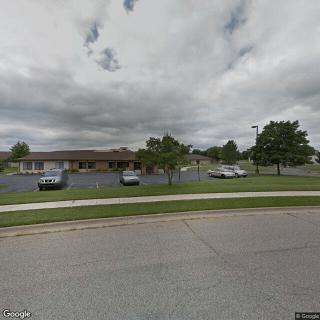
979 South Oakview, White Cloud, MI 49349
For more information about senior living options: (866) 208-4318
Overall Review of Oak
Cons
 They find the place terrible.
- They view it as unsafe and unreliable.
- They say they don’t trust this place.
- They worry about what goes on inside that nobody sees.
- They question why there are no pictures of the inside and think there should be interior photos showing happy faces, activities, dinner, and entertainment.
- They sense that something isn’t right.
- They describe a resident at the end of the driveway, alone and unattended, watching a baseball game across the street, which they find concerning.
Review
Oak in White Cloud, Michigan, is best suited for families that can accept a high degree of opacity in daily operations and are prioritizing cost or a minimal footprint over constant reassurance about resident safety. The lone review available paints a troubling portrait: a resident left unattended at the end of a driveway, seemingly watching a street-side baseball game, paired with a claim that someone recently escaped and has been missing. The implication is not simply a lapse in hospitality but a potential pattern of safety and supervision gaps. For families facing limited options, Oak may appear as a budget-conscious choice, but the price paid is a sharing of risk around oversight and reliability.
Those who should seriously consider alternatives are families for whom safety, consistent supervision, and transparent, verifiable operations are nonnegotiable. If a resident requires regular monitoring, mobility assistance, or structured programming, the kind of assurances offered by facilities with posted staffing ratios, routine internal communication, and visible activity schedules becomes essential. The absence of interior photos and a documented commitment to resident engagement signals a lack of transparency that will frustrate caregivers seeking reassurance before placing a loved one. In short, any family prioritizing clear accountability and visible, proactive care should move on to other options rather than invest trust in Oak.
From a decision-making perspective, the potential positives that might offset the stated concerns simply aren’t evident in the available account. No benefits, such as strong programming, responsive staff, or well-documented safety protocols, are described in a way that would counterbalance the red flags. Instead, the narrative centers on safety alarms, an unattended resident, a reported missing person situation, and a facility that does not provide interior photography to ease family worries. Without credible demonstrations of care quality or resident well-being, the drawbacks dominate the calculus, making any perceived upside largely theoretical at best.
The main cons, safety perception, questionable supervision, and lack of transparency, t overwhelm any potential conveniences. A home-like atmosphere typically touted by assisted living is hard to assess when critical visuals and accountability measures are absent. The reviewer’s sense of unease is reinforced by the absence of routine evidence: no interior pictures, no transparent activity life, and no clear ability for families to verify day-to-day operations. In practice, these gaps translate into elevated decision risk for anyone considering long-term placement, especially for residents with escalating care needs or cognitive impairment where trustworthy supervision matters most.
Practically, this recommendation means pursuing thorough, reality-checked alternatives before committing. Prospective families should demand a guided tour that includes face-to-face time with direct caregivers, opportunities to see common areas and resident rooms, and a transparent review of staffing levels and incident reporting practices. Request recent state inspection reports, copies of inspection citations, and the facility’s corrective action plans. Compare with neighboring communities that actively publish calendars of activities, resident engagement metrics, and verifiable staffing ratios. If possible, speak with current residents or families to gauge day-to-day morale and responsiveness. The goal is to choose a setting where safety, transparency, and consistent supervision are demonstrable, not merely promised.
In the end, Oak presents a stark decision fork: either accept substantial safety and transparency risk or opt for alternatives with clearer accountability and steadier supervision. Given the weight of the concerns raised, a cautious approach is advisable. Families should treat Oak as a last-resort consideration, to be revisited only if no comparable options exist and after exhaustive vetting of every other facility in the area. The responsible choice is a deliberate comparison process focused on proven safety records, visible resident life, and verifiable staff engagement, elements currently missing from the available account of Oak.
 6 resident community capacity
 Assisted Living
 Cable or satellite TV
 Dining room
 Fully furnished
 Garden
 Housekeeping services
 Move-in coordination
 Outdoor space
 Telephone
 Wi-Fi/high-speed internet available
 24-hour supervision
 Activities of daily living assistance
 Assistance with bathing
 Assistance with dressing
 Assistance with transfers
 Diabetes diet
 Meal preparation and service
 Medication management
 Special dietary restrictions
 Transportation arrangement (medical)
 Transportation to doctors appointments
 Small, intimate community with personalized care.


 When to Transition from Assisted Living to Memory Care: Key Indicators, Steps, and Finding the Right Community
 Assisted Living and Memory Care: Understanding Their Core Differences
 Beyond the Bingo Hall: 50+ Enriching Activities for Seniors in Assisted Living