
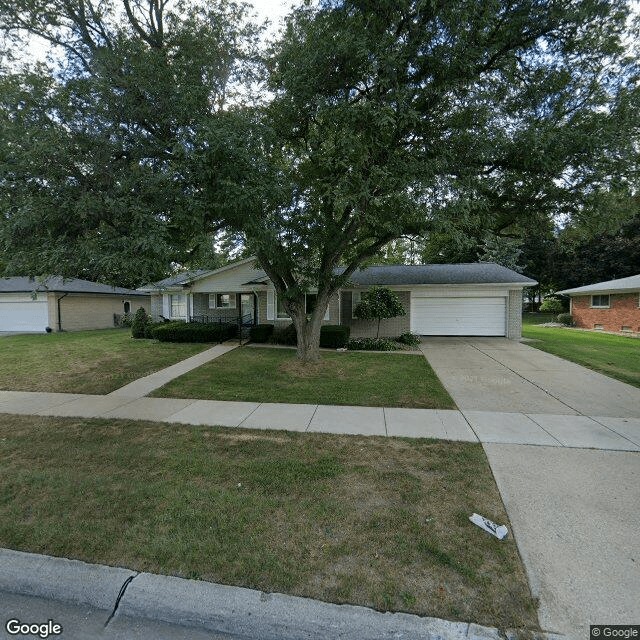
32885 Northampton, Warren, MI 48093
For more information about senior living options: (866) 208-4318
Angelic Foster Care Costs & Pricing
Angelic Foster Care offers competitive pricing for its services, particularly when compared to the broader market in Macomb County and across the state of Michigan. For semi-private rooms, monthly costs range from $2,600 to $2,700, significantly lower than the county average of $3,232 and the state average of $3,191. Private room rates at Angelic Foster Care fall between $3,000 and $3,120, which again positions them favorably against county and state figures of $3,567 and $3,675 respectively. Additionally, their studio units are priced at $3,380 - more affordable than both the local rate of $3,840 and the state's standard of $3,824. This pricing structure highlights Angelic Foster Care's commitment to providing quality care at a more accessible cost for families seeking support in their community.
| Floor plans | Angelic Foster Care | Macomb County | Michigan |
|---|---|---|---|
| Semi-Private | $2,600 to $2,700 | $3,232 | $3,189 |
| Private | $3,000 to $3,120 | $3,567 | $3,674 |
| Studio | $3,380 | $3,840 | $3,824 |
Assisted Living communities with a similar price nearby
-
from +$400 / mo
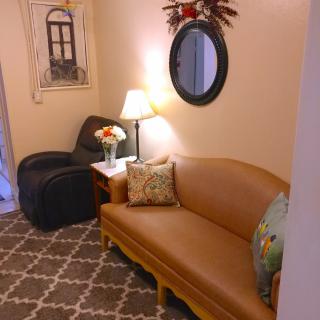
Hutcheson Manor
$3,000 to $4,500 / month18.0 miles away -
from -$405 / mo

Simply Beautiful Adult Foster Care Homes
$2,195 to $4,100 / month10.3 miles away -
from -$325 / mo
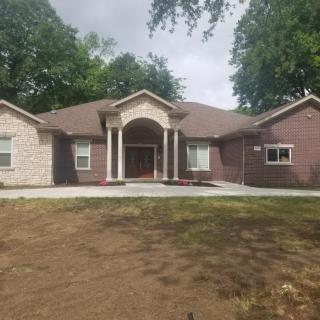
Pleasant Valley Family Care
$2,275 to $7,000 / month16.9 miles away -
from +$400 / mo
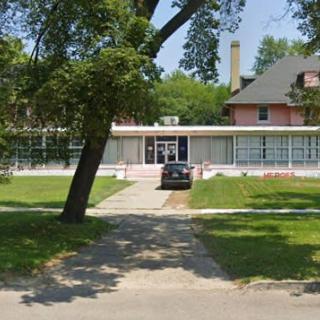
Passion and Caring Home
$3,000 to $3,200 / month12.3 miles away -
from -$140 / mo
Unlimited Care
$2,460 to $2,500 / month11.2 miles away
Overall Review of Angelic Foster Care
Pros
 The Angelic Foster Care home exceeded expectations.
 - The staff provided wonderful care and personal attention to residents.
- The team is thoughtful, caring, and nurturing.
- The home feels warm and comfortable, with good food.
- Angelo is on-site and actively involved in daily operations.
- The Haverhill location is nice, spacious, with a beautiful open living room and sun room.
- Families are kept informed about treatments and medications.
- The care feels like being in a family-like, comfortable home with personalized service.
- The facility is clean, well-maintained, with a nice menu and courteous staff.
- This care offers an excellent alternative to a nursing home.
- The staff are friendly, cheerful, and professional.
Cons
 The Northampton location had mostly Alzheimer's residents, which was not the best fit for the mom at that time.
- A prior rehab nursing home stay was described as pretty bad.
- Minimal activities were noted regarding resident programs.
Review
Angelic Foster Care in Warren, MI is best suited for families seeking a warm, home-like assisted living option where seniors receive personal attention in a small, intimate setting. The community shines for residents who value direct access to an on-site owner and a hands-on staff team, with daily care delivered in a house-like environment rather than a sterile, institutional feel. It’s a fit for seniors who want proximity to family-style interactions, appreciate good meals, and rely on meticulous daily oversight from a tightly knit caregiving group.
Those considering alternatives should weigh the realities of memory-focused or highly structured programming. For residents whose needs center heavily on dementia-specific care, comprehensive activity calendars, or robust on-site medical supervision, a larger community with formal memory-care wings and more extensive clinical staffing may serve better. The Haverhill/Northampton footprint highlights a potential limitation: some locations appear to lean toward Alzheimer’s-leaning demographics, which may not align with a non-Alzheimer’s profile. Availability can also be tight, with some sites already full, pushing families toward other options.
The strongest pros, personal attention, an involved owner, and a genuinely caring staff, form the core value proposition here. Edwin, Dana, Carol, and Josie are repeatedly described as thoughtful, nurturing, and attentive, delivering care that feels individualized rather than routine. Angelo’s on-site supervision adds a layer of accountability and reassurance for families. This level of warmth and steadiness translates into peace of mind: residents seem comfortable, meals are described as good, and the environment is consistently described as warm, clean, and welcoming. In practice, the personal touch can offset the absence of formal programming by fostering a sense of security and belonging that larger facilities struggle to replicate.
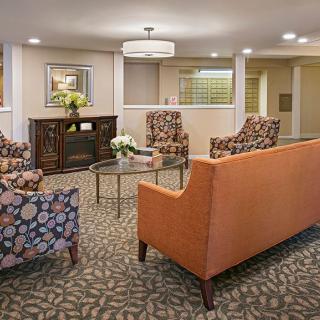
Another clear advantage lies in the home-like atmosphere and the practical realities of daily life. The homes feature open living spaces, sun rooms, and spacious bedrooms that contribute to a calm, residential rhythm rather than a clinical tempo. Families commonly note that the setting “feels like being in our own home,” with clean, well-kept spaces and meals that create a pleasant daily routine. Regular updates about treatment and medications, coupled with visible staff dedication, help families stay connected to their loved ones’ medical picture. The combination of a warm setting and reliable communication can compensate for the absence of a formal activity apparatus for residents who prioritize comfort and stability over constant social programming.
Yet there are tangible trade-offs that families must weigh. Several reviews point to minimal activities, at least in some weeks, which can leave more active seniors looking for purposeful engagement elsewhere. The Northampton site is described as clean and pleasant but with a limited activity mix, and one reviewer notes the setting skewed toward Alzheimer’s care, potentially making it less suitable for a parent who does not have memory impairment. In a small-home model, there’s also less of the clinical infrastructure that some families expect in a traditional assisted living, including a broader set of on-site specialists and around-the-clock nursing support. These factors don’t erase the positives, but they set realistic boundaries on what the community can deliver.
The practical takeaway is clear. Angelic Foster Care is a standout choice for families prioritizing a heartfelt, person-centered approach, strong owner involvement, and a comforting, home-like daily life. It works best when the resident thrives on routine, personal connections, and the security of a small, attentive staff. Pros offset most of the potential gaps for those who prize emotional warmth, transparent communication, and a life that feels less institutional. For residents requiring heavy memory-care programming, expansive social calendars, or robust, 24/7 clinical oversight, however, alternatives with larger campuses and more formal programming may be a wiser match. When evaluating, focus on memory-care needs, desired activity level, and the comfort level with a small-house model staffed by a tight-knit team.
 6 resident community capacity
 Assisted Living
 Board and Care Home
 Activities off-site
 Beautician on-site
 Cable or satellite TV
 Dining room
 Fully furnished
 Garden
 Housekeeping services
 Indoor common areas
 Move-in coordination
 Outdoor common areas
 Private
 Private bathrooms
 Telephone
 Wheelchair accessible showers
 Wi-Fi/high-speed internet available
 24-hour supervision
 Ambulatory care
 Assistance with bathing
 Assistance with dressing
 Assistance with transfers
 Diabetes diet
 Diabetic care
 High acuity care
 Meal preparation and service
 Medication management
 Special dietary restrictions
 Transportation arrangement (medical)
 Transportation to doctors appointments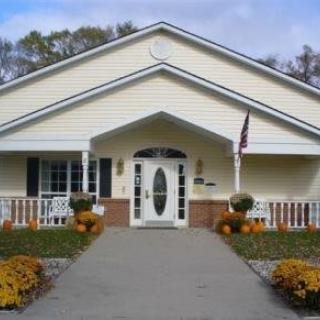
 When to Transition from Assisted Living to Memory Care: Key Indicators, Steps, and Finding the Right Community
 Assisted Living and Memory Care: Understanding Their Core Differences
 Beyond the Bingo Hall: 50+ Enriching Activities for Seniors in Assisted Living