
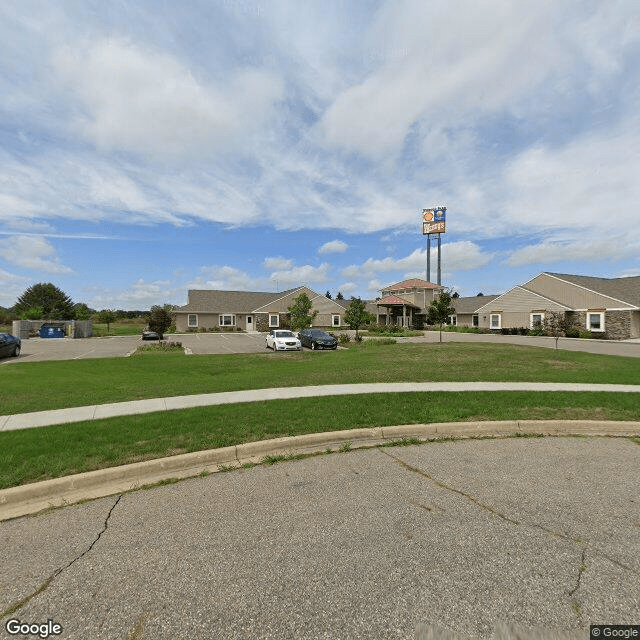
208 Winston Court, Marshall, MI 49068
To contact a resident: (269) 248-6226
For more information about senior living options: (866) 208-4318
Grand Vista Assisted Living Marshall Costs & Pricing
Grand Vista Assisted Living Marshall offers a range of accommodation options with monthly costs that reflect the quality of care and services provided. For studio apartments, residents can expect to pay between $3,500 and $5,349, which is notably higher than the average monthly cost in Calhoun County at $3,436 and the statewide average of $3,824. One-bedroom units are priced at $4,000, significantly above both local ($2,651) and state averages ($3,384), while semi-private rooms are listed at $4,115 compared to the county's $3,344 and Michigan's $3,191. Private accommodations command a premium rate of $4,938 - this is higher than both local ($4,172) and statewide averages ($3,675). Overall, Grand Vista reflects a commitment to exceptional living experiences that aligns with their premium pricing structure.
| Floor plans | Grand Vista Assisted Living Marshall | Calhoun County | Michigan |
|---|---|---|---|
| Studio | $3,500 to $5,349 | $3,436 | $3,824 |
| 1 Bedroom | $4,000 | $2,651 | $3,384 |
| Semi-Private | $4,115 | $3,344 | $3,189 |
| Private | $4,938 | $4,172 | $3,674 |
Memory care communities with a similar price nearby
-
About the same

Grand Vista
$3,500 to $4,000 / month22.2 miles away -
from -$275 / mo
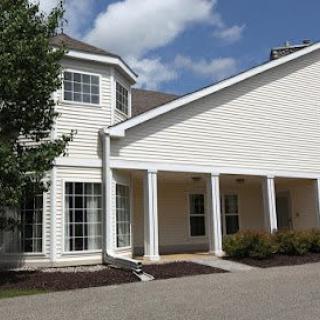
Marshall Comfort Care
$3,225 to $3,725 / month1.8 miles away -
from +$145 / mo

Spring Arbor Assisted Living Center
$3,645 to $4,245 / month23.3 miles away -
from -$154 / mo
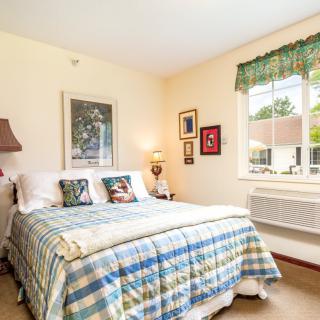
Bickford of Battle Creek
$3,346 to $3,954 / month10.9 miles away -
from +$655 / mo
Brookdale Battle Creek
$4,155 to $5,395 / month10.9 miles away
Overall Review of Grand Vista Assisted Living Marshall
Pros
 The staff have been nothing but amazing to residents and their families, with compassion and understanding beyond measure.
- The facility is consistently clean and friendly.
- The owner’s willingness to support residents’ transitions into the home stands out.
- It is a fairly new facility that is clean and well equipped.
- The atmosphere is wonderful, with amazing food and attentive staff, and a variety of activities for everyone.
- The management team is wonderful and always accessible, with staff who are helpful and attend to residents’ needs.
- Grand Vista is an amazing place to care for a loved one, with trusted caretakers and years of positive experience.
Cons
 They would not recommend the facility to any family seeking respectful, consistent care for their loved one.
- The owners are dismissive and, at times, outright rude.
- Communication is poor, accountability is lacking, and basic rights such as dignity, privacy, and humane treatment are disregarded.
- The facility has bed bugs that have spread from room to room and to staff.
- It is understaffed.
- There are medication errors.
- The owner is rarely present and appears more concerned with money than with care.
- There is a high turnover rate among staff, who are underpaid and underappreciated.
Review
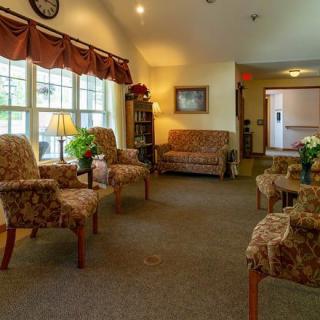
Grand Vista Assisted Living in Marshall, MI is best suited for families that want a warm, hands-on environment where the owners are accessible and care feels personal. The community tends to shine for those who value a homey atmosphere, clean surroundings, and a staff that comes across as genuinely caring and attentive. The combination of fresh, well-kept facilities, made-to-order breakfast, and a broad slate of daily activities can make Grand Vista a welcoming place for a loved one who thrives on daily structure and social engagement. Those buying into this model should be prepared to closely monitor care quality and to actively engage with staff to sustain the level of service they expect.
On the positive side, the strongest recurring strengths are the staff’s compassion and the overall atmosphere. Families repeatedly highlight friendliness, individualized attention, and a sense that residents are treated with dignity. The dining experience, especially breakfast and the opportunity for made-to-order items, receives frequent praise, and residents often speak highly of activities and social opportunities. The management presence, with owners who are reachable and involved, also emerges as a reassuring factor for many families. For families who can lean into the personal touch and the daily warmth of the community, these elements can significantly enhance quality of life and caregiver-resident relationships.
However, the downsides are persistent and meaningful enough to influence decisional balance. Several reviews describe serious operational challenges, including bed bug outbreaks and ongoing pest management concerns. Medication errors surface in multiple accounts, sometimes addressed by third parties but still a red flag for clinical reliability. Staffing levels and turnover are recurrent themes, with weekends repeatedly cited as difficult for nurse availability, and overall underpayment or underappreciation allegedly driving turnover. There are also pointed criticisms of the owner’s focus and communication, with some families feeling misled or pressured rather than fully informed about conditions or costs. In short, there is a credible risk of inconsistency in clinical oversight and day-to-day operations.
These pros can offset the cons only to a degree, and primarily for families who are prepared to participate actively in oversight. The positive traits, genuine staff warmth, clear accessibility of leadership, a newer, well-kept environment, and appealing day-to-day amenities, provide a cushion against some fragility in clinical systems. But this offset requires vigilance: frequent on-site visits, direct questions about how medication processes are implemented, and a transparent, written plan for infection control and staffing. Families must verify what weekend nurse coverage looks like, request current nurse-to-resident ratios, and seek concrete milestones for addressing any ongoing concerns. If these assurances cannot be secured, the advantage of the community’s culture may not compensate for risk.
Those for whom Grand Vista may not be the best fit are families who demand a consistently high bar for medical oversight and infection control, with predictable staffing and firm, transparent leadership. If a partner, parent, or loved one requires reliable weekend clinical care, consistently strong infection prevention, or a management team that is unambiguously aligned with resident welfare over revenue signals, alternatives should be explored. Larger facilities with longer, proven track records in clinical governance and more stable staffing patterns may deliver the reliability that some families require, even if that means sacrificing some of the personal touch or intimate community feel.
In the end, Grand Vista stands as a compelling option for families who can navigate and mitigate its risks: those who prize a welcoming, engaged staff and a proactive, approachable owner, and who can complement the facility with careful oversight and advocacy. It is not a guaranteed fit for every family, given the documented concerns around pest control, medication safety, and staffing stability. Schedule a thorough tour with explicit questions about weekend nursing, medication protocols, and pest remediation plans; request to see recent inspection and incident records; meet direct caregivers on a weekend shift; and insist on a detailed care plan before placing a loved one. With informed diligence, Grand Vista can be a strong fit for the right family, delivering warmth, dignity, and an active social environment alongside the essential caveats.
 Assisted Living
 Memory Care
 Activities on-site
 Devotional services off-site
 Indoor common areas
 Ambulatory care
 Diabetic care
 Meals provided

 A Thorough Discussion of Medications Potentially Linked to Dementia Risk
 Why Do Dementia Patients Sleep So Much? Understanding Oversleeping, Stages, and Care Approaches
 8 Key Indicators That Suggest It May Be Time to Transition from Assisted Living to Skilled Nursing Care