
14831 Beecher Road, Hudson, MI 49247
For more information about senior living options: (866) 208-4318
Maple Ridge Farms Assisted Living Costs & Pricing
Maple Ridge Farms Assisted Living offers competitive pricing for its services, with a monthly cost of $4,000 across various room types, including studios and one-bedroom units. When compared to Lenawee County, where the average studio costs slightly more at $4,025 and one-bedroom units are slightly less at $3,869, Maple Ridge presents an appealing option for potential residents seeking affordability without compromising on quality. Additionally, when looking at state averages in Michigan, the pricing at Maple Ridge remains comparable - especially notable in the case of private rooms where other facilities charge $4,265 on average. Overall, Maple Ridge Farms Assisted Living stands out for its consistent pricing model that aligns closely with local and state trends while providing comfortable living arrangements tailored for seniors.
| Floor plans | Maple Ridge Farms Assisted Living | Lenawee County | Michigan |
|---|---|---|---|
| 1 Bedroom | $4,000 | $3,869 | $3,384 |
| Private | $4,000 | $4,265 | $3,674 |
| Studio | $4,000 | $4,025 | $3,824 |
Memory care communities with a similar price nearby
-
from -$355 / mo

Summit Park Assisted Living Center
$3,645 to $4,245 / month23.0 miles away -
About the same
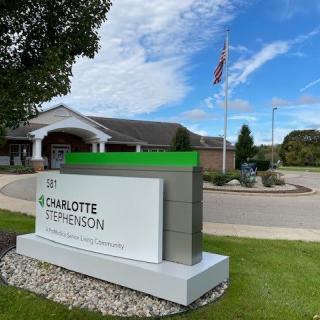
Promedica Charlotte Stephenson Manor
$3,979 to $4,722 / month16.4 miles away -
from +$605 / mo
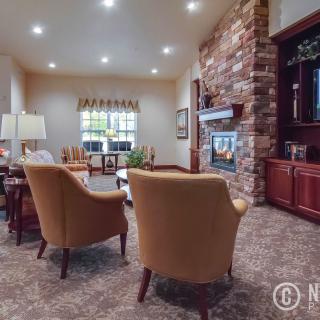
Gaslight Village Assisted Living & Memory Care
$4,605 to $4,995 / month17.9 miles away -
from -$250 / mo

Country Living of Hillsdale I
$3,750 / month10.9 miles away -
from -$355 / mo
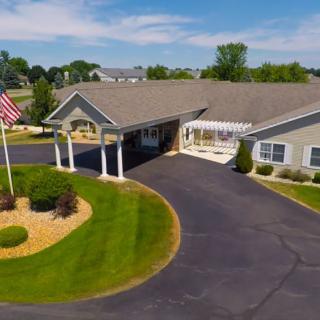
Spring Arbor Assisted Living Center
$3,645 to $4,245 / month24.0 miles away
Overall Review of Maple Ridge Farms Assisted Living
Pros
 They love it here.
- They hope the staff have better days.
Cons
 The front desk provides terrible service and a cold welcome.
- The staff are unapproachable, with unclear diction that makes the name hard to hear.
- They repeatedly fail to answer the phone, forcing callers to use a different line.
- The reviewer would pull a loved one from this location due to the poor service.
- The front desk did not recognize a business-to-business call, contributing to the negative experience.
- Training and phone reception need significant improvement.
Review
Maple Ridge Farms Assisted Living in Hudson, Michigan is best suited for seniors who prize a warm, homey community and are willing to trade some polish in administrative touchpoints for a living environment that residents talk about with affection. For families focused on social connectedness, comfortable everyday living, and a sense of belonging among neighbors, this campus can deliver. The atmosphere tends to feel welcoming once the initial point of contact is navigated, and residents who engage in on-site activities and build relationships with peers and caregivers may experience a genuine sense of community. Those who require flawlessly polished frontline communication should proceed with caution.
Everyone should consider alternatives if first impressions matter as much as the daily routine. A recent negative report highlights front-desk interactions that were difficult to receive or interpret, with slowed phone reception and a sense that the initial contact could be inhospitable. While that single critique does not erase other possibilities, it signals a potential pattern rather than an isolated misstep. Families who depend on consistently efficient scheduling, dependable phone access, or courteous, clear guidance from administration may find Maple Ridge Farms less reliable than intended. In such cases, exploring options with demonstrably stronger administrative responsiveness is prudent.
On the upside, there is a distinct signal that the living environment itself can deliver warmth and a sense of belonging for residents who connect with the community. A resident or family member expressing strong positive feelings suggests that day-to-day life, activities, and peer relationships can be meaningful and enjoyable. That potential upside matters, because it indicates real value when the administrative friction is not in play or is successfully managed by onsite staff. The tension between a positive habitat and a front-desk communications flaw creates a mixed experience that comes down to consistency and how much weight is placed on administrative quality versus social life.
From a practical decision-making standpoint, tours should focus on how the front desk actually operates in real time. Prospective families should test responsiveness by observing how staff handle calls, greet visitors, and coordinate with care teams. Inquire directly about training for front-line personnel, the reliability of the phone system, and the escalation path for unresolved concerns. During visits, look for signs of attentiveness in everyday interactions with residents, as well as the clarity of information provided about admissions, billing, and service coordination. Ask about staff stability, which can be a strong indicator of both resident satisfaction and administrative reliability.
The rating mix, three stars overall with divergent experiences, underscores the core reality: Maple Ridge Farms can be a solid choice for those who value community living and are comfortable navigating occasional administrative gaps. For families where every first impression matters, or where timely, courteous communication is non-negotiable, alternatives with consistently polished front-desk service may be a wiser fit. The decision hinges on balancing the intangible appeal of a friendly, neighborly environment against the tangible risk of inconsistent administrative performance. The best course is to verify firsthand how the front desk behaves under typical demands and to confirm that the care coordination meets expectations through concrete conversations with staff and current residents.
In short, Maple Ridge Farms stands out for those who want a genuine, social, homelike setting and can tolerate imperfect front-desk communication. It is less suited for families that cannot tolerate uncertain first impressions or sporadic administrative responsiveness. The strongest advisory takeaway is to treat the front desk experience as a non-negotiable test during visits: observe, ask, and insist on clear, reliable paths for communication and problem resolution. If those criteria can be met consistently, the community offers meaningful value; if not, it’s wise to keep looking.
 15 resident community capacity
 Assisted Living
 Board and Care Home
 Memory Care
 Respite Care
 Activities on-site
 Cable or satellite TV
 Devotional services off-site
 Dining room
 Fully furnished
 Garden
 Housekeeping services
 Indoor common areas
 Move-in coordination
 Outdoor space
 Private
 Telephone
 Wi-Fi/high-speed internet available
 24-hour supervision
 Ambulatory care
 Assistance with bathing
 Assistance with dressing
 Assistance with transfers
 Diabetes diet
 Diabetic care
 Hospice waiver
 Meal preparation and service
 Medication management
 Mental wellness program
 Special dietary restrictions
 Transportation arrangement (medical)
 Transportation to doctors appointments
 Dementia-Related Hallucinations: Causes, Experiences, and Practical Approaches
 Illuminating Insights About Alzheimer's Disease: Ten Crucial Realities
 A Thorough Discussion of Medications Potentially Linked to Dementia Risk