
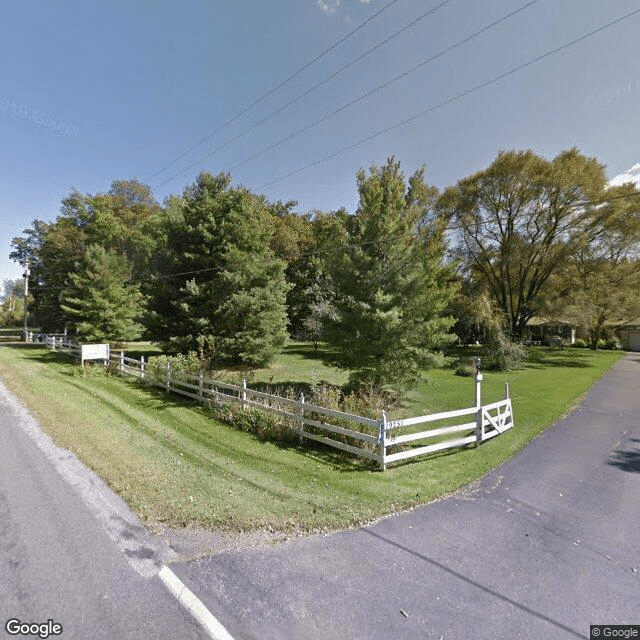
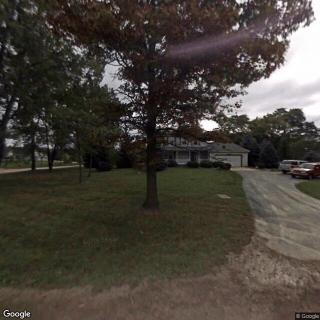
19251 Doyle Rd, Gregory, MI 48137
To contact a resident: (734) 498-2277
For more information about senior living options: (866) 208-4318
Sacred Heart Care Homes Inc Costs & Pricing
Sacred Heart Care Homes Inc offers competitive pricing for their accommodations compared to both Washtenaw County and the broader state of Michigan. For semi-private rooms, Sacred Heart charges $2,800 per month, significantly lower than the county average of $3,383 and the state average of $3,191. Similarly, their private rooms are priced at $3,000, which is again more affordable than the county's average of $3,385 and the state's higher average of $3,675. This positioning not only highlights Sacred Heart's value but also underscores their commitment to providing quality care at a price point that is accessible to families seeking supportive living arrangements in the area.
| Floor plans | Sacred Heart Care Homes Inc | Washtenaw County | Michigan |
|---|---|---|---|
| Semi-Private | $2,800 | $3,383 | $3,189 |
| Private | $3,000 | $3,385 | $3,674 |
Senior living communities with a similar price nearby
-
About the same
Dragonfly Manor
$2,800 to $3,000 / month15.7 miles away -
from -$300 / mo
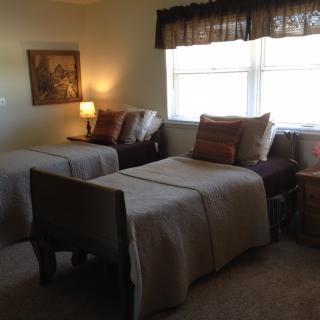
Sunset Pines AFC
$2,500 to $3,500 / month13.2 miles away -
from +$400 / mo
Safe Haven Assisted Living
$3,200 to $4,200 / month22.4 miles away -
from +$100 / mo
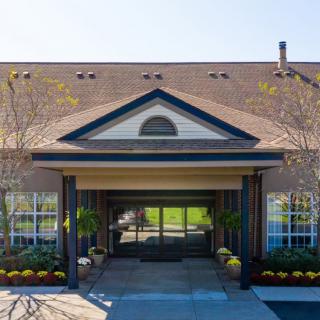
Brookhaven Manor
$2,900 to $4,100 / month21.7 miles away -
from +$480 / mo
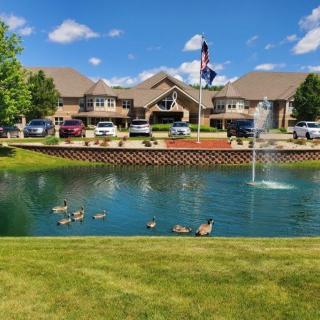
Village Manor Retirement
$3,280 to $4,300 / month20.4 miles away
Overall Review of Sacred Heart Care Homes Inc
Pros
 The caregivers are compassionate and friendly, and the administrators are available and helpful.
 - It is a family-owned facility with a warm, family-oriented atmosphere.
- The grounds are beautiful, with deer and birds plentiful.
- Residents are consistently happy, and the staff treat everyone like family.
- Sacred Heart feels non-institutional, with a homey interior and personal care.
- Meals are freshly prepared daily by staff, not an institutional cook.
- The setting is peaceful and rural, ideal for reflection.
- The owner and family members are actively involved with residents, enhancing the care.
- The home is immaculate and well-maintained, giving a true sense of a welcoming home.
Review
Sacred Heart Care Homes Inc in Gregory, Michigan is best suited for seniors who need around-the-clock assistance but insist on a true home environment rather than a clinical, institutional feel. This is a small, family-operated residence with a license for just twelve residents, which translates into a level of intimacy and hands-on attention that larger centers rarely match. The setting is deliberately rural and peaceful, with well-kept grounds, screened porches, and a warmly familial atmosphere that appeals to families who want daily life to resemble a comforting, on-purpose home. For families prioritizing accessibility to administrators and a facility that feels like a family member’s house, Sacred Heart delivers gravitationally in line with those values. It is not a cookie-cutter, cookie-cutter-institution experience; it is a deliberate choice for those who want a connected, predictable routine anchored by people who truly know the residents.
The strongest advantages revolve around people and relationships. Caregivers are described as compassionate and friendly, and the administrators are consistently available when needed, which matters enormously for ongoing care planning and responsive problem-solving. The ownership is hands-on, with the founder living on the property and participating in daily activities, reinforcing a sense of accountability and pride in the care delivered. Families repeatedly note the “homey” interior, the absence of an institutional feel, and the feeling that staff treat residents like family. The pace is calm, the dining area feels communal and cozy, and meals are prepared in-house, not by an impersonal cafeteria crew. This combination, personal attention, a small, stable team, and a setting that invites gathering and participation, creates trust and reduces the stress of placing a loved one in care.
The experience stands out in dementia and aged-care contexts precisely because of the intimate environment and the open, collaborative communication with families. Testimonials highlight ongoing, constructive problem-solving and a willingness to adapt to changing needs, with staff who stay engaged over years rather than cycling through turnover that can disrupt continuity. One reviewer describes a long-term arrangement for a relative with dementia and notes that staff actively listen, welcome reasonable suggestions, and bring inclusive solutions to care planning. The on-site activities, games, baking, visits, and gentle social opportunities, are framed by a spiritual component through weekly services, reinforcing a sense of routine, comfort, and belonging. For families seeking stability, predictability, and a sympathetic partner in care, this level of engagement is a meaningful offset to the rural, small-scale format.
Potential drawbacks naturally accompany the strengths of a small, rural home. The most visible limitation is capacity: with only twelve residents, Sacred Heart cannot accommodate the scale or breadth of services found in larger communities, and waitlists can emerge as needs grow or fluctuate. For families facing higher-acuity medical demands or requiring specialized memory-care programs beyond what a small house can sustain, alternatives with more on-site medical staff and formalized dementia strategies may be more suitable. The rural setting, while serene, can also pose logistical challenges for families traveling long distances for visits or arranging frequent external therapies. These factors are not flaws so much as reality checks: the setting is excellent for certain profiles while potentially compromising convenience or specialized options that larger, more resource-rich facilities can offer.
Yet the favorable elements consistently offset these limitations for the right resident. The compact size fosters a genuinely individualized plan of care, where staff know every resident’s preferences, strengths, and routines, leading to reliable medication administration, attentive monitoring, and a level of responsiveness that is harder to sustain in bigger operations. Families remain informed and included in decision-making, with open channels to administrators and owners who remain deeply invested in the daily life of the home. The home atmosphere, clean, well-kept, with a living-room dignity, chandeliers, a piano and even a small chapel, conveys dignity and warmth that counterbalance the absence of a hospital-like infrastructure. The result is a care experience that feels preventative rather than reactive: fewer surprises, tighter communication, and a daily rhythm that supports emotional and spiritual well-being as much as physical needs.
In the end, Sacred Heart Care Homes Inc offers a compelling choice for families prioritizing warmth, continuity, and a truly homelike atmosphere for a loved one who requires steady assistance. It is ideal for seniors who flourish in quiet, scenic surroundings where staff involvement feels genuine and relationships matter as much as routines. Those who would benefit most are individuals in the earlier-to-mid stages of functional decline who still value meaningful engagement, regular meals that feel like “mom’s cooking,” and the reassurance that drawing-room conversations and family-style dining are part of daily life. Conversely, families needing extensive on-site medical specialization, large-scale programming, or quick access to a broad spectrum of therapies may want to explore alternatives with greater capacity and a more institutional or clinical footprint. A visiting plan, spending a day to observe meals, activities, and staff interactions, will reveal whether Sacred Heart aligns with the loved one’s personality, medical needs, and family expectations. For the right resident, this is not just a place to stay; it is a trusted home where care and heart meet.
 Board and Care Home
 Cats allowed
 Dogs allowed
 Activities off-site
 Bath tubs
 Beautician on-site
 Devotional services off-site
 Indoor common areas
 Outdoor common areas
 Private
 Private bathrooms
 Respite or short term stays offered
 Wheelchair accessible showers
 Ambulatory care
 Diabetic care
 High acuity care
 Incontinence care
 Kosher
 Christian services
 Islamic services

 Fecal Incontinence in Older Adults: A Comprehensive Guide
 Recognizing the Journey: Understanding and Navigating Anticipatory Grief
 Encouraging Participation in Adult Day Care: A Guide to Supporting a Hesitant Parent