
10686 Wacousta Rd, Dewitt, MI 48820
To contact a resident: (810) 922-2938
For more information about senior living options: (866) 208-4318
A Ewing Country Estate Costs & Pricing
At A Ewing Country Estate, the monthly cost for a private room is set at $4,000. While this figure positions the estate above the average costs in Clinton County, which sits at approximately $3,350, it also reflects a competitive rate compared to the broader state average of $3,675. This price point may be indicative of the exceptional amenities and personalized care that residents can expect at A Ewing Country Estate, aiming to provide an enriching living experience amidst the serene surroundings of its locale.
| Floor plans | A Ewing Country Estate | Clinton County | Michigan |
|---|---|---|---|
| Private | $4,000 | $3,350 | $3,674 |
Memory care communities with a similar price nearby
-
from +$450 / mo

Riverwind Senior Assisted Living
$4,450 / month23.8 miles away -
from +$250 / mo
Sensations Memory Care Residence
$4,250 to $5,000 / month22.3 miles away -
from +$405 / mo
Grace Haven Assisted Living & Memory Care
$4,405 to $4,750 / month11.6 miles away -
from -$503 / mo
Independence Village Of Grand Ledge
$3,497 to $6,188 / month9.0 miles away -
About the same
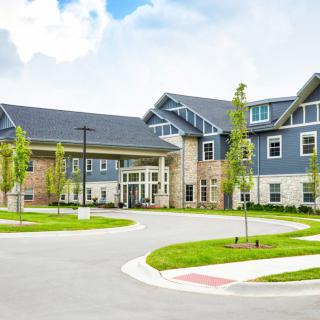
Provision Living at East Lansing
$4,000 to $5,750 / month14.2 miles away
Overall Review of A Ewing Country Estate
Pros
 The facility is run by a nice gentleman and his wife.
- They provide a lot of one-on-one time with the residents.
- The staff is available 24/7 and trained in Alzheimer's/dementia care.
Review
A Ewing Country Estate is best suited for a resident who wants a small, home‑like setting where care is intensely personal, highly visible, and continuously supervised. With only six residents, this AFC operates as a tightly knit, caregiver‑led environment, not a spread‑out campus. The standout here is the level of individualized attention: a nice gentleman and his wife actively run the house and dedicate substantial one‑on‑one time with each resident, and the 24/7 staff is trained specifically to support Alzheimer’s and dementia needs. For families seeking safety, responsiveness, and a familiar, noninstitutional atmosphere, this arrangement delivers.
Those who may want to consider alternatives are families prioritizing scale, breadth of programming, or access to a wider medical support network. Larger assisted living communities often boast more structured daily calendars, more robust social opportunities, on‑site therapy and rehabilitation options, and easier access to external services via coordinated transportation and partner providers. If the goal includes a broad spectrum of activities, more regular group outings, or a more standardized set of protocols across multiple shifts, a bigger setting will likely serve better. Individuals with complex or rapidly evolving medical needs might also look toward facilities that can deploy a broader care team.
The strongest pros, the intimate attention, the frequent caregiver contact, and dementia‑trained staff, do meaningful work that can sharply reduce anxiety and offer predictability for memory‑impaired residents. One‑on‑one time helps staff quickly recognize subtle changes in behavior, mood, or appetite, enabling timely adjustments to daily routines and meals. The around‑the‑clock availability of staff with ALZ/dementia expertise translates into quicker response to safety concerns, wandering risk, and agitation. These advantages partly offset the main limitation of size by building a sense of security, trust, and continuity that larger outfits sometimes struggle to deliver.
On the flip side, the small scale can limit social variety and resource breadth. Residents may find fewer peer interactions simply because there are fewer fellow residents to mingle with, and a limited pool of majors or recurring activities can lead to a quieter calendar. However, the personal approach of the owners can compensate to a degree, because activities, conversation, and routines are more adaptable to individual preferences. The family‑run model also means policies and routines may be more flexible and responsive, but it can raise questions about consistency and formalized procedures compared with larger operators. Prospective families should weigh the comfort of continuity against the potential for a less structured social ecosystem.
From a practical decision‑making standpoint, due diligence should focus on staffing reliability, quality of dementia care, and the facility’s capacity to evolve with changing needs. Confirm the exact caregiver‑to‑resident ratio across day and night shifts, and inquire about staff turnover and training refreshers. Ask how care plans are developed and updated, who notes changes in cognition or behavior, and how emergency medical needs are coordinated. Clarify meal planning, dietary accommodations, and the handling of activities that promote cognitive engagement and physical well‑being. Finally, verify costs, what is included in rent, and whether respite care or short‑term stays are available, should the situation require a temporary transition.
In the end, A Ewing Country Estate stands out for residents who want a discreet, neighborly setting where care feels like it’s delivered by family members who truly know each resident’s story. The 24/7, dementia‑trained staffing and steady, individualized attention create a safe, comfortable atmosphere that can yield real peace of mind for families navigating memory challenges. However, for those who prize a bustling social life, a broad array of activities, or a larger care team, alternatives with more extensive on‑site programming and resources will likely be a better fit. This community is a solid, practical choice for the right resident, one who thrives on close relationships, predictable routines, and a level of care that feels custom‑built rather than generalized.
 12 resident community capacity
 Assisted Living
 Board and Care Home
 Memory Care
 Respite Care
 Cats allowed
 Dogs allowed
 Activities off-site
 Bath tubs
 Beautician on-site
 Cable or satellite TV
 Devotional services off-site
 Dining room
 Fully furnished
 Garden
 Housekeeping services
 Indoor common areas
 Move-in coordination
 Outdoor common areas
 Private
 Private bathrooms
 Small library
 Swimming pool / hot tub
 Telephone
 Wheelchair accessible showers
 Capital City (8 miles away)
 24-hour supervision
 Ambulatory care
 Assistance with bathing
 Assistance with dressing
 Assistance with transfers
 Diabetes diet
 Diabetic care
 High acuity care
 Meal preparation and service
 Medication management
 Mental wellness program
 Special dietary restrictions
 Guiding Your Journey: Understanding Power of Attorney for Elderly Parents
 22 Remarkable Caregiver Support Groups Available Online and In-Person
 Understanding Medicaid Coverage for Assisted Living: A Comprehensive Guide