
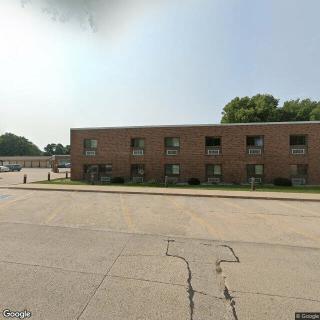
702 Park Street, Sheldon, IA 51201
For more information about senior living options: (866) 208-4318
Overall Review of Universal Pediatrics
Pros
 They provide supportive management, ongoing education, access to continuing education, and a strong work/life balance.
- The nurses and staff are amazing to work with.
Cons
 The center has zero contact number and no way to contact them by email or a credentialed website.
- It is unprofessional and unprepared.
- They cannot be trusted with children because they cannot maintain a live phone number or an active, registered website.
- Private mail and sensitive information are being sent to strangers, risking fraud.
- The place should be shut down.
Review
Universal Pediatrics in Sheldon, IA appears best suited for families whose priority is exceptional nursing talent and a culture that prioritizes ongoing professional development. The strongest signals from the observed reviews point to a team that is highly skilled, engaged, and backed by supportive leadership that values education and work‑life balance for its clinicians. For families seeking a pediatric center where caregivers are viewed as well-trained professionals who stay current through continuous education, this community ticks those boxes. The explicit praise from multiple reviewers about the nurses and staff suggests a care environment where bedside competence and team cohesion are reliable positives.
However, prospective families should explicitly assess the importance of reliable communication and privacy safeguards. The most damning feedback centers on administrative completeness: the facility reportedly has no publicly available contact number, no accessible email, and no credentialed website. In a pediatric setting, where timely updates, rapid appointment coordination, and clear lines of communication matter enormously, this lack of basic connectivity is a meaningful drawback. When families cannot easily reach the center to ask questions, confirm tests, or alert staff to changes in a child’s condition, care continuity suffers even if clinical skills are strong.
The positive drivers, supportive management and ongoing education, offset certain structural weaknesses only up to a point. A culture that fosters professional growth and sustains a stable, skilled nursing cadre translates into higher-quality clinical interactions, better responsiveness at the bedside, and more comprehensive care plans. Yet these advantages do not fully neutralize the harm caused by opaque communication channels. In practice, families may experience timely, compassionate care from clinicians while still facing frustration and uncertainty from an inaccessible administrative front end.
The most troubling connotation from the reviews is the privacy and trust risk embedded in the administrative lapses. Reports of misaddressed mail and the implication that private information could be circulating among unfamiliar recipients raise legitimate concerns for any family entrusting a center with a child’s sensitive data. In pediatric care, privacy and trust are not optional extras; they are foundational. Even excellent clinical care can be undermined if families doubt that personal information will be protected or that communications will be reliably received and acted upon.
Taken together, the pros and cons create a clear decision framework. For families who prioritize clinical excellence, staff stability, and a culture of ongoing learning, this center offers a compelling upside. The high-quality nursing staff and supportive leadership can yield strong patient experiences in the treatment room and in daily care. Conversely, for families that demand frictionless access to the clinic, transparent communications, and robust privacy controls, alternatives with established contact channels and verifiable online presence are likely safer choices. The central tension is trust: clinical capability is real, but it can be undermined by administrative opacity.
In making a final call, seek concrete assurances on accessibility and privacy before enrolling. Request current direct phone numbers, an official email address, and proof of credentialing or accreditation. Ask how appointment scheduling, test result delivery, and care coordination are managed and documented, and request examples of how privacy protections are implemented in practice. If these elements are satisfactory and the family can tolerate occasional administrative gaps in exchange for strong clinical care, the center can be a solid option. If not, it is prudent to pursue alternatives that guarantee transparent communication and rock-solid privacy as baseline expectations.
 21 resident community capacity
 Assisted Living
 Beauty salon
 Cable or satellite TV
 Dining room
 Fully furnished
 Garden
 Housekeeping services
 Kitchenette
 Move-in coordination
 Outdoor space
 Telephone
 Wi-Fi/high-speed internet available
 24-hour call system
 Activities of daily living assistance
 Assistance with bathing
 Assistance with dressing
 Assistance with transfers
 Diabetes diet
 Meal preparation and service
 Medication management
 Mental wellness program
 Special dietary restrictions
 Transportation arrangement (medical)
 Transportation to doctors appointments



 Exploring the Path to Senior Living: A Comprehensive Look at Independent Living and Assisted Living
 Is Assisted Living Deductible on Your Taxes? Understanding the Complexities of Assisted Living Expenses and Deductions
 Assisted Living Support for Veterans: A Complete and Detailed Overview