

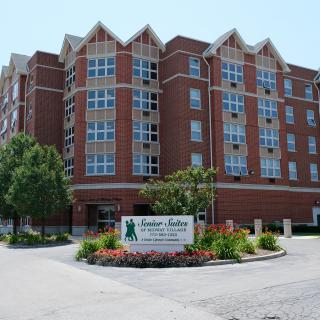
6233 W 63rd St, Chicago, IL 60638
To contact a resident: (773) 586-6717
For more information about senior living options: (866) 208-4318
Overall Review of Premier Home Health Care Inc
Pros
 Naquita Sanford went beyond her duties to ensure the reviewer was taken care of with Medicaid and SNAP benefits.
- Naquita Sanford was excellent at resolving the reviewer’s issues.
- The experience of working with Naquita Sanford was wonderful.
- The reviewer felt relieved thanks to Naquita Sanford’s assistance.
Cons
 They believe the state will shut them down if enough people complain, and there is no point in them being open when service isn’t timely.
- They report no response after calling for over a month and claim the company did not record or know about the service, causing distress for an elderly relative.
- They consider it absolutely ridiculous to have no response for over a month and say the company should not be in business, especially when dealing with the elderly.
- They describe long waits and no replies from representatives, with in-home service for an Alzheimer’s patient still not provided, citing bureaucracy.
- They call Premier Home Health the worst, criticizing the staff and customer service and saying they would rate less than one star.
- They note missed appointments and unreturned calls, and that this seems to be the only location for their parents, necessitating involvement of the Department of Aging.
- They describe a case manager saying the paperwork was still on a supervisor’s desk weeks after assessment, indicating a lack of respect for the elderly.
Review
Premier Home Health Care Inc. in Chicago is best suited for families that can tolerate substantial administrative friction while pursuing in-home care for an elderly loved one. The setting is not a fit for households needing timely, predictable service or urgent assistance, because response times and visit scheduling are inconsistent. When care is finally arranged, issues re-emerge quickly, missed appointments, unclear communication, and long waits for any contact. The practical reality is that effectiveness hinges on relentless advocacy, repeated calls, and escalation to supervisors. For families willing to invest time and persistence into securing even basic visits, this agency can function as a last-resort option.
Explicitly, this option should be avoided by those with immediate care demands or those who require reliable coordination of multiple services. Alternative home health agencies with stronger track records for responding promptly and honoring scheduled visits should be considered. If advice comes with a sense of hope but no concrete follow-through, it is prudent to explore other providers, or engage local Department on Aging resources to help broker dependable care. In short, while one review highlights a single staff member’s helpfulness, the broader performance signals risk when lives hinge on timely hours and consistent care.
Among the negative patterns, consistent unresponsiveness, months-long delays, and repeated broken promises dominate the narrative. Yet there is one bright note: a staff member who handled Medicaid and SNAP benefits with competence and care. That isolated instance suggests that capable, proactive employees exist within the organization, but they are not enough to counter systemic communication failures. The most consequential downside, lack of timely service and failure to return calls, undermines safety, daily routine, and caregiver trust. The contrast between a single positive interaction and widespread service gaps underlines how fragile this provider’s value proposition is.
From a decision-making perspective, the rare staffing moments of competence do not offset the severity of the core issues. A case manager who delays for weeks and supervisors who do not intervene quickly enough translates into real-world harm: delayed medical assessments, postponed in-home support, and increased caregiver stress. The negative experiences cluster around the same themes: poor communication, missed visits, and a bureaucratic barrier that treats urgent needs as questions for the back burner. In practical terms, the "pro" interactions are anecdotal outliers; the "cons" are consistent, recurring patterns that degrade reliability.
For families weighing options, begin with concrete expectations and track performance over a set period. Request a named case manager and specify response times in writing; demand a backup plan if calls go unanswered. If persistent delays occur, contact the state licensing authority and the Department on Aging to secure an interim arrangement and document the lack of service. Meanwhile, compare other agencies side-by-side, prioritizing timeliness, staff stability, and the ability to schedule prompt visits. If care continuity is non-negotiable, this provider should not be the default choice.
Bottom line: Premier Home Health Care Inc. is not a reliable choice for families that require timely, predictable in-home care. It may be considered only by those prepared to comb through red tape, advocate vigorously, and accept service gaps as the price of access. For most seniors, explore alternatives with proven responsiveness and fewer reliability concerns. When a second-by-second care plan hinges on prompt support, the prudent move is clear: seek a provider with demonstrated reliability, clarity of communication, and a documented track record of honoring visits.
 Chicago Midway (1 miles away)






 Home Health Care Demystified: A Comprehensive Guide for Families and Caregivers
 Seniors and Modern Transportation: Exploring Uber, Lyft, and Other Ride-Hailing Options
 Comprehensive Guide to Qualifying for Home Health Care Services