
11950 Thames Court, Hayden, ID 83835
To contact a resident: (208) 772-2146
For more information about senior living options: (866) 208-4318
Larks Haven Costs & Pricing
Larks Haven offers competitive pricing for its accommodations, positioning itself as an attractive option in both Kootenai County and the broader state of Idaho. With a monthly cost of $2,000 for semi-private rooms and $2,500 for private rooms, Larks Haven significantly undercuts the regional averages - $3,304 and $3,124 respectively for semi-private and private options in Kootenai County, and even higher at $3,026 and $3,906 across the state. This pricing strategy not only underscores Larks Haven's commitment to providing quality care at an accessible price but also highlights its value proposition in a market where costs can be prohibitively high.
| Floor plans | Larks Haven | Kootenai County | Idaho |
|---|---|---|---|
| Semi-Private | $2,000 | $3,304 | $3,026 |
| Private | $2,500 | $3,124 | $3,906 |
Senior living communities with a similar price nearby
-
from +$195 / mo
Broadway Court Estates
$2,195 to $3,395 / month23.2 miles away -
from +$195 / mo
Evergreen Fountains Senior Living Community
$2,195 to $2,950 / month23.0 miles away -
About the same

Home Instead - Coeur dAlene, ID
$2,040 / month6.5 miles away -
from -$135 / mo
Brookdale Coeur d'Alene
$1,865 to $3,580 / month5.5 miles away -
from -$150 / mo
Orchard Crest Retirement Community
$1,850 to $3,170 / month23.3 miles away
Overall Review of Larks Haven
Pros
 They chose Larks' Haven because it was small, quiet and casual, which suited Mom.
- They enjoyed the staff at the first meeting.
- The group home setting is working out well so far.
- It has only been three weeks, but so far so good.
- They loved the administrator and cheerful staff.
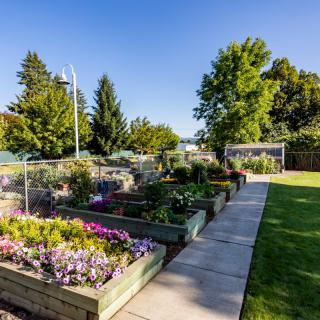
- The yard and garden are bright, quiet, and nice, which Mom would like.
- Privately owned settings suit them better than corporate ownership.
Cons
 The reviewer does not recommend the facility based on their experience.
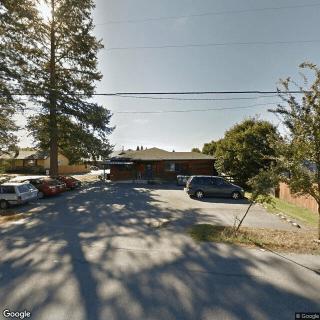
- The staff regularly blocks the road with their cars, preventing residents from leaving.
- The staff do not answer the phones, forcing the reviewer to knock and enter to get attention.
- The facility was not locked to protect residents’ safety, allowing outsiders or residents to move about unseen.
- The reviewer would not trust the facility with a family member or loved one.
- When raising concerns, staff were too busy in another meeting to speak with the reviewer.
- A staff member answered the phone but did not actually respond, so calls did not go through.
Review
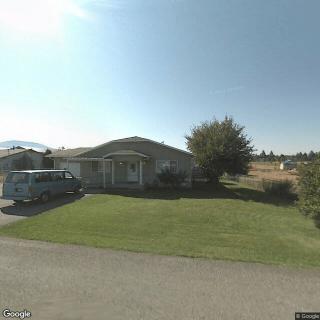
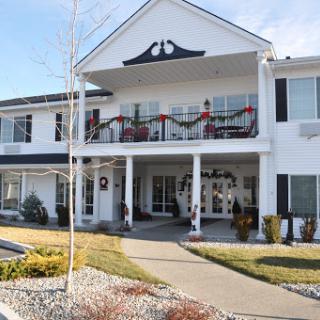
Larks Haven in Hayden is best suited for families seeking a small, home-like alternative to a larger, institutional setting. The environment described by residents and visitors is intimate, quiet, and casual, with a genuine emphasis on a private ownership model rather than a corporate chain. This makes it a sensible fit for an elder who thrives in a warm, low-key atmosphere, values personal attention from a small staff, and appreciates a garden or yard where a loved one can enjoy outdoor time. For families prioritizing a cozy, “group home” vibe over hospital-like amenities, Larks Haven can feel like the right fit.
But this is not the place for those who require strong safety protocols and consistently reliable communication. Alternatives should be considered if safety and oversight are non-negotiable priorities. The negative experiences cited by reviewers, unlocked doors, parking that blocks access, and staff who were hard to reach or unavailable, signal a gap in basic safety controls and responsive communication. If 24/7 nursing, strict incident reporting, clear call-back routines, and predictable staffing are essential, a larger or more formally managed facility may be a safer match. Families should also consider whether they need a more structured environment with defined policies around access and visitability.
The positive aspects do land some substantial value on the table, and they help offset certain trade-offs for the right resident. A small, cheerful, administrator-led operation tends to foster warmth, quick familiarization, and a level of personalized touch that larger campuses often struggle to sustain. The setting’s brightness, quiet grounds, and the sense of a privately owned home can create comfort and familiarity for an elder who prefers a casual daily rhythm over rigid schedules. For someone who can function with light supervision and minimal clinical needs, these strengths can translate into real quality-of-life benefits.
However, the gaps are material enough to require careful scrutiny. The strongest red flags revolve around security and responsiveness: doors that aren’t consistently secured, a roadway routinely congested by staff vehicles, and phone calls that go unanswered. The mixed experiences on staff availability, being told a staff member is in a meeting or otherwise occupied, also highlights potential inconsistencies in day-to-day coverage. In short, the warmth of the staff and the homelike ambiance do not wholly compensate for what could become safety-related stress or delayed problem resolution, especially for residents who require visible supervision or rapid escalation of issues.
The review mix, two high-creds and two mid-range positives alongside two grave concerns, speaks to variability in day-to-day operations. This suggests that while some families have had genuinely positive, home-centered experiences, others have encountered operational lapses that can erode trust quickly. The privately owned angle is a double-edged sword: it can yield nimble, personalized care when it’s functioning well, but it can also mean fewer formalized protocols than a larger, corporate setting. Prospective residents should weigh the value of a tightly knit, person-centered routine against the risk of uneven execution and inconsistent safety practices.
Bottom line: Larks Haven can be a viable choice for a resident who wants a small, quiet, home-like environment with a personable administrator and a garden-friendly setting, provided that safety oversight and reliable communication can be verified and maintained. For families where risk tolerance is higher than tolerance for occasional communication gaps, or where immediate assurance of security and access control is non-negotiable, exploring alternatives is the prudent path. Counsel should include a focused tour that probes safety systems, staff presence on the floor, access controls, and a clear plan for how phone and emergency communications are handled. If those checks come back solid, Larks Haven offers a likable, intimate option; if not, it’s wise to keep looking until a smaller, consistently managed or more highly staffed setting is found.
 Board and Care Home
 Cats allowed
 Dogs allowed
 Activities off-site
 Bath tubs
 Devotional services off-site
 Indoor common areas
 Outdoor common areas
 Private
 Private bathrooms
 Respite or short term stays offered
 Wheelchair accessible showers
 Diabetic care
 High acuity care
 Incontinence care
 Medication management
 Meals provided
 Adventist services
 Buddhist services
 Islamic services

 Fecal Incontinence in Older Adults: A Comprehensive Guide
 Recognizing the Journey: Understanding and Navigating Anticipatory Grief
 Encouraging Participation in Adult Day Care: A Guide to Supporting a Hesitant Parent