
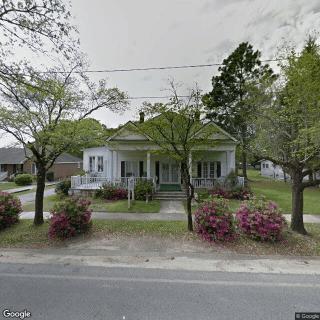
414 West Main Street, Swainsboro, GA 30401
For more information about senior living options: (866) 208-4318
Overall Review of Retirement Inn
Pros
 The new owners are wonderful.
- The staff is the best.
- The staff is highly trained.
- The home is licensed for 24 residents and has sufficient staff to cover them as required by Georgia state regulations.
- It is an awesome place for mom or dad to stay.
- They provide assistance with medications, bathing, laundry, meals, and more.
- They provide information on how to apply for financial assistance.
- Some residents still drive, indicating independence.
- Using the parents' own furniture and belongings made things go smoother.
Review
This community is best suited for families seeking an intimate, caregiver-first assisted living option for a parent who benefits from reliable medication management, daily living support, and a personal touch, without requiring the resources of a large campus. Swainsboro’s Retirement Inn operates with a tight, 24-bed license, and the current leadership is clearly focused on hands-on oversight. The new owners bring two registered nurses into the ownership group, and the staff is described as highly trained and attentive. For families evaluating how care feels day to day, this combination typically translates into quicker responses, clearer medical coordination, and more personalized attention than larger facilities working through layers of administration.
Those who may want to consider alternatives are those whose loved ones require higher acuity medical supervision, memory-care specific programming, or a broader menu of on-site therapies and activities. If robust, on-site rehab, dementia care options, or frequent social programming across a wide array of modalities are non-negotiables, a larger community with dedicated memory care cohorts and expansive activity schedules may better meet expectations. Families seeking aggressive clinical management, 24/7 advanced nursing support, or specialized equipment and services may find a smaller, 24-bed setting less suited to evolving needs.
The strongest pros here center on staffing excellence and practical, resident-centered care. With owners who are registered nurses and a staff described as the best and highly trained, care delivery tends to be more consistent and medically informed than in many comparable small homes. The licensed capacity of 24 ensures staffing ratios stay manageable and visible, which translates to medication support, assistance with bathing, daily laundry, and meals being delivered with reliable oversight. The facility’s willingness to provide guidance on financial assistance adds a concrete path for families navigating affordability, reducing the stress of the transition and ongoing costs.
Another compelling advantage is the ability to preserve a familiar, home-like environment. Residents can continue using their own furniture and belongings, smoothing the transition for aging parents and helping to maintain continuity of daily routines. The mention that a portion of residents still drive signals an emphasis on maintaining a degree of independence where possible, which can be reassuring for families balancing safety and autonomy. These elements, personalization, independence where feasible, and direct access to nursing leadership, tend to offset the limits of a smaller footprint by delivering reassurance on care quality, safety, and adaptability.
Operational history and leadership clarity further strengthen the decision. The home’s sale in 2012 and the positive assessment of current ownership imply a stable, hands-on approach rather than a distant corporate model. The owners’ nursing backgrounds combined with a staffing strategy that meets Georgia’s regulatory expectations create a predictable, accountable care environment. For families who prioritize clarity of responsibility, knowing exactly who coordinates medications, who reviews care plans, and who is available for urgent questions, this setup provides a level of certainty that larger, impersonal campuses often struggle to match.
Ultimately, Retirement Inn in Swainsboro presents a practical, evidence-based choice for families seeking a small, nurse-led community that can reliably manage daily care tasks while offering personal warmth and affordability. It excels where personal attention, medical oversight, and a home-like setting matter most, and it does so with a transparency about finances and a willingness to accommodate familiar belongings. If the goal is a high-touch, low-friction transition for a parent who does not require expansive medical complexity or high-end amenities, this option should rise to the top of the shortlist. If the criteria include extensive memory-care specialization, expansive activity programming, or a large, diversified clinical team, alternative communities with broader capacity and specialized tracks deserve consideration.
 24 resident community capacity
 Assisted Living
 Beauty salon
 Cable or satellite TV
 Dining room
 Fully furnished
 Garden
 Housekeeping services
 Kitchenette
 Move-in coordination
 Outdoor space
 Restaurant-style dining
 Small library
 Telephone
 Wi-Fi/high-speed internet available
 24-hour call system
 Activities of daily living assistance
 Assistance with bathing
 Assistance with dressing
 Assistance with transfers
 Diabetes diet
 Medication management
 Mental wellness program
 Special dietary restrictions


 Social Security Benefits and Assisted Living: Navigating Options Across the U.S.
 An Extensive Exploration of the VA Aid and Attendance Benefit
 Senior Transition Services: Understanding Their Role, Cost, and Importance