
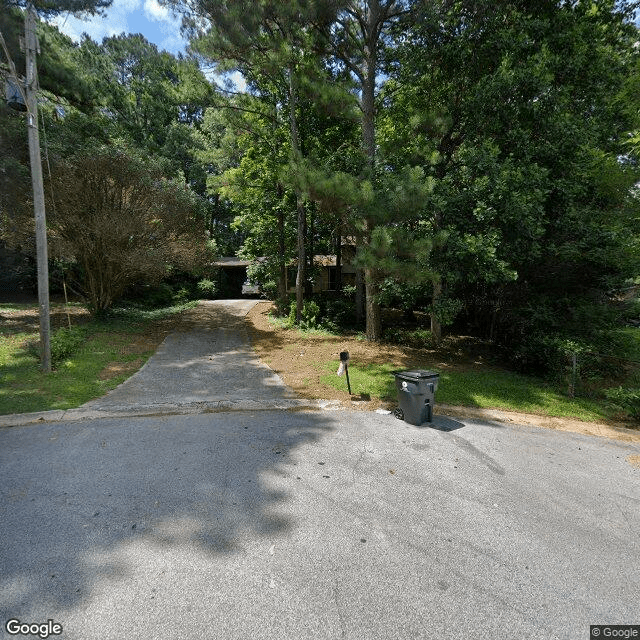
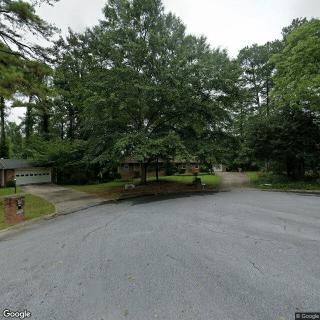
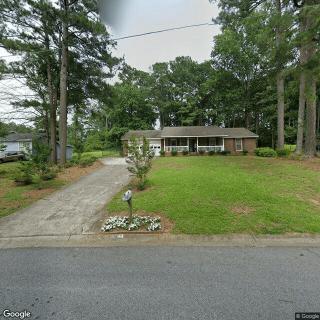
1241 Creek Bark Court, Riverdale, GA 30296
For more information about senior living options: (866) 208-4318
Angels Royal Gardens III Costs & Pricing
Angels Royal Gardens III offers a competitive monthly cost for its private room option at $1,599, which is significantly lower than the averages in both Fulton County and the broader state of Georgia. In Fulton County, the average monthly cost for similar accommodations is approximately $3,203, while across Georgia, residents can expect to pay around $2,864. This pricing structure positions Angels Royal Gardens III as an attractive choice for those seeking quality care without the burden of excessive expenses, making it a noteworthy option for families exploring assisted living facilities in the area.
| Floor plans | Angels Royal Gardens III | Fulton County | Georgia |
|---|---|---|---|
| Private | $1,599 | $3,203 | $2,864 |
Memory care communities with a similar price nearby
-
from -$249 / mo
Le'glen Personal Care Home
$1,350 to $2,150 / month10.0 miles away -
from +$201 / mo
Agape Haven Personal Care Home
$1,800 to $2,000 / month22.5 miles away -
About the same
My Care Your Care Home
$1,600 to $1,900 / month24.2 miles away -
from -$99 / mo

Joy's Manor Pch
$1,500 to $4,000 / month16.6 miles away -
from +$201 / mo

Grosvenor Home
$1,800 to $2,500 / month21.3 miles away
Overall Review of Angels Royal Gardens III
Pros
 This place was good until the caretaker left in September.
- The initial impression of the place was positive.
Cons
 The new caretaker is racist and dislikes white people.
- The caretaker allegedly spoke to him differently, fed him poorly, and spit in the aluminum water container given to him.
- Others received bottled water instead of him.
- There was a theft from him, including a check that was stolen and cashed.
- The bank and police will be involved.
Review
Angels Royal Gardens III in Riverdale, Georgia appears best suited for families seeking a small, home-like care setting where residents can receive attentive, personal attention when staffing remains stable. The lone review notes that “this place was good until the only caretaker left in September,” signaling that prior performance was solid but heavily dependent on continuity. In practice, that means the model works when one caregiver is consistently on site, with straightforward communication and a simple routine. For families prioritizing a tight-knit environment and direct access to staff, this facility can feel appropriate, provided staffing stability is maintained. The caveat is clear: the moment turnover enters the equation, care quality becomes unpredictable and the setting stops feeling reliable.
Explicitly, families should consider alternatives if long-tenured staff, dependable safety, and uncompromised resident dignity are non-negotiables. The review centers on serious concerns tied to the current caregiver after September: alleged discriminatory behavior, differential treatment, and questionable hydration practices, including claims that water container handling differed from other residents. There are further accusations of theft involving a check. While these are unverified by independent sources here, they are not trivial, and they illuminate a risk profile that could compromise safety, respect, and financial security. Even if management has attempted corrective steps since the turnover, the existence of such allegations is a compelling warning flag. For families with clear expectations around fairness, safety, and anti-discrimination, seeking communities with stronger oversight is prudent.
Pros, where visible, remain precarious in light of the reported issues. The period when care was described as good hints at what the facility can achieve with stable staffing: responsive routines, genuine interpersonal connection, and nimble daily support. However, those potential advantages rest on continuity. A single staffing collapse, especially when coupled with concerns about how new personnel treat residents and manage basic needs, erodes the confidence necessary for a sound care decision. In practical terms, any small, intimate setting becomes a liability if turnover is frequent or if new staff bring behavior that jeopardizes dignity and safety. The positive impression from the pre-turnover period does not meaningfully offset the current risks for families who require unwavering reliability.
For decision-making, concrete verification matters far more than impression. Prospective residents should demand a thorough outline of the staffing model: how many caregivers per shift, how turnover is monitored, and what retention strategies exist. Require transparent incident reporting, access to background checks and ongoing training documentation, and a clear grievance process. Assess how the facility protects residents’ belongings and funds, including payment workflows and check handling, to minimize vulnerability. In tours, push for conversations with multiple staff members, not just the primary caregiver, to gauge consistency and culture. Insist on a written care agreement, explicit expectations, and a defined escalation path if standards slip, with a trial period to test reliability before any long-term commitment.
Families evaluating options should weigh the emotional and financial costs of a move against the potential risk of instability. The single-star verdict, paired with the described narrative, suggests a low tolerance for staff turnover and possible mistreatment. If other communities show longer staff tenures, stronger resident-rights protections, and more transparent incident handling, they will likely deliver more predictable daily life and greater peace of mind. It also matters how meals, hydration, and activity programming align with the resident’s preferences and dignity, these elements convert basic care into a meaningful quality of life. In short, a setting that prioritizes consistency, respect, and trustworthiness in its caregivers should be the baseline; Angels Royal Gardens III presently falls short of that benchmark for most families.
Bottom line: Angels Royal Gardens III is likely a poor fit for families unable to tolerate material staffing instability or the risk of discriminatory treatment and theft. The positives, when they appeared, depended on stable, attentive care, which the September turnover has called into question. Alternatives with longer-tenured staff, stronger oversight, and transparent safeguarding measures should be prioritized. If exploration of this community continues, demand verifiable assurances, a robust written care agreement, and a clear exit mechanism if standards are not met. The practical takeaway is clear: choose a setting where continuity, dignity, and safety are non-negotiable, and treat this facility as a cautionary reference rather than a trusted baseline.
 3 resident community capacity
 Assisted Living
 Board and Care Home
 Memory Care
 Activities off-site
 Beautician on-site
 Cable or satellite TV
 Devotional services off-site
 Dining room
 Fully furnished
 Garden
 Housekeeping services
 Indoor common areas
 Move-in coordination
 Outdoor common areas
 Private
 Telephone
 Wi-Fi/high-speed internet available
 William B Hartsfield-Atlanta International (5 miles away)
 24-hour supervision
 Ambulatory care
 Assistance with bathing
 Assistance with dressing
 Assistance with transfers
 Diabetes diet
 Diabetic care
 High acuity care
 Incontinence care
 Meal preparation and service
 Medication management
 Special dietary restrictions
 Transportation arrangement (medical)
 Transportation to doctors appointments




 Comprehending Evening Confusion in Dementia: Causes, Manifestations, and Support
 Delirium and Dementia: Unraveling the Key Differences
 Are Dementia and Alzheimer's Disease Lethal? A Comprehensive Exploration