
804 Shady Bank Ct, Macon, GA 31220
For more information about senior living options: (866) 208-4318
Overall Review of Shady Bank - Community Living Arrangement
Pros
 Rescare is committed to addressing customer concerns promptly.
- The Macon office focuses on accountability and resolving issues.
- Rescare aims to maintain professional and courteous communication with clients.
- The organization strives to learn from feedback to improve service delivery.
- It places importance on earning the trust of homeowners and veterans through responsible care.
Cons
 An employee from Rescare damaged the mailbox and did not inform the owner.
 - The owner had to discover the damage themselves after reviewing security footage.
- Michelle Ingram was rude, disrespectful, and unconcerned about resolving the issue.
- She refused accountability and repeatedly cited the company’s size as justification for the damage.
- She hung up on the owner multiple times, showing no professionalism or empathy.
- The reviewer finds the treatment disgusting and is concerned about how seniors in their care might be treated.
- The reviewer, a veteran and homeowner, finds Rescare’s behavior disturbing and unacceptable.
Review
Shady Bank - Community Living Arrangement in Macon, GA is best suited for budget-minded residents who want a straightforward, low-overhead living option and can tolerate limited, and sometimes reactive, oversight from management. This is the kind of setting families consider when cost and location matter more than highly structured service delivery or proactive problem resolution. It serves a niche where residents accept that accountability from leadership will be uneven and where the emphasis is on basic lodging rather than a comprehensive care experience.
The case presented centers on a troubling incident: a Rescare employee damaged a mailbox, with the resident discovering the damage via security footage rather than being informed directly. The Macon office contact, Michelle Ingram, is described as rude, disrespectful, and entirely unconcerned about resolving the issue. Her response was to highlight the company’s size rather than address the harm, including hanging up during conversations and offering no apparent empathy or accountability. This sequence raises a clear red flag: the lack of professional communication, combined with what appears to be a downstream lack of ownership when errors occur, directly undermines trust in the staff’s ability to safeguard residents’ interests.
In evaluating what this means for a family evaluating options, the absence of evident compensating advantages is striking. The facility’s negative communication experience eclipses any potential convenience, such as location or basic lodging, because the core concerns revolve around property protection, responsible incident handling, and respectful, solution-oriented contact with families. When a provider normalizes brusque, dismissive behavior in the face of damage or complaints, the overall environment becomes inhospitable to residents who rely on staff to respond with care, clarity, and accountability. The account signals a breakdown in basic customer service that directly translates into risk for residents and their families.
Those who should consider alternatives are mostly families who cannot accept inconsistent management, poor complaint handling, or signs that staff training and accountability are uneven. If dependable issue resolution, respectful communication, and transparent processes matter, and they should for anyone evaluating care options for loved ones, then explore other community living arrangements with documented commitments to resident safety and proactive service recovery. This is also a strong signal to compare providers that emphasize staff accountability, clear escalation paths, and demonstrable remediation when property or personal boundaries are violated.
When evaluating a prospective community, several practical steps help separate lighting from reality. Ask for a written policy on property damage and incident remediation, and request examples of how similar situations were resolved. Inquire about staff screening, ongoing training, and a clear chain of responsibility for complaints, including who handles follow-up and how families are updated. Speak directly with current residents about responsiveness to concerns and with multiple staff members about communication norms. Check the facility’s licensing history, third-party reviews, and any independent audits to confirm consistency beyond a single negative experience.
Overall, the takeaway is decisive: this particular community presents a meaningful risk in terms of staff behavior, accountability, and problem resolution. For families prioritizing safety, respect, and reliable service recovery, alternatives with stronger governance and more consistent customer care are strongly advised. If pursuing Shady Bank, proceed with extreme diligence, obtain assurances in writing, review incident-handling protocols, and demand concrete commitments on accountability before any placement. The contrast between cost considerations and the quality of daily interactions will weigh heavily in the decision, and in this case, the scales tip toward seeking other options that place higher emphasis on resident dignity and responsible leadership.
 4 resident community capacity
 Assisted Living
 Cable or satellite TV
 Dining room
 Fully furnished
 Garden
 Housekeeping services
 Move-in coordination
 Outdoor space
 Telephone
 Wi-Fi/high-speed internet available
 Middle Georgia Regional (12 miles away)
 24-hour supervision
 Activities of daily living assistance
 Assistance with bathing
 Assistance with dressing
 Assistance with transfers
 Diabetes diet
 Meal preparation and service
 Medication management
 Special dietary restrictions
 Transportation arrangement (medical)
 Transportation to doctors appointments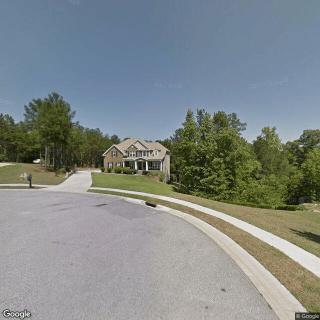


 Understanding Medicaid Coverage for Assisted Living: A Comprehensive Guide
 How and When Medicaid May Cover Assisted Living Costs
 A Detailed Exploration of Assisted Living Medicaid Waivers Across the United States