
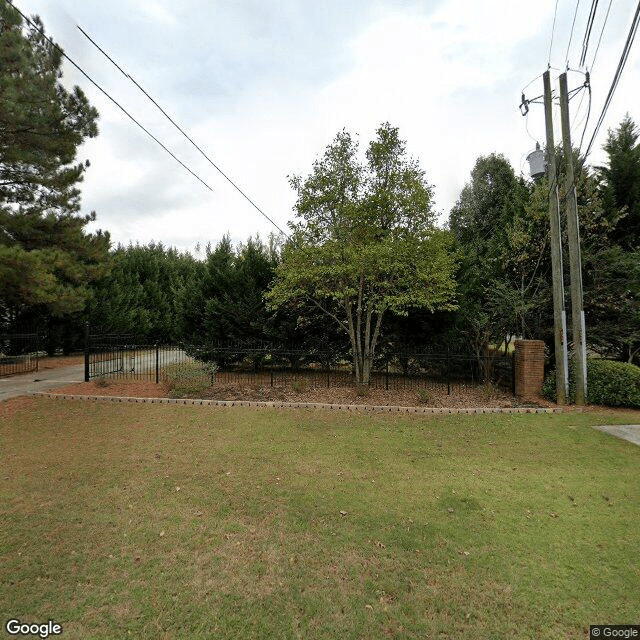
730 Tab Roberts Road, Lawrenceville, GA 30043
To contact a resident: (770) 807-6989
For more information about senior living options: (866) 208-4318
Ana's PHC #2 Costs & Pricing
At Ana's PHC #2, the costs for room accommodations are notably competitive when compared to both Gwinnett County and the broader state of Georgia. For a semi-private room, Ana's rates at $2,500 per month position it slightly below the county average of $2,530 and the state average of $2,529. Similarly, in the private room category, Ana's pricing is set at $3,500, which remains lower than Gwinnett County's average of $2,551 but is higher than Georgia's state average of $2,864. This strategic pricing reflects a commitment to providing accessible care while ensuring that residents receive quality services in a comfortable environment.
| Floor plans | Ana's PHC #2 | Gwinnett County | Georgia |
|---|---|---|---|
| Semi-Private | $2,500 | $2,530 | $2,529 |
| Private | $3,500 | $2,551 | $2,864 |
Senior living communities with a similar price nearby
-
from +$350 / mo
Miss Willie's Manor
$2,850 to $3,250 / month14.2 miles away -
About the same
Eden Home Care
$2,500 / month9.9 miles away -
About the same
Loving Angels Home Care
$2,500 / month8.7 miles away -
About the same

A & C Personal Care Home
$2,500 to $4,000 / month16.1 miles away -
About the same

Golden Manor Senior Living
$2,500 to $4,445 / month1.3 miles away
Overall Review of Ana's PHC #2
Pros
 The staff are very kind and loving toward residents.
- The staff are caring and attentive to residents' special meal needs.
- The meals are very good and residents are pleased with the variety.
- The community is very clean.
- They offer a lot of nice activities for residents who want to participate.
- Ana and her staff are super sweet.
- The facility is highly recommended for great care.
Cons
 The reviewer wishes the staff would pick up the resident's medicine instead of relying on the family.
- The reviewer notes that other locations pick up medicine for residents, implying this facility is lacking in that service.
- The reviewer expresses dissatisfaction with the medication pickup arrangement.
Review
Ana's PHC #2 in Lawrenceville, GA is best suited for seniors who want a warm, home-like setting where caregivers provide tangible, attentive support, and where meals, daily activities, and personal care feel tailored rather than industrial. This community fits residents who value a small-house feel, consistent warmth from staff, and a schedule that accommodates personal preferences. Families seeking a nurturing environment with a clearly caring ownership, and a setting that emphasizes daily engagement over institutional formality, will find Ana’s PHC #2 a compelling match.
Those weighing alternatives should consider whether robust medical oversight is a priority. The reviews hint that medication management, specifically medication pickup or pharmacy coordination, may not be part of the standard offering, which could be a decisive factor for residents who rely on routine medication handling within the care setting. For seniors requiring frequent nursing visits, complex medical monitoring, or memory-care specialized services, larger campuses with dedicated medical programs might be a more suitable fit. In short, the community shines as a personal, caring home, but it may not be the best match when high-level medical coordination is non-negotiable.
The strongest pros, genuine kindness and attentiveness from staff, meals that meet special dietary needs with variety, and a consistently clean, welcoming environment, create a powerful offset to the main concern about medication logistics. Caregivers who remember individual preferences and dietary restrictions translate into tangible peace of mind for families. The meals are described as good and varied, which supports daily quality of life and reduces the stress of mealtime negotiations. A clean atmosphere reinforces safety and comfort, while a range of activities ensures social engagement for residents who want to participate, rather than sit passively through the day. These factors collectively cultivate a sense of security and belonging that is hard to replace in larger facilities.
The personnel dynamic at Ana’s PHC #2 stands out as a differentiator. Ana and her team are perceived as warm, patient, and reliable, with a leadership presence that anchors the home’s culture. This personal leadership translates into a consistently welcoming lived experience, making the environment feel less like an institution and more like a cared-for home. The inclusion of visitors and external programming, preachers and other activity facilitators, adds a familiar cadence of routine that can ease anxiety for residents and reassuring certainty for families. Yet, the same potency of personal care underscores the gap for those who expect a fully integrated medication service and more formal medical oversight.
Practical decision-making hinges on aligning expectations with what is feasible in this setting. If independence is valued but with reliable companionship, and if meals, cleanliness, and social activity are top drivers, Ana’s PHC #2 delivers convincingly. The potential shortfall in medication coordination is concrete enough to warrant diligence: confirm whether pharmacy pickup can be arranged through a companion option, or whether a family member must manage this outside the facility. Prospective residents should also verify the availability of visiting clinicians or on-site nursing support to determine how far the current model can accommodate evolving medical needs without sacrificing the home-like atmosphere.
In the end, the best-fit profile is a senior who seeks a caring, intimate environment with strong staff relationships, high-quality meals, and a clean, activity-friendly home. If that aligns with the family’s priorities, Ana’s PHC #2 stands out as a credible, dependable choice. If, however, medication logistics and hands-off nursing oversight are non-negotiable requirements, it will be essential to explore other options and compare how they manage pharmacy coordination, regular medical visits, and memory-care supports. A candid visit, with direct questions about med handling, staffing patterns, daily schedules, and resident-facing routines, will crystallize whether this community meets the specific, practical demands of the decision.
 Board and Care Home
 Cats allowed
 Dogs allowed
 Activities off-site
 Bath tubs
 Devotional services off-site
 Indoor common areas
 Outdoor common areas
 Private
 Private bathrooms
 Respite or short term stays offered
 Wheelchair accessible showers
 Diabetic care
 High acuity care
 Incontinence care
 Kosher
 Adventist services
 Buddhist services
 Islamic services

 Skilled Nursing Facilities vs. Nursing Homes: Making Sense of the Differences
 A Detailed Examination of Nursing Home Costs Across the U.S.
 Exploring Nonmedical Home Care: Understanding Services, Costs, and Financial Approaches