










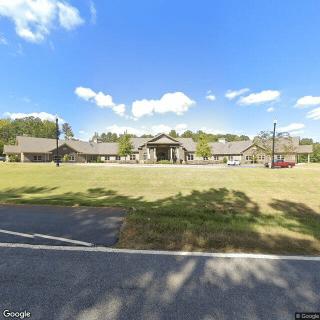
419 Airport Road, Griffin, GA 30224
For more information about senior living options: (866) 208-4318
Village At Renaissance Costs & Pricing
The Village At Renaissance offers competitive pricing for its living accommodations, aligning closely with regional and state averages. For a 1-bedroom unit, the cost at Village At Renaissance is $3,000 per month, which is slightly above the Spalding County average of $2,975 but below the Georgia state average of $3,412. Meanwhile, studio apartments are priced at $3,500 monthly; again, this figure is lower than the state average of $3,520 but higher than the county's average of $3,156. These rates reflect not only the quality of care and amenities available at Village At Renaissance but also their commitment to providing value in comparison to both county and statewide costs.
| Floor plans | Village At Renaissance | Spalding County | Georgia |
|---|---|---|---|
| 1 Bedroom | $3,000 | $2,975 | $3,412 |
| Studio | $3,500 | $3,156 | $3,520 |
Assisted Living communities with a similar price nearby
-
About the same
River Place
$3,000 / month18.6 miles away -
from +$500 / mo

Oaks at Eagles Landing
$3,500 to $4,200 / month23.1 miles away -
from +$192 / mo

Arbor Terrace Peachtree City
$3,192 to $5,073 / month19.2 miles away -
from +$450 / mo

Oaks at Stockbridge
$3,450 to $3,950 / month20.4 miles away -
from +$550 / mo

The Reserve At Peachtree City
$3,550 to $6,700 / month21.0 miles away
Overall Review of Village At Renaissance
Pros
 The Village Senior Living feels like a welcoming home, with helpful and friendly staff.
- Pat and the staff are terrific.
- The staff are knowledgeable about residents' care needs and answer questions.
- The food is good, with plenty of meal options.
- The facility is clean, and housekeeping keeps rooms well maintained.
- The staff are attentive, and there is very good communication with them.
- The community offers daily activities such as bingo and exercise classes.
- The Village at Renaissance staff take very good care of residents.
Cons
 The facility is very unreliable; calls are redirected and never returned.
- After a relative’s death, all of her belongings went missing.
- They had to wait a month to get the death certificate signed, despite calling multiple times.
- Medicaid is accepted by only a few, which makes it hard and is a headache.
- Renaissance Center is absolutely horrible; the building smells of mildew and urine and isn’t properly cleaned.
- There are neglect issues, with patients left in their own urine and feces for hours.
- The facility is severely understaffed, with only two nurses for 28 patients per hallway per shift.
- Residents roam the halls unsupervised and staff don’t seem to care or can’t be found.
- This facility should be investigated and shut down.
- The meals are not good; there are limited options and residents are often made to eat in their rooms.
- The airport nearby creates noise and is a drawback.
- It is an expensive place, costing around $3,000 a month, and care feels overly profit-driven.
- They don’t offer flu shots; a family member must transport the resident elsewhere to get one.
- There is too much drama among staff and residents are sometimes ignored.
Review
Village at Renaissance in Griffin, Georgia is best suited for seniors who want a warm, home-like setting with steady daily engagement and staff who know residents by name. The community works well for families navigating budget constraints, since several reviewers describe it as an affordable option when Medicaid coverage is available and private-pay costs are a concern. It delivers a familiar, clean environment with friendly faces, routine activities, and straightforward care. The emphasis is on daily assistance, companionship, and an atmosphere that feels approachable rather than clinical. It is less appropriate for those seeking top-tier medical oversight, rapid clinical responsiveness, or luxury amenities.
Those who should consider alternatives include families for whom reliability and proactive communication are non-negotiable. Several reviewers report inconsistent returns on calls and slow handoffs, and at least one recounts delays in important administrative tasks. The sense of unpredictability around leadership and accountability suggests this may not be the best fit for those who prize transparent problem-solving and consistently timely updates. Residents with complex medical needs requiring robust, on-demand clinical management or more expansive memory-care programming may not find the intensity of oversight they require here.
On balance, the strongest offset to these concerns is a genuinely caring staff and a homey, attentive culture. Families repeatedly note staff who answer questions, monitor needs, and treat residents with respect. The facility is described as clean and reasonably quiet, with dependable housekeeping that supports a comfortable living environment. Daily activities, bingo, exercise opportunities, and social gatherings, help residents stay engaged and connected, which matters when mobility or cognitive issues arise. For families prioritizing personal attention, warmth, and a sense of belonging, these positives carry significant weight.
Operational realities temper the positives, however. Some accounts point to tight staffing and interpersonal drama among staff that can translate into slower responses during peak times. Yet, the presence of on-site resources, including healthcare professionals and social support staff, plus generally open lines of communication with families, provides a framework for managing care plans effectively when the system functions smoothly. The campus location, with proximity to medical facilities, supports coordinated care when needed, even as dining experiences and menu variety receive mixed reviews from residents and families.
Cost and eligibility details loom large in the decision. Several reviewers frame Village at Renaissance as a more budget-conscious option, with Medicaid covering much of the cost for many residents and private-pay rates that are not prohibitive relative to higher-end alternatives. The trade-off referenced by critics is a perception of cost dynamics tied to a for-profit model and the possibility that care quality may hinge on staffing and administrative cycles. For families evaluating long-term affordability, these considerations require careful, conservative planning rather than an optimistic tilt toward savings at move-in.
Bottom-line guidance: this community makes practical sense for seniors who value a home-like atmosphere, steady daily care, and family involvement, provided that reliability of administration and comprehensive medical oversight are not the sole deciding factors. A targeted visit with explicit questions about response times, care planning processes, and current staffing levels will reveal how well the reality aligns with expectations. If quick, consistent administrative communication, robust memory-care programming, and access to upscale amenities are priorities, it would be prudent to explore alternatives first. For families balancing budget with personal connection and daily quality of life, Village at Renaissance offers a workable, if imperfect, option worth serious consideration.
 35 resident community capacity
 Assisted Living
 Respite Care
 Cats allowed
 Dogs allowed
 Activities off-site
 Air-conditioning
 Beautician on-site
 Cable or satellite TV
 Devotional services off-site
 Dining room
 Fully furnished
 Garden
 Housekeeping services
 Indoor common areas
 Kitchenette
 Move-in coordination
 Outdoor common areas
 Restaurant-style dining
 Small library
 Telephone
 Wheelchair accessible showers
 Wi-Fi/high-speed internet available
 24-hour call system
 Ambulatory care
 Assistance with bathing
 Assistance with dressing
 Assistance with transfers
 Diabetes diet
 Diabetic care
 High acuity care
 Incontinence care
 Medication management
 Mental wellness program
 Special dietary restrictions



 Securing Financial Support for Assisted Living: A Comprehensive Overview
 Social Security Benefits and Assisted Living: Navigating Options Across the U.S.
 An Extensive Exploration of the VA Aid and Attendance Benefit