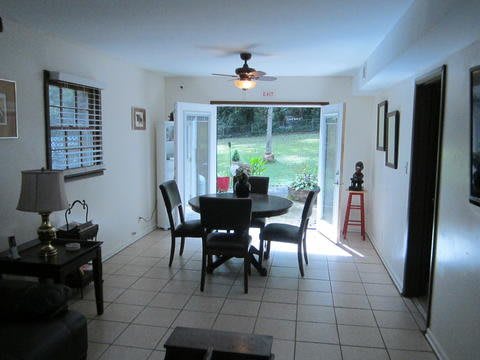
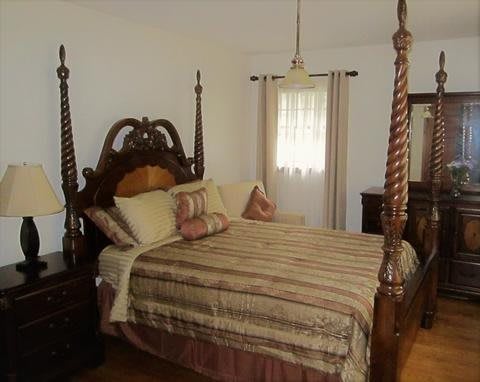
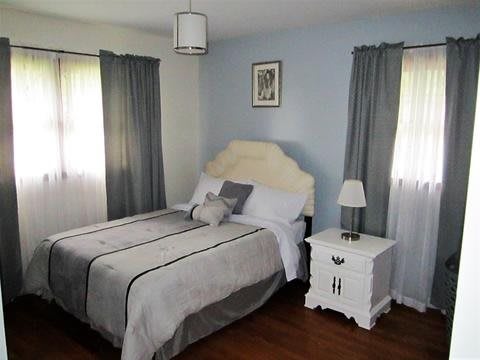
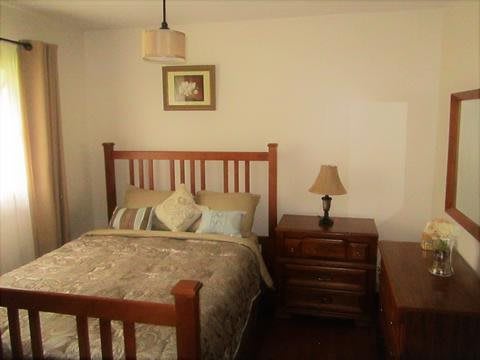
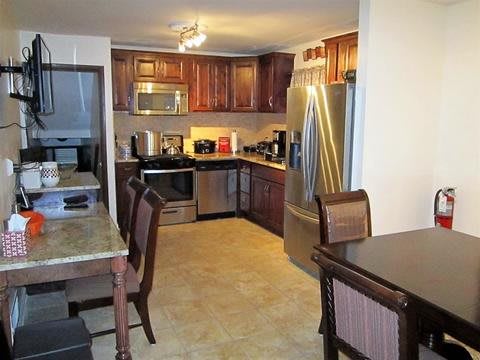




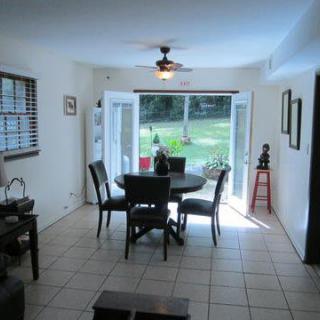
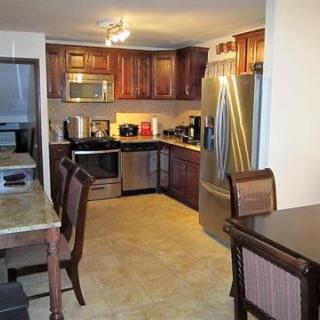

2230 Cedarbrook Ct, Atlanta, GA 30316
For more information about senior living options: (866) 208-4318
Mae House Costs & Pricing
Mae House offers private room accommodations at a monthly cost of $4,500, which is significantly higher than the average rates in both Fulton County and the broader state of Georgia. Specifically, the average monthly cost for a private room in Fulton County is $3,203, while statewide figures indicate an even lower average of $2,864. This pricing reflects Mae House's unique value proposition, potentially encompassing enhanced amenities or specialized services that cater to its residents' needs. While it may seem steep compared to local and state averages, this investment likely underscores a commitment to quality care and an inviting living environment that aims to enrich the overall experience for its residents.
| Floor plans | Mae House | Fulton County | Georgia |
|---|---|---|---|
| Private | $4,500 | $3,203 | $2,864 |
Assisted Living communities with a similar price nearby
-
from +$400 / mo

Safe Haven at Brookhaven
$4,900 / month9.9 miles away -
About the same

The Mansions at Sandy Springs
$4,550 to $6,990 / month17.3 miles away -
from +$495 / mo

Timber Lake - Community Living Arrangement
$4,995 / month22.1 miles away -
from +$240 / mo

Sunrise of Five Forks
$4,740 to $7,710 / month17.6 miles away -
from -$175 / mo

Legacy Ridge at Peachtree
$4,325 / month23.8 miles away
Overall Review of Mae House
Pros
 The visitor appreciated the tour of the beautiful facility.
- The visitor was glad they came.
- The management and staff were very helpful and informative.
Review
Mae House in Atlanta is best suited for seniors and families who prize a welcoming, aesthetically pleasing environment and a management team that can be trusted to guide the move with clarity. The community makes a strong first impression through its visibly well-kept public areas and a tour experience that feels open and informative. When the objective is to minimize the mystery around transition, knowing who will be available, how care is managed, and what life on campus looks like, the Mae House model delivers. It is a setting where resident-facing staff and leadership are clearly accessible, which matters when settling into a new routine.
Those with more demanding medical needs, memory care requirements, or the desire for a broad, activity-dense calendar may want to compare alternatives. The single positive review signals high satisfaction but leaves questions about care levels, specialized services, and cost unanswered. Prospective movers should seek other communities that publish detailed care plans, staff-to-resident ratios, and a full timetable of wellness offerings. In markets like Atlanta, options range from smaller, boutique operations to larger campuses with more on-site therapies; Mae House may sit toward the friendlier, smaller end of that spectrum, which is not inherently a drawback but matters in decision-making.
From the resident and family standpoint, the strongest pro is the staff and management's responsiveness. The tour was described as beautiful and informative, implying transparency and a willingness to invest time in families. This kind of engagement translates into practical peace of mind: questions are answered, concerns acknowledged, and the move-in process appears to be guided rather than left to chance. The environment itself reinforces trust, bright spaces, tidy rooms, and communal areas that feel cared for. For families that want a partner they can rely on during early weeks of adjustment, Mae House delivers that relational advantage.
Yet the decision calculus must acknowledge the gaps inherent in a single favorable review. The data set is thin, with no mentions of concrete pricing, dining quality, programming depth, safety metrics, or staffing specifics. Potential residents should verify comprehensive details, ask for a written care plan, and speak with current residents or their families about consistency of daily routines. Without broader corroboration, the perceived pros risk not translating into real-world satisfaction for every resident, especially those whose routines diverge from the tour experience.
The key pros, atmosphere, accessibility of leadership, and a responsive staff, offset many of the typical cons by offering a reassuring, low-friction transition. When the priority is emotional comfort, clear communications, and a facility that looks and feels well maintained, Mae House likely meets those expectations more reliably than some peers. However, the offset is not unlimited: if the resident's needs include robust medical oversight, a wide spectrum of therapies, or a highly structured daily schedule, the absence of documented depth could erode confidence over time. The prudent course is to pair the initial impression with rigorous follow-up checks.
Decision-makers should approach Mae House with an action plan. Schedule a second visit focused on concrete specifics: care levels supported, caregiver qualifications, daily activity calendars, dining options, emergency procedures, and transparent pricing with a clear contract framework. Prepare a short list of non-negotiables and compare Mae House against Atlanta options that deliver stronger evidence in those areas. For the right family, Mae House represents a compelling blend of beauty, warmth, and accessible management, an attractive fit for residents who prioritize relational comfort and a smooth onboarding; alternatives should be pursued if medical complexity or broad programming is non-negotiable.
 3 resident community capacity
 Assisted Living
 Board and Care Home
 Activities on-site
 Air-conditioning
 Bath tubs
 Cable or satellite TV
 Devotional services off-site
 Dining room
 Fully furnished
 Garden
 Housekeeping services
 Indoor common areas
 Move-in coordination
 Outdoor common areas
 Private
 Telephone
 Wi-Fi/high-speed internet available
 William B Hartsfield-Atlanta International (8 miles away)
 24-hour supervision
 Ambulatory care
 Assistance with bathing
 Assistance with dressing
 Assistance with transfers
 Diabetes diet
 Diabetic care
 High acuity care
 Incontinence care
 Meal preparation and service
 Medication management
 Special dietary restrictions
 Transportation arrangement (medical)
 Transportation to doctors appointments
 Art classes
 BBQs or picnics
 Birthday parties
 Forever fit
 Karaoke
 Stretching classes
 Wii bowling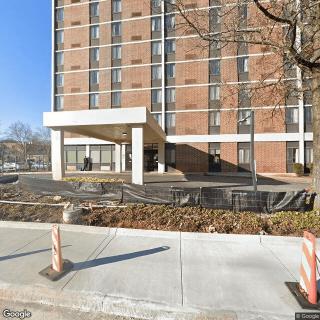



 Vibrant Senior Living: A Comprehensive Guide for Active Older Adults
 When to Transition from Assisted Living to Memory Care: Key Indicators, Steps, and Finding the Right Community
 Assisted Living and Memory Care: Understanding Their Core Differences