
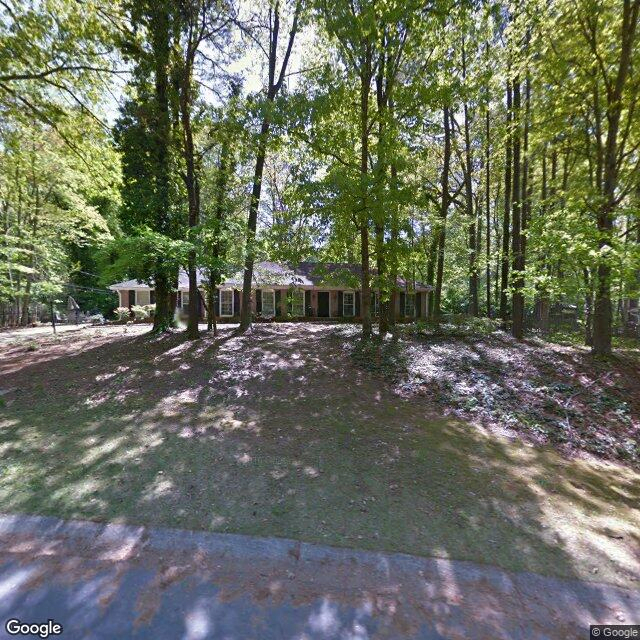
2743 Laurelwood Road, Atlanta, GA 30360
To contact a resident: (770) 337-7030
For more information about senior living options: (866) 208-4318
Laurelwoods Personal Care Home Costs & Pricing
Laurelwoods Personal Care Home offers competitive pricing in comparison to the broader market, making it an attractive option for those seeking assisted living services. For a semi-private room, residents can expect a monthly fee of $1,700, significantly lower than the Gwinnett County average of $2,530 and the state average of $2,529. Likewise, the private room rate at Laurelwoods stands at $2,400, which is notably more economical compared to the local county rate of $2,551 and the state average of $2,864. This positioning not only underscores Laurelwoods' commitment to providing affordable care options but also highlights its dedication to delivering quality support within a budget-conscious framework for families navigating long-term care decisions.
| Floor plans | Laurelwoods Personal Care Home | Gwinnett County | Georgia |
|---|---|---|---|
| Semi-Private | $1,700 | $2,530 | $2,529 |
| Private | $2,400 | $2,551 | $2,864 |
Senior living communities with a similar price nearby
-
from -$200 / mo
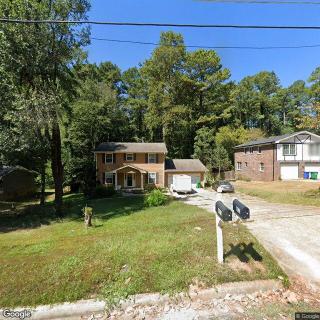
Americare Group
$1,500 / month11.1 miles away -
from +$100 / mo
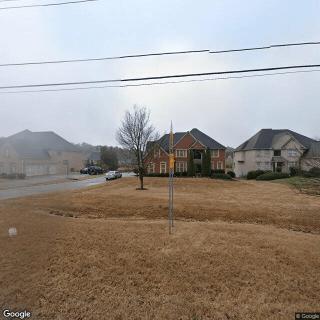
Lona Lisa's Assisted Living Home Inc.
$1,800 to $6,000 / month17.8 miles away -
from +$100 / mo
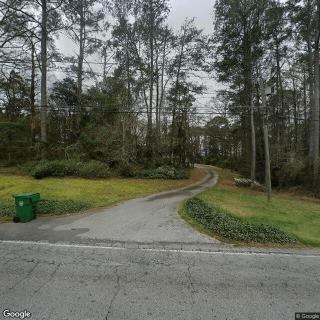
G & M Personal Care Home
$1,800 to $2,500 / month15.8 miles away -
from +$300 / mo
B&A Personal Care Home
$2,000 / month19.2 miles away -
from +$300 / mo

Senior Care America 2
$2,000 to $2,500 / month17.2 miles away
Overall Review of Laurelwoods Personal Care Home
Pros
 The care provided to residents is pretty good.
- The community is clean and well maintained.
- Residents enjoy the meals, which taste good.
- The staff are friendly and personable, and the house manager is very involved with the residents.
- Trevel is an amazing, patient, and caring caregiver who helps keep residents active.
- Laurelwoods Personal Care Home is a nice place that takes good care of the people who live there.
- Residents are happy with this arrangement.
Cons
 The reviewer notes the facility resembles a backroad elderly house with many seniors crammed together and no apparent state inspections of the interior or fire codes.
- They describe it as a rented house with two licensed CNA staff living in a trailer behind the house while the seniors are locked inside, suggesting that’s what one pays for.
- The reviewer regrets the visit and warns others to research before placing someone there.
- Another reviewer says the owner never comes around and that a visiting family member is rude, selfish, and disruptive, indicating poor visiting rules.
- They state the facility has not seen improvements or renovations in quite some time, implying neglect.
- They describe the house as old and dingy with old furnishings, with residents that can appear very out of it, even if the place is kept clean.
- They point out there are no visiting doctors or nurses, making medical monitoring difficult and requiring families to transport the resident for care.
Review
Laurelwoods Personal Care Home in Atlanta is best suited for families seeking a truly small, home‑like environment where a senior can get daily assistance without entering a large, campus‑style facility. The configuration supports a high level of personal attention: a maximum of eight residents, a couple of licensed caregivers who rotate on site, and an actively involved house manager. For seniors who respond well to routine, enjoy a calm, intimate setting, and value easy access to caregivers in a non‑institutional vibe, Laurelwoods can feel like the right fit. The upside is clear: familiarity, safer social interaction in a compact footprint, and a setting that often feels more like a private home than a care facility. The downside, however, is equally real, centered on medical oversight and the limits that come with a small operation.
Those who should consider alternatives are the families facing higher medical needs or complex care demands. If a resident requires regular on‑site nursing, visiting physicians, or more intensive monitoring of medications, Laurelwoods’s model falls short. The reviews repeatedly flag the absence of on‑site doctors or nurses, with care limited to medication distribution and external medical appointments arranged by family. For memory care, post‑acute rehabilitation, or frequent lab work and doctor follow‑ups, a larger, more equipped community with integrated clinical staff should be the default path. Ownership and oversight questions also loom; some reviewers describe a setup where the owner is not consistently present, raising concerns about governance and accountability.
On the positive side, the strongest assets are cleanliness, a well‑kept home atmosphere, and a staff that residents and families speak about with warmth. Several reviewers praise meals that are satisfying, and several instances highlight a caregiver, Trevel in particular, as patient, attentive, and capable of keeping residents engaged. The house manager’s hands‑on involvement adds a level of daily structure and accessibility that many small facilities aspire to but can’t sustain. These practical benefits translate into safer socialization, easier communication, and a homey rhythm that reduces the friction often seen in larger, more clinical settings.
Yet the main drawbacks are not incidental. The home’s interior and overall infrastructure appear dated in some reviews, with muted calls for renovations and modernization that never fully materialize. The physical plant, while clean, is described as old and not fully adapted to current accessibility standards by some observers. Staffing remains a core tension: two caregivers on site who rotate shifts means there is no live‑in caregiver, and coverage can be uneven if someone is off or during busy periods. Crucially, there is no on‑site physician presence, and medical oversight relies on external providers, an arrangement that may slow urgent assessments or complicate coordination when a medical issue arises. For families used to the reassurance of a nurse or physician being reachable within the facility, Laurelwoods will feel compartmentalized.
In making a decision, practical criteria matter. If the priority is a tightly knit, low‑key environment with a caregiver‑driven schedule and meaningful daily interactions, Laurelwoods delivers that sense of home and personal touch at a cost that hovers in the mid‑range for small homes. Prospective residents should verify staffing patterns, confirm who is on site each day, and get a clear, written understanding of what medical services are available in house versus offsite. A tour should focus on safety features, accessibility, and the current condition of the interior, given the recurring notes about age and upkeep. Finally, concrete questions about ownership involvement, transparency in billing, and the process for handling medical emergencies will determine whether the benefits can truly offset the limits.
Bottom line: Laurelwoods excels as a intimate, resident‑focused home for seniors who thrive on personalized attention, predictable routines, and a peaceful, small‑scale setting. It is not a fit for households needing regular medical oversight, on‑site clinical staff, or modernized facilities with robust programming. Families should weigh the value of social warmth and simplicity against the reality of limited medical coverage and potential governance gaps. If those trade‑offs align with a senior’s needs and a family’s capacity to coordinate external care, Laurelwoods can be a solid, even comforting choice. If not, pursuing a larger, clinically oriented community will likely deliver greater peace of mind and comprehensive care.
 Board and Care Home
 Activities off-site
 Bath tubs
 Beautician on-site
 Devotional services off-site
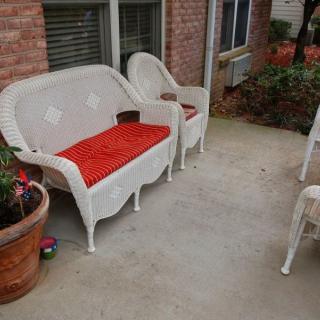
 Indoor common areas
 Outdoor common areas
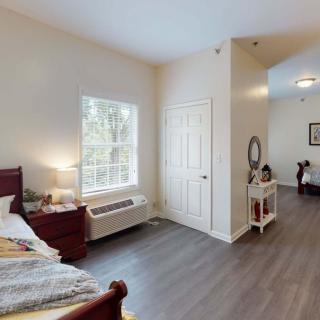
 Private
 Private bathrooms
 Respite or short term stays offered
 Wheelchair accessible showers
 William B Hartsfield-Atlanta International (22 miles away)
 Ambulatory care
 Diabetic care
 High acuity care
 Incontinence care
 Medication management
 Kosher


 A Detailed Exploration of Living Wills and Advance Directives
 Comprehensive Guide to Medicare Coverage for Hospice Care
 Caring for Those Who Care: Recognizing, Understanding, and Overcoming Caregiver Burnout