
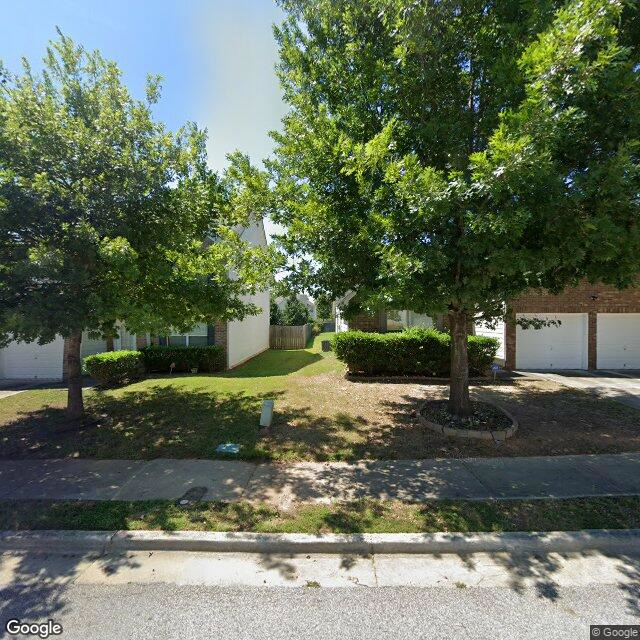
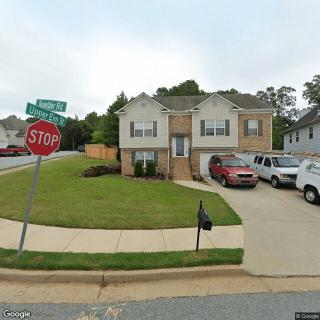
4273 Holliday Rd, Atlanta, GA 30349
To contact a resident: (678) 365-8349
For more information about senior living options: (866) 208-4318
Changing Lives Today #1 Costs & Pricing
Changing Lives Today #1 offers competitive pricing for its residents, with monthly costs significantly lower than the average rates seen in Fulton County and across Georgia. For a semi-private room, the facility charges $1,150, which stands in stark contrast to the county's average of $2,883 and the state's average of $2,529. Similarly, for private accommodations, Changing Lives Today #1's monthly fee of $1,950 is notably more affordable compared to Fulton County's $3,203 and Georgia's own average of $2,864. This pricing structure underscores the organization's commitment to providing accessible care without compromising on quality.
| Floor plans | Changing Lives Today #1 | Fulton County | Georgia |
|---|---|---|---|
| Semi-Private | $1,150 | $2,883 | $2,529 |
| Private | $1,950 | $3,203 | $2,864 |
Senior living communities with a similar price nearby
-
from +$50 / mo

Kelly Lake Manor PCH
$1,200 / month19.4 miles away -
from +$50 / mo
Yellow Rose Manor Pch
$1,200 to $1,500 / month14.5 miles away -
from +$50 / mo

A New Perspective
$1,200 to $1,750 / month9.9 miles away -
from +$50 / mo
Ebenezer Family Home
$1,200 to $1,500 / month21.6 miles away -
from +$200 / mo

Le'glen Personal Care Home
$1,350 to $2,150 / month18.1 miles away
Overall Review of Changing Lives Today #1
Pros
 The staff treated him with respect.
- A staff member moved him so he could fully participate in the Day Program.
- The company is great.
- The neighborhood is good.
Cons
 Some of the staff argued with him.
- One staff member asked him to show her something to prove he was telling the truth.
- Bugs were coming into his room, and one crawled on him.
- The place needs to be shut down for good.
- He felt he was given the runaround about employment.
- The broken promises about employment were a waste of time.
- An individual living there was abused by staff.
- Another resident from a different group home knew that he was dead.
Review
This community is best suited for seniors who prefer a small-scale, group-home style setting in a decent Atlanta neighborhood and whose families are prepared to take an active role in overseeing daily care. It may work for residents who value proximity and affordability and can tolerate variability in staff conduct, with the understanding that care quality hinges on a relatively lean team. The strongest caveat is safety and reliability: without consistent, well-supervised staff and transparent management, serious issues can slip through. For seniors with complex medical needs or those who require constant, high-level supervision, this option is unlikely to deliver the steady level of oversight necessary for dependable living.
Those who should seriously consider alternatives include families unwilling to tolerate indicators of environmental and care instability. Reports of pests in living spaces and troubling interactions with some staff point to sanitation gaps and inconsistent bedside manners that should not be accepted as the norm. If trust in staff to handle daily routines, wake-up calls, and safety incidents without friction or coercion is essential, this community warrants a cautious approach. Additionally, broken promises about employment or advancement reflect management reliability concerns that should steer families toward operators with demonstrated follow-through and transparent communication.
The apparent positives, such as a good neighborhood and some staff members who treat residents with respect, do not sufficiently offset the weight of the main drawbacks. Sanitation issues and alleged resident abuse create an environment where safety and dignity can be compromised. When a care setting hinges on sporadic respect rather than consistent, proactive kindness, the benefit of any friendly moments is eroded by ongoing mistrust and fear. The uneven quality among staff further undermines continuity of care, making it hard for families to feel confident that routines, medications, and safety checks will be reliably managed day after day.
Prospective residents should plan concrete due-diligence steps before deciding. Request a detailed tour that includes unscheduled times, speak with current residents and family members, and press for up-to-date incident reports and pest-control records. Observe the cleanliness of living spaces, the condition of shared areas, and how quickly staff respond to a call for assistance. Ask direct questions about staffing levels during evenings and weekends, turnover rates, and the process for reporting concerns to supervisors. Demand transparency about safety protocols, emergency responsiveness, and how disputes or alleged mistreatment are investigated and resolved.
In practical terms, this facility will test families on core decision criteria: safety, transparency, and staffing reliability. Compared with better-run alternatives, the risk profile here is higher due to sanitation issues, reports of abusive dynamics, and inconsistent management promises. If those concerns cannot be reconciled through direct conversations, on-site observation, and verified assurances, it is prudent to move on. For families willing to invest time in rigorous vetting and to maintain close oversight after move-in, a documented improvement plan and clear accountability might lessen risk, but the bar must be explicitly met before accepting responsibility for a loved one’s day-to-day wellbeing.
Bottom line: Changing Lives Today #1 presents a genuine red flag profile for any senior needing dependable safety and consistently respectful care. The favorable neighborhood and some positive staff interactions are not enough to overcome the dominant concerns about environment, conduct, and management reliability. The prudent path is to walk through stronger, more transparent options first, reserving this community for circumstances where thorough, ongoing oversight is guaranteed and a concrete, credible plan is in place to address sanitation, safety, and staffing stability. If pursuing this route, insist on a formal improvement plan with measurable milestones and commit to frequent follow-up reviews to ensure sustained progress.
 Board and Care Home
 Activities off-site
 Bath tubs
 Private
 Private bathrooms
 Swimming pool / hot tub
 Wheelchair accessible showers
 William B Hartsfield-Atlanta International (10 miles away)





 Top Canine Companions for Older Adults
 Comprehensive Guide to Blood Pressure Charts for Older Adults: Understanding Normal and High Readings by Age
 Financing Long-Term Nursing Home Care Through Social Security: A Thorough Exploration