For more information about senior living options: (866) 208-4318
4.1 from 114 reviews
5 stars
86
4 stars
1
3 stars
1
2 stars
2
1 stars
24
Renaissance Gardens Costs & Pricing
Renaissance Gardens offers a compelling option for individuals seeking affordable housing in comparison to broader market rates within Miami-Dade County and the state of Florida. With a monthly cost of $1,600 for a studio, Renaissance Gardens stands out as significantly more budget-friendly than the county average of $3,886 and the state average of $3,823. This substantial difference highlights Renaissance Gardens' commitment to providing quality living arrangements at a price point that is accessible to many, making it an attractive choice for those looking to balance comfort and affordability in their housing decisions.
Floor plans
Renaissance Gardens
Miami-Dade County
Florida
Studio
$1,600
$3,886
$3,823
Assisted Living communities with a similar price nearby
Food quality and food rules are a recurring point of contention in reviews.
Several residents describe the food and snacks in positive terms, including comments that snacks taste good and meals feel better than expected. Others complain that the food quality is low, that coffee is limited, or that dietary needs were not handled. A few reviews also connect food with broader concerns about how the facility operates day to day.
differentiator6 reviews mention this
Therapy and dual diagnosis support
Residents frequently credit therapy and mental-health treatment with helping recovery.
Many reviews highlight therapy and counseling as a key part of what helped them, with repeated praise for therapists and group sessions. Several also mention mental health support alongside addiction care, describing help with trauma, bipolar/mental-health concerns, or dual-diagnosis needs. The community is set up to provide care services like ambulatory and diabetic care, which aligns with residents’ emphasis on medical and clinical involvement during treatment.
common4 reviews mention this
Activities build community support
Reviews mention structured activities and groups that help residents stay engaged.
Residents describe a steady stream of activities such as movie night, bingo, and arts-and-crafts, along with sports and group-based engagement. Reviews also mention learning-focused programming and group sessions that keep people involved during treatment. This lines up with the on-site activities and devotional services reflected in the community’s offering.
caveat5 reviews mention this
Insurance billing concerns come up
A recurring criticism is how billing and insurance handling are handled.
Some reviewers describe negative experiences involving insurance coverage, billing practices, or difficulty getting insurance verified. Several negative reviews characterize the facility as focused on length of stay and billing rather than support, including claims about disputes after someone left early. Others mention the admission process with praise for help checking insurance, suggesting outcomes vary by situation.
common2 reviews mention this
Nearby daily essentials are close
Convenient nearby spots for errands are within a few miles.
If you plan on running errands nearby, several common stops are listed in the local area, including pharmacies and casual dining. Reviews don’t emphasize specific nearby destinations, but the listing places everyday needs within a short drive.
How we summarize
Counts show how many written reviews mention each theme; a review can touch several themes, and only frequently mentioned themes are displayed.
Features
Types of Care
Assisted Living
Independent Living
Amenities
Activities on-site
Devotional services off-site
Indoor common areas
Transportation
Fort Lauderdale-Hollywood International (10 miles away)
Miami International (11 miles away)
Care Services
Ambulatory care
Diabetic care
Dining
Meals provided
Activities
Activities on-site
Devotional activities offsite
Nearby Places of Interest
This area of North Miami Beach, Florida offers a variety of amenities and services that would be beneficial for senior living. With multiple pharmacies such as Walgreens and CVS nearby, accessing medication and healthcare supplies is convenient. There are also several restaurants including Chipotle Mexican Grill and Houston's for dining options. In terms of recreational activities, there are parks like Scott Park and Haulover Beach Park for outdoor enjoyment. For medical care, hospitals such as Joe DiMaggio Children's Hospital and Mount Sinai Medical Center are within a reasonable distance. Additionally, transportation options at North Perry Airport of Broward County and various Metrorail stations provide easy access to different parts of the city. Overall, this area provides a mix of essential services and recreational opportunities suitable for seniors looking to live in a well-equipped community.
Restaurants
Chipotle Mexican Grill (0.7 miles)
Houston's (2.8 miles)
Mo's Bagels & Deli (3.2 miles)
Jackson Soul Food II (3.5 miles)
Serafina Miami (3.7 miles)
Subway (5.6 miles)
Chili's Grill & Bar (6.4 miles)
Pharmacies
Walgreens (1.6 miles)
Walgreens (1.7 miles)
CVS Pharmacy (2.1 miles)
Winn-Dixie (2.4 miles)
Walgreens (3.2 miles)
Winn-Dixie (3.6 miles)
Winn-Dixie (4 miles)
Parks
Scott Park (2.4 miles)
Founders Park (3.7 miles)
Haulover Beach Park (4.5 miles)
Poinciana Park (5.6 miles)
South City Beach Park (6 miles)
North Shore Open Space Park (6.2 miles)
River Run Park (6.3 miles)
Theaters
AMC Aventura 24 (3.7 miles)
Cafes
Rosetta Bakery (3.7 miles)
Starbucks (4.3 miles)
Starbucks (7.5 miles)
Starbucks (7.6 miles)
Starbucks (8.7 miles)
Starbucks (8.7 miles)
Starbucks (8.7 miles)
Transportation
North Perry Airport of Broward County (5.8 miles)
Tri-Rail Metrorail Transfer (7.1 miles)
Earlington Heights Metrorail Station (8.3 miles)
Okeechobee Metrorail Station (9.1 miles)
Hospitals
Joe DiMaggio Children's Hospital (6.4 miles)
Memorial Hospital Pembroke (7.8 miles)
Mount Sinai Medical Center (8.5 miles)
Physicians
Comprehensive Health & Wellness Center, P.A. (7.2 miles)
Renaissance Gardens offers a compelling option for individuals seeking affordable housing in comparison to broader market rates within Miami-Dade County and the state of Florida. With a monthly cost of $1,600 for a studio, Renaissance Gardens stands out as significantly more budget-friendly than the county average of $3,886 and the state average of $3,823. This substantial difference highlights Renaissance Gardens' commitment to providing quality living arrangements at a price point that is accessible to many, making it an attractive choice for those looking to balance comfort and affordability in their housing decisions.
Transitioning from assisted living to memory care is driven by an individual's cognitive decline and specific needs, requiring careful evaluation of indicators like increased confusion and wandering. The process involves consulting medical professionals, researching suitable communities, considering financial and legal aspects, and ensuring effective communication for personalized care plans.
Assisted living provides moderate support for seniors seeking independence, while memory care offers specialized support for individuals with dementia or cognitive impairments through structured routines and trained staff. Key differences include care approaches, environment security measures, staff training levels, activity types, and cost considerations.
Assisted living communities offer diverse activities beyond traditional games to enhance seniors' physical health, cognitive well-being, emotional enrichment, and social connections, including fitness classes, creative expression, and intergenerational interactions. These enriching programs foster community bonds and support residents' independence and happiness.
Get PricingAsk A QuestionSchedule A TourContact Senior Advisor
By clicking submit, you agree to our Partner's Terms of Use. You
also consent to receive calls and texts, which may be autodialed, from our Partner. Your consent is not a condition to
using our Partner's service. Please visit our Partner's Privacy Policy for information about their privacy practices.


 Assisted Living
 Independent Living
 Activities on-site
 Devotional services off-site
 Indoor common areas
 Fort Lauderdale-Hollywood International (10 miles away)
 Ambulatory care
 Diabetic care
 Meals provided
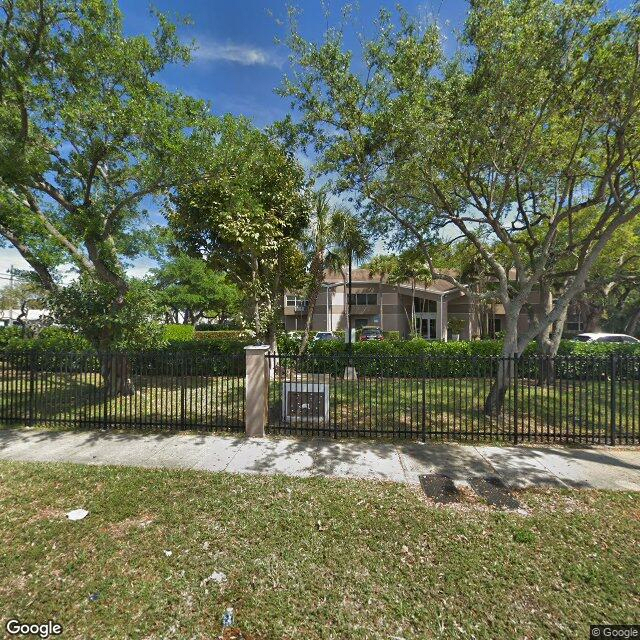
 Exceptional care in a well-located community with nearby amenities.

 When to Transition from Assisted Living to Memory Care: Key Indicators, Steps, and Finding the Right Community
 Assisted Living and Memory Care: Understanding Their Core Differences
 Beyond the Bingo Hall: 50+ Enriching Activities for Seniors in Assisted Living