
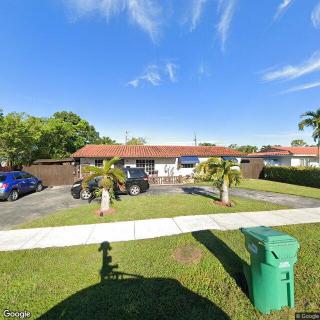
13391 South West 27 Street, Miami, FL 33175
For more information about senior living options: (866) 208-4318
Overall Review of Mablex Home Care
Pros
 None. The reviews express negative feedback, so no positive third-person statements can be derived.
Cons
 The agency delivered an awful experience and should not be recommended.
- They claimed they called both the reviewer and the reviewer’s father for visits—complete lie.
- They sent someone once for a so-called consultation and then vanished, with no follow-up, care, or communication.
- Whenever help was sought, they claimed the caller hadn’t answered and closed the case.
- Multiple referrals ended the same way: false claims, no accountability, and zero compassion.
- This is not home health care; it adds stress for families who truly need support.
- The reviewer described the experience as absolutely the worst and urged others to stay away.
Review
This community is best suited for families seeking in-home care with a sharp focus on reliability and straightforward, verifiable communication. When care is delivered at home, the ability to schedule visits, confirm who will be present, and obtain timely updates becomes a non-negotiable, safety-critical factor. The most salient takeaway from the available feedback is that promises must be backed by consistent follow-through. In this environment, where health and daily assistance rest on dependable coordination, the absence of reliable contact and documented accountability becomes a decisive flaw. The right choice will be measured not by initial outreach but by sustained responsiveness, transparent scheduling, and durable caregiver continuity.
Those who should consider alternative options are families that cannot tolerate gaps between promise and action. If a service cannot prove that calls, visits, and care plans are actively tracked and communicated, the risk rises significantly for miscommunication about visits, treatments, and escalation of needs. Prospective clients with complex schedules, urgent care requirements, or sensitive family dynamics should demand a track record of dependable outreach and a clear escalation path. In such cases, facility-based solutions or other home-care providers with robust verification processes, strong supervisory oversight, and evidence of client advocacy will likely deliver more predictable results.
The potential advantages of in-home care, staying in a familiar environment, personalized attention, and real-time coordination with caregivers, are severely undermined when core processes fail. A credible home-care program should pair an initial intake with a documented care plan, real-time scheduling visibility, and a responsive support line. When a provider makes claims about outreach but cannot document timely attempts or follow through, the perceived benefit evaporates. In short, the main leverage of in-home care is continuity and clarity; without reliable communication, the main value proposition collapses, making the service impractical for families that depend on steady hands and predictable routines.
Financial and emotional costs also loom large in environments where accountability is lacking. The described experience, misleading claims of contact, missed follow-ups, and a culture of closing cases without thorough resolution, produces unnecessary stress, confusion about who is responsible for care decisions, and potential delays in addressing urgent needs. Even if some visits occur, the absence of a dependable communication framework casts doubt on the overall quality and safety of the provisioning. Families must weigh the potential convenience against the risk of fragmented service, inconsistent caregiver assignments, and the potential for important medical or daily living needs to go unaddressed.
To mitigate risk, families evaluating Mablex Home Care should pursue concrete, verifiable assurances before committing. Require a written care plan with specific visit counts, caregiver names, and backup schedules for unavoidable absences. Insist on a single, accessible point of contact for scheduling and urgent questions, plus a documented escalation protocol with expected response times (for example, 4 hours for urgent matters, 24 hours for routine checks). Request access to a caregiver-training record, background checks, and details on continuity of care, how often caregivers rotate, and what happens when a caregiver is unavailable. Finally, obtain recent references and verifiable performance metrics such as on-time visit rates and client satisfaction scores to anchor the decision in tangible performance.
In the final assessment, this provider should not be the default choice for families prioritizing reliability, transparency, and compassionate, consistent care. The red flags raised by the negative testimonial, false claims, absent accountability, and significant communication gaps, translate into real-world risk for patient safety and family peace of mind. If proceeding, approach with stringent safeguards: insist on written policies, insist on clear accountability lines, and pilot the arrangement with a short, tightly monitored term. For those who prize steadiness over convenience, exploring other agencies with proven communication protocols, as well as facility-based options where oversight is uncompromising, will yield a more predictable and less stressful caregiving experience.
 6 resident community capacity
 Assisted Living
 Board and Care Home
 Cable or satellite TV
 Dining room
 Fully furnished
 Garden
 Housekeeping services
 Move-in coordination
 Outdoor space
 Telephone
 Wi-Fi/high-speed internet available
 Miami International (8 miles away)
 24-hour supervision
 Activities of daily living assistance
 Assistance with bathing
 Assistance with dressing
 Assistance with transfers
 Diabetes diet
 Meal preparation and service
 Medication management
 Special dietary restrictions
 Transportation arrangement (medical)
 Transportation to doctors appointments



 How and When Medicaid May Cover Assisted Living Costs
 A Detailed Exploration of Assisted Living Medicaid Waivers Across the United States
 Comprehensive Residential Support and Assisted Living Solutions for Individuals with Disabilities