
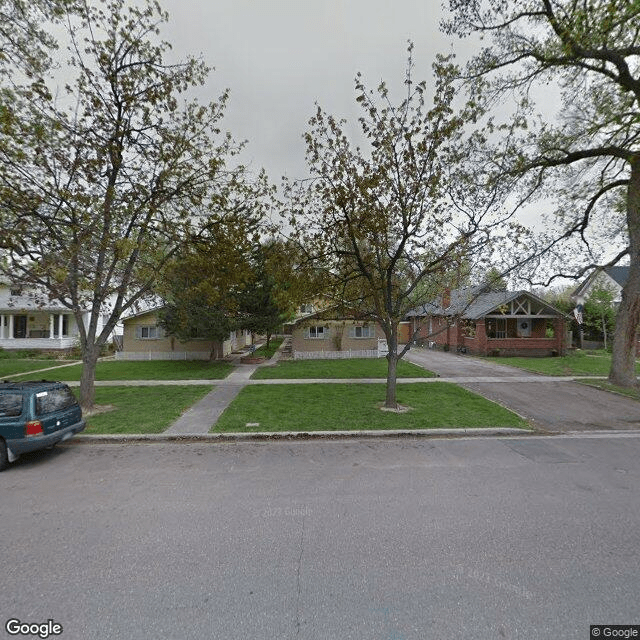
520 Emery Street, Longmont, CO 80501
To contact a resident: (720) 287-1229
For more information about senior living options: (866) 208-4318
Crab Apple Court Costs & Pricing
Crab Apple Court offers competitive pricing for its accommodations, particularly when compared to the broader market in Boulder County and the state of Colorado. The monthly rates for one-bedroom units at Crab Apple Court range from $850 to $2,615, significantly lower than Boulder County's average of $4,755 and Colorado's average of $4,119. Similarly, two-bedroom units are priced between $1,050 and $3,415, contrasting sharply with Boulder County's higher rate of $5,993 and remaining more accessible than the state's average of $4,580. Even the studio apartments at Crab Apple Court, offered at a rate of $2,190, show notable value against Boulder County's standard price of $4,274 and Colorado's average of $4,090. Overall, Crab Apple Court stands out as an attractive option for those seeking quality living arrangements without the steep costs typically associated with the area.
| Floor plans | Crab Apple Court | Boulder County | Colorado |
|---|---|---|---|
| 1 Bedroom | $850 to $2,615 | $4,755 | $4,118 |
| 2 Bedrooms | $1,050 to $3,415 | $5,993 | $4,580 |
| Studio | $2,190 | $4,274 | $4,088 |
Senior living communities with a similar price nearby
-
from +$54 / mo

The Towers at Golden West
$904 to $10,000 / month14.0 miles away
Overall Review of Crab Apple Court
Pros
 It has been a wonderful fit in many ways.
- The property management team, Sara Hull and her husband, have been outstanding.
- It is a great first step into senior living, and the reviewer could not be happier.
Review
Crab Apple Court in Longmont, Colorado is best suited for seniors who want a straightforward, low-friction entry into assisted living, guided by a hands-on, owner-led property management approach. The available feedback depicts a smooth transition into life at the community, with the management team taking a clear, personal role in daily operations. The standout element is the leadership from Sara Hull and her husband, described as outstanding and deeply attentive. For families seeking a warm, practical first step into senior living, where questions are answered promptly and residents are treated with visible care, this community presents a compelling fit.
Those weighing Crab Apple Court against alternatives should consider whether a broader care continuum and larger campus would better serve current or future needs. The two testimonials emphasize satisfaction with management but offer limited detail on medical services, staffing levels, or pricing. If the expectation is robust on-site medical supervision, extensive activity programming, or a wide array of amenities, other options with more transparent information and a wider service footprint deserve consideration. In short, this is less a one-stop resort and more a carefully run doorway into assisted living.
The principal advantages center on leadership and the resulting sense of security. Exceptional property management, highlighted by the praise of Sara Hull and her husband, translates into reliable responsiveness, clear communication, and a supportive transition for families. That personal touch can significantly reduce the anxiety that accompanies moving a loved one out of a familiar home. In the context of an entry-level setting, such leadership can compensate for a smaller scale and sparser programming, because residents and families alike feel seen, heard, and protected. The 5-star impressions from both reviews underscore a core experience built on trust, accessibility, and consistent follow-through.
Nonetheless, the limited scope of the feedback is a real caveat. With only two data points, there is a risk of overestimating stability or underestimating gaps that might emerge over time. Absence of detail on pricing, room layouts, daily schedules, and the depth of care provided means questions remain unanswered for budget-conscious or care-heavy households. The management strength is a powerful offset, but not a substitute for objective, long-range performance information. To guard against surprises, prospective residents should request a written care plan, inquire about staffing ratios, and seek opportunities to observe routines and speak with current residents during a visit.
Visit guidance should focus on practical, decision-making benchmarks. Ask how care decisions are individualized, how emergencies are managed, and what the meal program looks like in terms of quality and flexibility. Transportation options, accessibility, safety features, and the consistency of staff at all shifts matter as much as the initial warmth from leadership. While the praise for management is encouraging, diligence remains essential: a small community can shift quickly if leadership or policies change, so verify licensure status, inspection records, and any ongoing improvement plans. Concrete, current answers will distinguish genuine reliability from a hopeful impression.
Overall, Crab Apple Court presents a strong case for households seeking a warm, manager-driven environment that eases the transition into assisted living. The main caveat is the tight feedback loop, just two reviews, so the option should be paired with direct visits and careful vetting to confirm fit and affordability. For families prioritizing a straightforward, high-touch start to senior living, this community deserves serious consideration. If the target includes broader programming, more extensive care options, or a larger, more varied campus, it is prudent to compare with alternatives side by side. A guided tour, conversations with Sara Hull and her husband, and a precise plan for next steps will determine whether Crab Apple Court becomes the right long-term home.
 Active Adult Communities (55+)




 Comprehensive Guide to Qualifying for Home Health Care Services
 Powerful Realities of Elder Abuse and the Most Effective Ways to Report It
 Ten Vital Duties of a Senior Caregiver: A Comprehensive Guide