
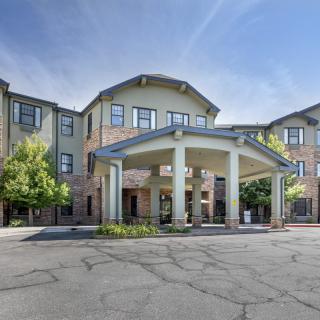
6824 Chestnut Hill Street, Littleton, CO 80130
For more information about senior living options: (866) 208-4318
Overall Review of Rocky Mountain Assisted Living Chestnut
Pros
 RMAL Chestnut Hill is described as the best move for her, offering more individualized attention due to its smaller size.
- The community has a wonderful family feeling with a tremendous staff.
- Residents receive loving care every day from knowledgeable caregivers who keep families informed.
- Activities are well-suited to small groups or individuals.
- The facility is local and not part of a large corporate chain, which makes a world of difference.
- Families sleep well knowing their loved one is in great hands.
- The staff and management are caring and consistently go above and beyond.
- Programming and activities are taken to the next level.
- Residents are cared for as if they are family in an at-home environment.
- The home is clean, bright, and has an open floor plan, creating a welcoming atmosphere.
- The care includes stimulating activities for physical and mental well-being.
- Families would highly recommend Rocky Mountain Assisted Living and its Chestnut Hill location.
Cons
 Most other assisted living centers were large and impersonal.
- The reviewer was unhappy with what they found at those facilities.
- They feared their grandmother would get lost in the shuffle in those environments.
Review
Rocky Mountain Assisted Living Chestnut Hill is best suited for seniors who flourish in a small, home-like setting where each resident is known personally and care is highly individualized. Families seeking memory care or assisted living with a strong emphasis on tailored attention will find this community a natural fit. The smaller footprint and absence of a large, corporate chain create a genuine family feel that resonates with residents and relatives alike. The experiences shared by families describe the environment as bright, welcoming, and intimate, where staff members treat residents as if they were relatives. This is the kind of place where social connections form quickly in a predictable, comfortable routine, and caregivers anticipate needs rather than merely respond to them.
Those weighing alternatives should consider what happens when a larger campus is desired. For residents with higher acuity needs or those requiring intensive around-the-clock nursing, a bigger facility with broader on-site medical resources may be more appropriate. Families who prefer a chain-brand experience or a facility with a long track record across multiple markets may find a larger, more impersonal environment more predictable. Similarly, if the goal is a highly structured dementia program with a dedicated memory-care unit on a larger scale, other options designed specifically for memory progression could be a better fit.
The core strengths drive meaningful outcomes here. The small size allows truly individualized attention, with residents cared for in small groups or one-on-one, translating into daily support that feels deliberate rather than routine. Staff are described as tremendous, loving, and consistently knowledgeable about each resident’s preferences and history. A genuine family tone permeates the house, with staff and owners accessible and responsive to families, frequently sharing photos or updates. The home is bright, clean, and open, reinforcing a safe, comfortable environment. Activities are crafted to fit small-group or person-centered needs, including physical games, arts and crafts, outings, and celebratory events that keep minds and bodies engaged.
Of course, every small home operates within certain realities. There may be trade-offs in scale and resources compared to larger campuses, fewer on-site services, less breadth in specialty programming, and a smaller staff pool during peak times. Residents with complex medical needs or those requiring frequent, specialized therapies may encounter limits in daily options. These potential gaps are not ignored; they are mitigated by hands-on leadership, a tight-knit staff, and a culture that treats families as partners in care.
The positive stories illustrate how these dynamics play out in real life. The depth of staff knowledge about individual residents makes each day calmer and more predictable, while the open lines of communication with families provide reassurance that care is current and personalized. The owner’s philosophy, care delivered with intimacy, colors every interaction, making residents feel cherished and safe. The sense of community extends beyond residents to family members, who are welcomed and kept in the loop. Emotionally, the staff remain compassionate, celebrating milestones and grieving alongside loved ones when appropriate, which reinforces the trust families place in this home.
For families weighing the decision, the equation is clear: a home-like environment where care is deeply personal and attention is constant versus a desire for broader medical resources or larger-scale programming. RMAL Chestnut Hill excels for those who prioritize intimate relationships, consistent staff knowledge, and frequent family contact in a cheerful, well-maintained space. It is an excellent fit for memory care that requires a gentle, individualized approach and for assisted living where residents are treated as members of a close, caring community. If those criteria align with a loved one’s needs, a visit will likely confirm this as the right choice; if they do not, exploring a broader range of options early will save time and stress later.
 16 resident community capacity
 Assisted Living
 Board and Care Home
 Cable or satellite TV
 Dining room
 Fully furnished
 Garden
 Housekeeping services
 Move-in coordination
 Outdoor space
 Telephone
 Wi-Fi/high-speed internet available
 Denver International (25 miles away)
 24-hour supervision
 Activities of daily living assistance
 Assistance with bathing
 Assistance with dressing
 Assistance with transfers
 Diabetes diet
 Meal preparation and service
 Medication management
 Special dietary restrictions
 Transportation arrangement (medical)
 Transportation to doctors appointments
 Assisted Living and Memory Care: Understanding Their Core Differences
 Beyond the Bingo Hall: 50+ Enriching Activities for Seniors in Assisted Living
 Understanding the Distinctions: Assisted Living and Memory Care Explained