

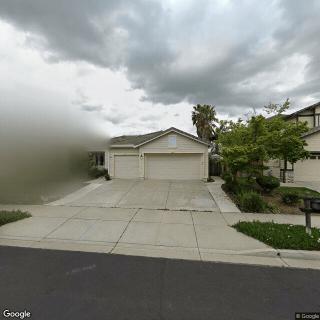
1712 Geary Road, Walnut Creek, CA 94597
To contact a resident: (925) 864-9634
For more information about senior living options: (866) 208-4318
Cypress Manor Costs & Pricing
Cypress Manor offers competitive pricing for its residents, with monthly costs that significantly undercut both Contra Costa County and the broader California market. For a semi-private room, Cypress Manor is priced at $2,500, well below the county's average of $3,471 and the state average of $3,333. Similarly, their private rooms are available for $3,200, compared to the county's average of $4,088 and the state's benchmark of $3,939. These cost advantages make Cypress Manor an appealing option for those seeking quality care without the hefty price tag often associated with senior living facilities in California.
| Floor plans | Cypress Manor | Contra Costa County | California |
|---|---|---|---|
| Semi-Private | $2,500 | $3,471 | $3,333 |
| Private | $3,200 | $4,088 | $3,939 |
Senior living communities with a similar price nearby
-
from +$400 / mo

Parkside Manor
$2,900 to $3,600 / month19.4 miles away -
About the same
Brentwood Care Home
$2,500 to $4,000 / month19.4 miles away -
About the same

Ava Bella Care Home
$2,500 to $3,000 / month22.5 miles away -
About the same

Rose Arbor Senior Care
$2,500 to $4,620 / month14.1 miles away -
from +$222 / mo

LEF Home Care Specialists
$2,722 / month13.4 miles away
Overall Review of Cypress Manor
Pros
 The two bedrooms are nicely sized.
- One bedroom is sunnier and more desirable.
- The living areas are pretty nice.
- The facility has two nice rooms available.
Cons
 They didn't like the caregiver all that much.
- She didn't seem to totally "get the gluten thing."
Review
Cypress Manor in Walnut Creek is best suited for seniors who want two-bedroom options in a compact, home-like setting and who prize light-filled living spaces and approachable common areas. The community reads as a practical fit for couples or roommates seeking in-unit privacy alongside comfortable social spaces, without demanding highly specialized medical care. For those who place a premium on space at a relatively accessible level of care, Cypress Manor offers a straightforward choice that prioritizes livability over institutional scale.
On the upside, the two-bedroom configuration stands out as a clear drawing card. Both units described in conversations were roomy enough to feel like real homes, which can ease the dynamics of sharing living space or keeping a guest room.available These layouts are particularly meaningful for couples who wish to stay together or for families planning regular visits without crowding. In addition, the living areas come across as pleasant and usable, contributing to a sense of everyday comfort that supports routine and independence. When combined with decent common areas, this makes the overall experience feel deliberately livable rather than merely functional.
However, the caveat attached to these strengths centers on care staff. Feedback points to a caregiver who did not resonate well with residents, with concerns that personal attention and responsiveness were lacking. Even more pointed is a dissatisfaction with understanding dietary restrictions, specifically gluten needs. In practical terms, this signals a potential mismatch between resident expectations around individualized support and the day-to-day delivery of those supports. For families or residents who rely on attentive caregiving and precise dietary coordination, this is not a minor detail but a determining factor in ongoing quality of life.
These pros can offset the cons to a degree, but only for a subset of potential residents. The appeal of having two sizeable bedrooms in a comfortable setting cannot be understated for couples or for individuals who want a reliable space to host family. The sunlit aspect of at least one unit adds a meaningful annual advantage, improving mood and daily rhythms. Yet the offsetting factor, caregiver engagement and dietary responsiveness, limits Cypress Manor’s suitability for those who value proactive staff, frequent check-ins, and tight coordination around meals for gluten-free needs. In such cases, the risk of ongoing friction with care delivery weighs heavier than the housing benefits.
Families should explicitly weigh alternative options if these criteria matter. Those who require high-touch caregiving, structured gluten-free meal programs, or staff who consistently demonstrate strong communication about dietary restrictions may wish to explore other communities before committing. A practical path is to schedule a while-you-wait tour with a staff member, request to observe a meal service, and probe how dietary plans are created and updated. Observing interactions during a routine moment, checking on a resident, answering questions, and guiding a resident through a meal, offers a clearer read than brochures alone.
In the end, Cypress Manor presents a pragmatic choice for residents prioritizing space and a homey ambiance, with the notable caveat that caregiving quality and dietary responsiveness appear uneven. If independence, two-bedroom living, and pleasant common areas align with current needs, this community can deliver a solid, low-hussle option. For anyone whose daily life hinges on consistently proactive staff and precise dietary support, due diligence warrants exploring alternatives where care standards are demonstrably stronger. A deliberate, in-person evaluation remains essential to determine whether the positives will outweigh the observable shortcomings in care delivery.
 Board and Care Home
 Activities off-site
 Devotional services off-site
 Indoor common areas
 Outdoor common areas
 Private
 Private bathrooms
 Respite or short term stays offered
 Wheelchair accessible showers
 Metropolitan Oakland International (16 miles away)
 Ambulatory care
 Diabetic care
 High acuity care
 Incontinence care
 Meals provided
 Christian services







 Navigating the Tax Landscape of Caregiving: Credits, Deductions, and Beyond
 Highly Beneficial Low-Impact Exercises for Senior Living Residents
 Is In-Home Healthcare Tax Deductible? Your Comprehensive Guide