
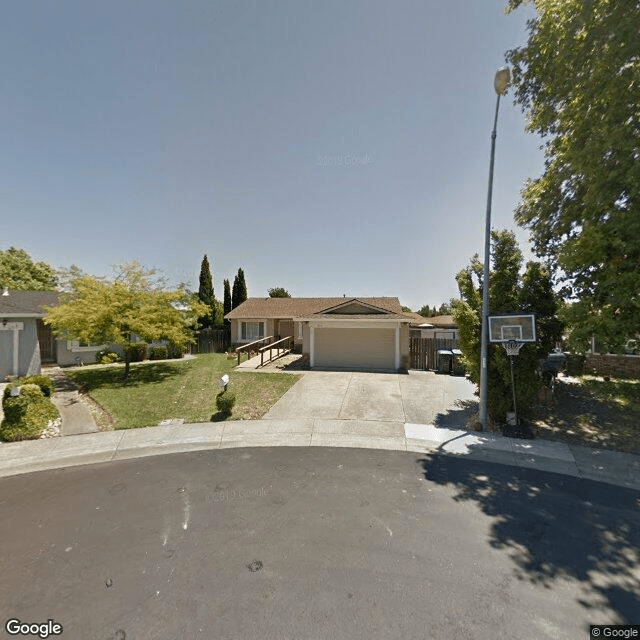
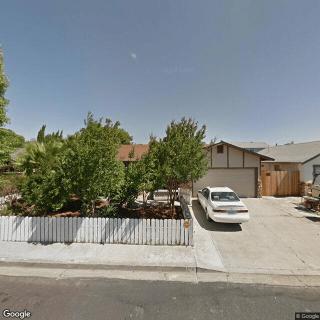
601 Alexander Ct., Suisun City, CA 94585
To contact a resident: (707) 704-7314
For more information about senior living options: (866) 208-4318
A & E Quality Care Home Inc. Costs & Pricing
A & E Quality Care Home Inc. offers competitive pricing for its services when compared to Solano County and the broader California market. For semi-private rooms, their monthly fee of $3,000 is slightly higher than the county average of $2,762 but remains below the state average of $3,333. In contrast, for private rooms, A & E's cost of $3,500 aligns closely with the county rate of $3,482 while still being lower than the state's average of $3,939. This pricing structure suggests that A & E Quality Care Home Inc. provides a valuable option for residents seeking quality care in a comfortable setting without straying too far from regional norms.
| Floor plans | A & E Quality Care Home Inc. | Solano County | California |
|---|---|---|---|
| Semi-Private | $3,000 | $2,762 | $3,333 |
| Private | $3,500 | $3,482 | $3,939 |
Senior living communities with a similar price nearby
-
About the same

Golden Harmony Elderly Care
$3,000 / month20.1 miles away -
About the same
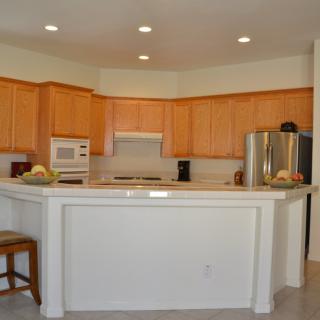
Laylor Care Home For The Elderly
$3,000 to $4,000 / month22.9 miles away -
from +$400 / mo

An Oak Grove Manor
$3,400 to $3,800 / month22.4 miles away -
from -$405 / mo

Carlton Senior Living Concord
$2,595 to $3,395 / month18.7 miles away -
from -$500 / mo
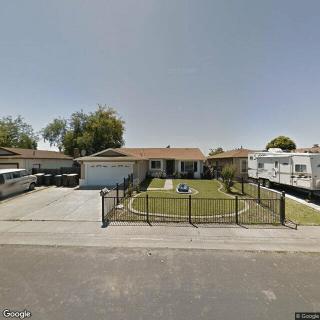
Village Golden Care Home
$2,500 to $3,800 / month0.1 miles away
Overall Review of A & E Quality Care Home Inc.
Pros
 A & E staff are very kind.
Cons
 The facility did not fit the parent's needs.
 - There were concerns about how the 24-hour "awake" care was interpreted, affecting the mother's night-time care.
- The reviewer felt that a person with impaired vision and memory problems was unfairly labeled a "problem" and was disconcerted by the suggestion of anti-anxiety medication.
- The family was disappointed and felt that a parent should not be treated as an inconvenience in a facility.
Review
A & E Quality Care Home Inc. in Suisun City is best suited for families seeking a small, home‑like setting where staff deliver warm, personal attention to residents who mainly need daily living assistance rather than intensive medical or memory‑care services. The atmosphere is human‑scale, and caregivers appear accessible and kind, which can smooth the transition for a senior who can maintain basic independence with routine support, familiar routines, and regular check‑ins from attentive aides. In short, this community favors a less institutional vibe and a more hands‑on, neighborly approach to everyday care.
Those whose loved ones struggle with memory loss, impaired vision at night, or require reliable, specialized overnight supervision should consider alternatives. The reviews highlight a critical ambiguity around what "twenty‑four hour awake care" actually means in practice, and a move‑in experience where cognitive and orientation challenges were not handled with the sensitivity expected. Families facing frequent nighttime wandering or disorientation may find that the level and style of supervision here do not align with needs, risking unsettled nights and a sense that the resident is treated as an inconvenience rather than a person in need of steady, respectful support.
On the upside, the staff's kindness stands out as a meaningful strength. A responsive, compassionate team can create a gentler daily rhythm, lower anxiety, and help families feel connected. However, the stated benefit of 24/7 awake presence becomes a question mark when real‑world expectations clash with a resident who wakes repeatedly or requires specialized behavior management for cognitive impairment. Prospective families should demand precise policies: how staff interpret "awake" at night, what interventions are allowed, and how this translates into actual hours and hands‑on care when a parent is most vulnerable.
The most challenging aspect from the reviewed experiences is how care for a newly relocated resident with vision and memory issues appeared to be handled. Reports of a resident being viewed as a "problem" and recommended anti‑anxiety medication signal a rigidity in approaching behavioral complexity that can undermine trust during a sensitive transition. The sense of being an inconvenience, rather than a person with legitimate needs, can erode the care partnership families rely on. This is not merely a philosophical concern; it affects day‑to‑day safety, responsiveness, and the emotional climate of the residence.
Before choosing, families should press for specifics: exact overnight supervision hours and the threshold for interventions if a resident wakes in the night; the facility's policies on memory‑support practices, redirection strategies, and non‑pharmacological approaches; staff‑to‑resident ratios by shift; how new residents with cognitive or sensory challenges are oriented and monitored during the first weeks; and whether any memory‑care certifications or specialized staff are available on site. Ask to speak with current residents or families, request a trial stay if possible, and outline a clear plan for escalation if needs outpace the home's capabilities.
Overall, A & E Quality Care Home Inc. offers a comforting, personable environment that can work well for seniors who require moderate daily assistance and place a high value on courteous, available staff. It is less well‑suited for those who depend on robust memory‑support programs or consistent overnight supervision tailored to disoriented sleep patterns. Families must weigh the warmth and accessibility of the team against the potential rigidity in responding to memory and sensory challenges. If memory impairment or night‑time wandering is a real risk, consider alternatives with proven memory‑care capabilities, stronger individualized planning, and clearer, resident‑centered policies that reduce the sense of being a burden during the transition.
 Board and Care Home
 Activities off-site
 Indoor common areas
 Outdoor common areas
 Private
 Private bathrooms
 Respite or short term stays offered
 Wheelchair accessible showers
 Ambulatory care
 High acuity care
 Incontinence care
 Medication management
 Meals provided
 Adventist services
 Buddhist services


 Comprehensive Look at Senior Blood Pressure Charts: Normal and Elevated Levels by Age
 Top Canine Companions for Older Adults
 Comprehensive Guide to Blood Pressure Charts for Older Adults: Understanding Normal and High Readings by Age