
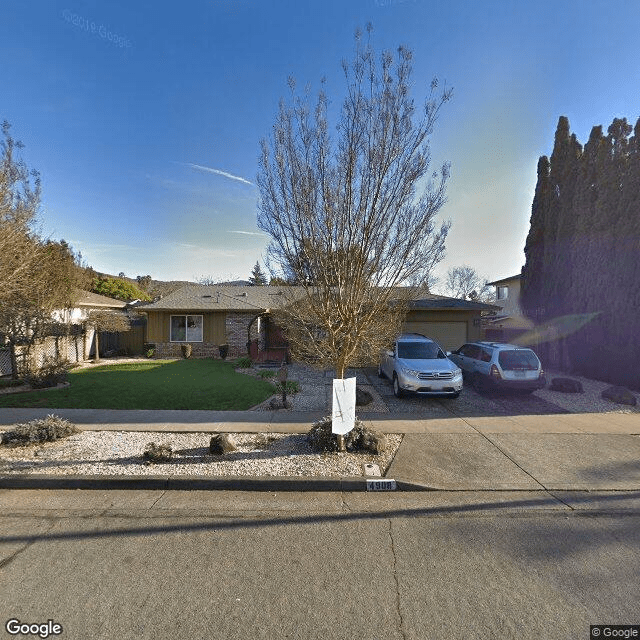
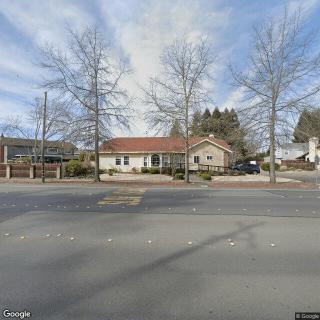
4908 Stonehedge Drive, Santa Rosa, CA 95405
For more information about senior living options: (866) 208-4318
Marian Gardens Care Home Costs & Pricing
Marian Gardens Care Home offers competitive pricing for its residential care services, particularly in comparison to both Sonoma County and the broader California market. With a monthly rate of $3,500 for both private rooms and studios, Marian Gardens stands out as an affordable option. In contrast, the average costs in Sonoma County are notably higher, with private rooms priced at around $4,225 and studios at approximately $4,340. Even when looking at state averages, where private accommodations are roughly $3,939 and studios about $4,145, Marian Gardens' rates reflect a commitment to providing high-quality care while maintaining accessibility for families seeking reliable senior living options. This makes it an attractive choice for those prioritizing value without compromising on care standards.
| Floor plans | Marian Gardens Care Home | Sonoma County | California |
|---|---|---|---|
| Private | $3,500 | $4,225 | $3,939 |
| Studio | $3,500 | $4,340 | $4,145 |
Memory care communities with a similar price nearby
-
About the same
Ana's Care Home
$3,500 / month1.3 miles away -
from +$495 / mo
The Watermark at Napa Valley
$3,995 to $6,795 / month19.6 miles away -
from +$200 / mo
Silva Board And Care
$3,700 to $5,367 / month3.1 miles away -
from -$500 / mo

Linda Falls Guest Home 1
$3,000 to $4,500 / month13.6 miles away -
from +$310 / mo
Brookdale Chanate
$3,810 to $7,855 / month3.4 miles away
Overall Review of Marian Gardens Care Home
Pros
 The care was always loving and personal.
- The place was clean and medications were carefully administered.
- Meals were shared and sociable.
- Her family was always welcome.
- The reviewer would recommend any place where Raymond is present.
- Marian Gardens has become a place of comfort and peace for residents and families alike.
- The reviewer has known Raymond and his care home for over ten years.
- The reviewer thanks Raymond for all the lives he has changed for the better.
Review
Marian Gardens Care Home in Santa Rosa is best suited for seniors who want a small, home-like setting where daily care feels personal and steady. The operation is anchored by Raymond and his nurse-partner, producing a sense of continuity and warmth that is palpable from first contact onward. Families seeking transparent communication and a place where meals become social rituals will find this environment particularly comforting. The house-scale layout, evident cleanliness, and an open invitation for family participation in care decisions create a reassuring sense of control for relatives. In short, this community thrives for residents who prize intimate attention, predictable routines, and relationships built on genuine care rather than institutional formality.
Pros are abundant and concrete. The care feels loving and highly individualized, with Raymond and his partner delivering hands-on support that resembles a true home atmosphere. A nurse-partner adds credibility to medical oversight, and medications are administered with meticulous attention, reducing common error risks. The facility emphasizes clean, orderly spaces, while meals are shared in a sociable setting that supports social engagement and mood. Families are welcomed and involved, turning caregiving into a collaborative effort rather than a unilateral arrangement. This blend of warmth, professional competence, and communal dining fosters stability that benefits both memory and mood for residents.
Still, some families should consider alternatives when care needs scale beyond what a small board-and-care can reliably provide. Marian Gardens operates on a compact footprint, which naturally limits access to on-site therapies, robust activity programming, and a broader spectrum of medical services found in larger campuses. For residents with complex medical needs, the requirement for high-level oversight, or the need for specialized memory-care design and secure environments, the path may lead to more expansive options. The upside of intimacy comes with a potential trade-off in breadth of services, and that balance should be weighed against the level of clinical support required.
Yet the positives substantially counterbalance those constraints. The intimate setting and daily personal attention mitigate loneliness and confusion that often accompany aging, and staff turnover tends to be less disruptive when the team is embedded in the home over years. The nurse-partner arrangement provides a meaningful safety net for medication management, symptom monitoring, and timely escalation when issues arise. Cleanliness and a warm dining culture reduce health risks and support appetite, which is crucial for seniors. In essence, the standout advantages, trust, predictability, and emotional security, often make up for the absence of a large hospital-style medical apparatus.
The model fits best for residents who value belonging and routine over breadth of services. It suits older adults who do not require round-the-clock hospital-level care but do need reliable help with medications, daily activities, and social engagement. Families who want to be actively involved and who appreciate transparent, consultative stewardship will find Marian Gardens compelling. Those with ongoing needs for memory-care specifics, around-the-clock nursing, or highly structured activity rosters should compare options that deliver those features more explicitly, including larger assisted-living communities with dedicated memory-care wings.
Bottom line: Marian Gardens Care Home presents a compelling choice for the right resident, someone who prioritizes warmth, intimate oversight, and a stable, home-like routine. The strongest positives, deep personal attention, careful medication management, domestic cleanliness, sociable meals, and open family involvement, provide a powerful offset to the lack of large-scale services. Prospective families should visit with questions about staffing ratios, daily schedules, and escalation procedures, and verify licensing and care plans. If those criteria align with a loved one’s needs and preferences, this Santa Rosa locale stands out as a strong, practically grounded option that delivers peace of mind through genuine care.
 6 resident community capacity
 Assisted Living
 Board and Care Home
 Memory Care
 Activities off-site
 Cable or satellite TV
 Devotional services off-site
 Dining room
 Fully furnished
 Garden
 Housekeeping services
 Indoor common areas
 Move-in coordination
 Outdoor common areas
 Private
 Telephone
 Wheelchair accessible showers
 Wi-Fi/high-speed internet available
 24-hour supervision
 Ambulatory care
 Assistance with bathing
 Assistance with dressing
 Assistance with transfers
 Diabetes diet
 High acuity care
 Incontinence care
 Meal preparation and service
 Medication management
 Special dietary restrictions
 Transportation arrangement (medical)
 Transportation to doctors appointments

 Engaging Memory Care Activities That Enhance Quality of Life
 When to Transition from Assisted Living to Memory Care: Key Indicators, Steps, and Finding the Right Community
 Understanding the Distinctions: Assisted Living and Memory Care Explained