
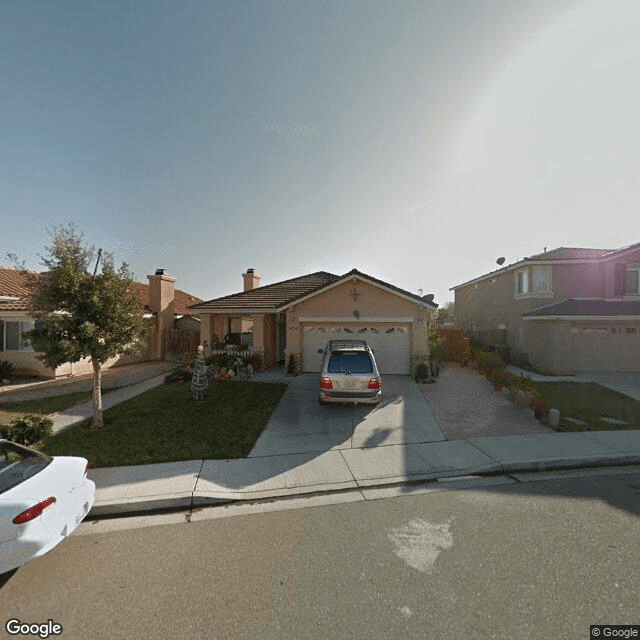
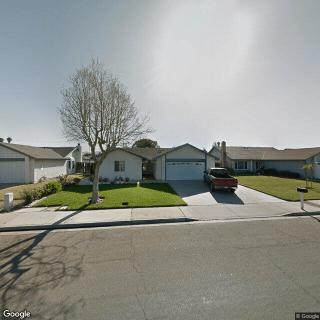
1432 E. Lahr Lane, Santa Maria, CA 93454
To contact a resident: (805) 346-6053
For more information about senior living options: (866) 208-4318
Majestic Home Care Costs & Pricing
At Majestic Home Care, we pride ourselves on offering competitive pricing that significantly undercuts both Santa Barbara County and the broader California region. For a semi-private room, our monthly fee stands at $1,700, which is notably lower than the county average of $3,007 and the state average of $3,333. Similarly, our private rooms are priced at $2,500, in stark contrast to the county's rate of $3,480 and the state's higher average of $3,939. This strategic pricing positions Majestic Home Care as a cost-effective option for those seeking quality care without compromising on comfort or services.
| Floor plans | Majestic Home Care | Santa Barbara County | California |
|---|---|---|---|
| Semi-Private | $1,700 | $3,007 | $3,333 |
| Private | $2,500 | $3,480 | $3,939 |
Senior living communities with a similar price nearby
-
from -$200 / mo
Pedflor's Residential Care
$1,500 to $3,500 / month0.4 miles away -
from +$100 / mo

Santa Maria Terrace
$1,800 to $3,500 / month0.8 miles away -
from +$300 / mo
Superior Residential Care Facility For The Elderly
$2,000 / month7.0 miles away -
from +$300 / mo
Superior Residential Care For The Elderly II
$2,000 / month6.8 miles away -
from +$100 / mo
Mydor's Open Guest Home 3
$1,800 to $2,500 / month0.8 miles away
Overall Review of Majestic Home Care
Pros
 Majestic Home Care is generally good.
- Kristina runs the facility.
- The aides are very loving and kind.
- Residents receive three good home-cooked meals a day.
- The staff provides reliable, attentive care.
Cons
 Kristina doesn't always touch base with people.
- There was not communication between Kristina and the staff members.
- Everything falls on the shoulders of the aides.
- There could be better training for the aides since they are responsible for so much.
Review
Majestic Home Care in Santa Maria is best suited for seniors who prize a warm, home-like atmosphere, where consistently loving aides deliver daily care and residents receive reliable home-cooked meals. This community serves better those who need assistance with activities of daily living rather than intensive, hospital-level medical oversight. Families seeking a personal, caregiver-centric environment will find the most value here. Those requiring rigorous clinical governance, ongoing physician coordination, or specialized dementia programming may want to consider alternatives with stronger administrative structures and more formal care coordination.
The core strengths revolve around the caregiving team and the home-like setting. Kristina runs the facility with aides who are described as loving and kind, and residents enjoy three meals a day prepared in-house. This combination creates a reassuring, comfortable daily rhythm and reduces family worries about day-to-day welfare. Yet the model leans heavily on front-line staff, which means supervision and consistency hinge on the skills and communication of aides and the director’s ability to stay in touch with both teams and families. Communication gaps have surfaced, most notably when fasting instructions for lab work were not relayed properly, leading to avoidable confusion. Training for aides, while good in spirit, could be more robust to ensure uniform performance across shifts and circumstances.
Because of these dynamics, Majestic is not the first pick for families demanding meticulous oversight or frequent, formal updates. If a resident requires regular management touchpoints, timely family notifications, or on-site nursing oversight, alternatives with clearer governance will usually serve better. The facility shines when warmth and daily routines are the priority and when there is alignment between family expectations and Kristina’s leadership. The decisive question is whether the advantages of compassionate caregiving and home-style meals outweigh the risk of sporadic miscommunications and the heavy reliance on aides for day-to-day risk management.
The key to making the pros work lies in clear, proactive communication and defined accountability. Prospective families should probe how care plans are created, updated, and shared, who is responsible for reminders about medical instructions, and how family updates are delivered. Establish a defined chain of accountability to minimize missteps, especially around any medical or lab-related instructions, and demand transparency about staffing coverage and ratios. Inquire about ongoing training for aides and whether continuing education is part of the workforce development, so consistency can be maintained even during shift changes. Only with these safeguards can the warmth translate into dependable, predictable care.
Practical evaluation steps should focus on getting beneath the surface: observe staff interactions in common areas, talk directly with aides about daily routines, and taste-test a meal to verify kitchen quality. Request a written sample care plan and a clear description of how medical appointments, medications, and communications with family are managed. Seek explicit expectations for post-incident updates and the cadence of routine reporting. For families seeking more control over day-to-day decisions, confirm that these preferences can be accommodated through concrete protocols and dependable leadership.
Bottom line: Majestic Home Care delivers a solid, warmth-forward option for seniors who value loving caregiving, a homelike environment, and reliable meals, and who can tolerate occasional communication gaps. It is less well-suited for families needing tight medical oversight, rigorous, structured reporting, or specialized memory-care programming. If those needs exist, exploring alternatives with stronger clinical governance and clearer management accountability is prudent. When this community is pursued, establish explicit expectations, regular communication routines, and robust staff training measures to safeguard consistency and peace of mind.
 Board and Care Home
 Private
 Santa Maria Pub Capt G Allan Hancock (5 miles away)
 Diabetic care



 Engaging Brain Games and Innovative Apps to Keep Senior Minds Active
 Effective Strategies for Keeping Seniors' Minds Active: A Deep Dive into Brain Games and Apps
 In-Depth Look at the VA Aid and Attendance Program