
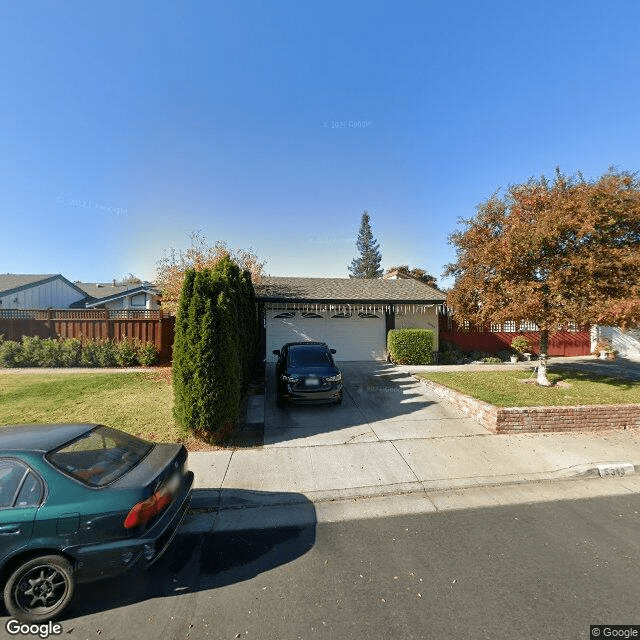
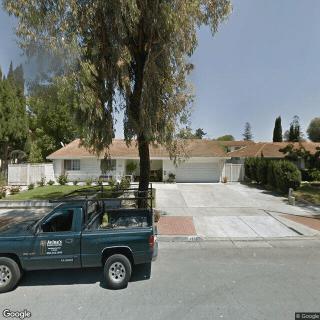
5343 Hansell Drive, San Jose, CA 95123
For more information about senior living options: (866) 208-4318
Family Senior Care Home Costs & Pricing
The costs for Family Senior Care Home reflect a premium pricing model compared to the broader market in Santa Clara County and across California. For a semi-private room, residents can expect to pay $5,500 monthly, significantly higher than the county average of $3,943 and the state average of $3,333. Similarly, private rooms at Family Senior Care Home come with a monthly fee of $6,000, surpassing both the local average of $4,096 and the state average of $3,939. This pricing may be indicative of specialized services or tailored care that Family Senior Care Home provides, positioning it as a choice for families seeking quality and personalized support for their loved ones in a competitive landscape.
| Floor plans | Family Senior Care Home | Santa Clara County | California |
|---|---|---|---|
| Semi-Private | $5,500 | $3,943 | $3,333 |
| Private | $6,000 | $4,096 | $3,939 |
Assisted Living communities with a similar price nearby
-
from -$650 / mo
Alexandria Victoria
$4,850 / month21.3 miles away -
from +$500 / mo
Sunflower Care Home
$6,000 to $7,000 / month13.5 miles away -
from -$855 / mo

Loma Clara Senior Living
$4,645 to $6,895 / month14.0 miles away -
from +$895 / mo
Almaden
$6,395 to $11,495 / month3.5 miles away -
About the same

Merrill Gardens At Campbell
$5,395 to $9,295 / month7.0 miles away
Overall Review of Family Senior Care Home
Pros
 They have been absolutely wonderful and they are taking great care of our loved one.
- They have really stepped it up and they are quite caring.
- They have gone the extra mile.
- The area near Snell Road is nice.
Review
Family Senior Care Home in San Jose is best suited for families seeking a small, intimate, home-like setting where caregivers know residents personally and consistently go the extra mile. The community shines when daily warmth and personalized attention trump the appeal of large, highly structured campuses. It is a strong fit for older adults who don’t require round-the-clock medical escalation but still want dependable supervision, regular human interaction, and a calm, familiar environment. Its San Jose location near Snell Road adds a quiet, approachable neighborhood feel that helps residents settle in quickly.
Those evaluating this option should also consider who may want alternatives. For seniors needing frequent skilled nursing, intensive medical oversight, or specialized memory care, larger assisted living campuses or dedicated memory-care communities usually offer more on-site clinicians, stricter care protocols, and a wider calendar of specialized programs. Families should assess whether the smaller home can consistently manage evolving medical needs and emergency contingencies, and whether they’re comfortable relying on a leaner care ecosystem with outside partners for certain services. If predictable, clinic-like staffing and broad activity rosters are priorities, alternatives deserve serious consideration.
The strongest selling points here are the staff’s genuine care and the personal, proactive approach to daily life. Reviewers describe caregivers as “absolutely wonderful” and note that the team has “gone the extra mile,” indicating a level of attentiveness that translates into reliable safety checks, responsive help, and tailored routines. In a smaller, home-style setting, this translates into meaningful continuity: residents see familiar faces, forms of communication flow smoothly, and caregiving decisions can be adjusted quickly to align with a resident’s preferences. For families, that translates into less stress, clearer accountability, and a sense that a loved one is known and valued each day.
Those same strengths naturally temper some of the common drawbacks of a compact operation. The trade-off for a more intimate environment is typically fewer on-site amenities, less formal rehabilitation programming, and a leaner pool of specialists compared to larger campuses. Yet the advantage lies in the depth of relationships and day-to-day predictability. When the priority is avoiding frequent transitions and preserving routine in a familiar setting, attentive staff and a steady pace often offset the potential gaps in structured programming. Families must decide whether intimate, relationship-centered care outweighs the convenience of larger, more program-driven options.
Practical considerations matter in the San Jose context. The area’s quiet, residential vibe supports smoother transitions for many seniors, but prospective residents should confirm licensing, staffing ratios, and the plan for handling medications and emergencies. A decisive step is an in-person visit at different times to observe how care operates beyond polished statements, and to gauge whether staff responsiveness meets expectations during routine tasks and busy moments alike. Request a clear, written care plan, inquire about after-hours coverage, and map out the coordination with any outside providers the resident already relies on.
Ultimately, this community stands out for families prioritizing warmth, reliability, and a sense of belonging in a small, supportive setting. It is a pragmatic choice for residents who flourish with consistent caregiver relationships, familiar surroundings, and flexible daily routines that feel curated for the individual. For households where medical complexity, rigorous programming, or expansive on-site resources are non-negotiable, exploring larger facilities may be warranted. The right path emerges from a focused visit, transparent conversations about current needs, and a concrete plan for daily living, one that confirms this home can deliver dignified, comfortable living with trustworthy, attentive support.
 6 resident community capacity
 Assisted Living
 Board and Care Home
 Cable or satellite TV
 Dining room
 Fully furnished
 Garden
 Housekeeping services
 Move-in coordination
 Outdoor space
 Private
 Private bathrooms
 Telephone
 Wi-Fi/high-speed internet available
 San Jose International (9 miles away)
 24-hour supervision
 Activities of daily living assistance
 Ambulatory care
 Assistance with bathing
 Assistance with dressing
 Assistance with transfers
 Diabetes diet
 Diabetic care
 Incontinence care
 Meal preparation and service
 Medication management
 Special dietary restrictions
 Transportation arrangement (medical)
 Transportation to doctors appointments

 An Extensive Exploration of the VA Aid and Attendance Benefit
 Senior Transition Services: Understanding Their Role, Cost, and Importance
 Exploring the Path to Senior Living: A Comprehensive Look at Independent Living and Assisted Living