
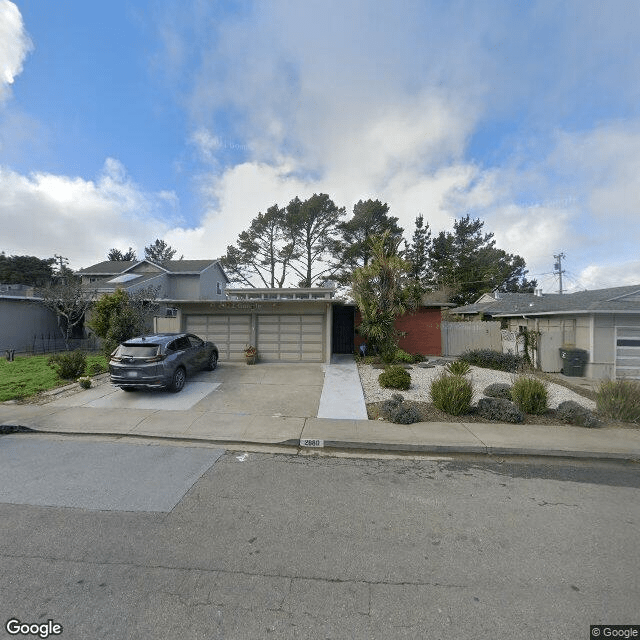
2880 St Cloud Drive, San Bruno, CA 94066
To contact a resident: (650) 303-8497
For more information about senior living options: (866) 208-4318
Elle's Care Home Costs & Pricing
At Elle's Care Home, the monthly costs for care reflect a competitive pricing structure within both San Mateo County and the broader California market. For a semi-private room, residents can expect to pay $3,000, which is notably lower than the county average of $3,830 and also more affordable than the statewide average of $3,333. In contrast, the private room option is priced at $5,000 per month. While this figure exceeds the San Mateo County average of $4,281 and surpasses California's average of $3,939, it highlights the unique offerings and personalized care that Elle's Care Home provides. Overall, these rates position Elle's Care Home as an appealing choice for families seeking quality care with lasting value.
| Floor plans | Elle's Care Home | San Mateo County | California |
|---|---|---|---|
| Semi-Private | $3,000 | $3,830 | $3,333 |
| Private | $5,000 | $4,281 | $3,939 |
Senior living communities with a similar price nearby
-
from -$300 / mo

Home Instead Senior Care
$2,700 to $3,400 / month15.6 miles away -
from +$500 / mo
Apple Tree Home Care
$3,500 / month7.5 miles away -
from -$500 / mo
Ava Bella Care Home
$2,500 to $3,000 / month21.9 miles away -
from +$195 / mo
Harbor Bay Assisted Living
$3,195 to $5,000 / month13.5 miles away -
from +$500 / mo
Angels Golden Care Assisted Living
$3,500 to $5,000 / month13.4 miles away
Overall Review of Elle's Care Home
Pros
 The place is described as the best place ever.
- The staff treat residents and their families as part of the family.
- The facility is very clean.
- The outreach coordinator is delightful.
- There are at least two staff on duty 24/7.
- Activities and sing-alongs are provided.
- The staff understand residents’ problems and know how to engage them.
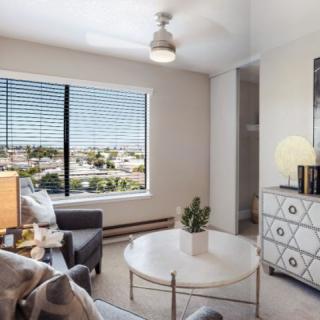
- The rooms are lovely with good natural light.
- Overall, it is a good fit.
Review
Elle's Care Home in San Bruno is best suited for seniors who want a warm, home-like atmosphere where staff know residents by name and families feel their loved ones are treated as part of a larger circle. It works particularly well for couples or households seeking daily life shaped by natural light, a comfortable room, and regular social engagement, rather than a clinical, impersonal setting. The tone here is practical and intimate: caregiving that feels personal, with staff who strive to create a sense of belonging and normalcy amid aging.
Those who should consider alternatives are clear. If higher-acuity medical supervision, dementia- or memory-care-specific programming, or aggressive rehabilitation services are non-negotiable, this community may fall short. The record shows at least two staff on duty 24/7, which is solid for safety, but there is no explicit evidence of on-site nursing coverage around the clock or highly specialized clinical support. Budget sensitivity also matters: $3,500 per month includes one doctor-visit transport, yet multiple or non-medical trips may require additional arrangements, which could influence overall affordability and convenience.
The major positives pull hard in favor of a home-like, socially active environment. Cleanliness and bright, sunlit rooms create an inviting backdrop for daily life. An outreach coordinator described as delightful signals strong family-oriented coordination and a clear channel for communication. The staff’s ability to understand the resident’s problems and draw her out into activities points to thoughtful, individualized engagement, crucial for maintaining dignity and mood. The programmatic rhythm, regular activities and sing-alongs, helps counter isolation and provides social structure that often makes daily life feel meaningful. The included transport to doctor appointments is a practical plus, reducing the friction of medical logistics and enhancing consistency in healthcare.
Despite those strengths, the picture has gaps that families should weigh. The limited volume of published feedback means the decision rests on a small sample, raising questions about consistency across shifts, variations in care quality, and long-term outcomes. The transportation arrangement, while useful for medical visits, may prove restrictive for residents who require trips beyond doctors’ offices or who need more flexible scheduling. Absent explicit detail on dementia-focused programming or advanced medical staffing, there is a real need to verify whether the level of care can scale with rising needs or if transitions will be necessary later.
For decision-making, start with a precise profile of the senior’s needs: what level of memory support is required, how mobility is managed, how medications are handled, and how frequently medical follow-ups occur. Prospective families should request a guided tour that probes staff-to-resident ratios at various times, dining quality, safety measures, and the exact scope of services included in the monthly rate. Ask for a sample week of activities to gauge engagement, and confirm what transportation options exist beyond the one-visit-included trip. The transport feature stands out as a differentiator, but clarity on its limits is essential to prevent unexpected costs or gaps.
In practical terms, Elle's Care Home offers a compelling package for households prioritizing a warm, attentive, socially active environment within a clean, welcoming setting. The combination of family-style care, consistent staffing, and structured programming provides real value that can support stability and happiness for residents who fit within its current care framework. That said, for families facing higher medical or memory-care demands, or for those needing broader transport and service options, alternative communities with more explicit clinical capabilities or dementia specialization should be explored. When the fit is right, centered on warmth, reliability, and practical daily living, Elle's Care Home can be a dependable, well-suited choice.
 Board and Care Home
 Activities on-site
 Beautician on-site
 Devotional services off-site
 Indoor common areas
 Outdoor common areas
 Private
 Respite or short term stays offered
 Wheelchair accessible showers
 San Francisco International (5 miles away)
 Diabetic care
 High acuity care
 Incontinence care
 Meals provided
 Adventist services
 Buddhist services
 Islamic services
 Effective Strategies for Keeping Seniors' Minds Active: A Deep Dive into Brain Games and Apps
 In-Depth Look at the VA Aid and Attendance Program
 Nurturing Our Loved Ones: A Daughter's Journey in Caring for Her Mother