

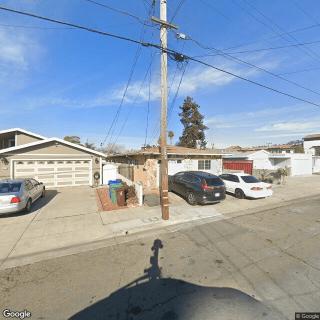
423 Mclaughlin Street, Richmond, CA 94805
For more information about senior living options: (866) 208-4318
Grace Homes 2 Costs & Pricing
At Grace Homes 2, the monthly costs for care reflect a premium positioning compared to both Contra Costa County and broader California averages. For a semi-private room, residents can expect to invest $5,000 per month, which significantly exceeds the county's average of $3,471 and the state's average of $3,333. Private rooms are priced at $6,000 monthly; this is notably higher than the county's $4,088 and the state's $3,939. Similarly, studio accommodations also come in at $6,000, surpassing county averages of $4,358 and state averages of $4,145. These figures suggest that while Grace Homes 2 offers quality services potentially justifying these rates, they are positioned at the higher end of the cost spectrum within their regional context.
| Floor plans | Grace Homes 2 | Contra Costa County | California |
|---|---|---|---|
| Semi-Private | $5,000 | $3,471 | $3,333 |
| Private | $6,000 | $4,088 | $3,939 |
| Studio | $6,000 | $4,358 | $4,145 |
Memory care communities with a similar price nearby
-
About the same

Blessing Home
$5,000 to $6,000 / month20.4 miles away -
from +$500 / mo
Carnelian III
$5,500 / month13.9 miles away -
from -$500 / mo
Lafayette Gardens
$4,500 to $5,000 / month11.8 miles away -
About the same

Aegis of Moraga
$5,100 to $6,150 / month12.7 miles away -
from +$700 / mo

Sunrise of Burlingame
$5,700 to $9,000 / month23.9 miles away
Overall Review of Grace Homes 2
Pros
 Grace Homes is a small facility that feels like family.
- The staff work hard to keep Grace Homes feeling like family.
- Grace Homes is a very special place thanks to the owner and staff.
- Communication with the family is very good.
- The facility is very clean.
- Residents receive warm, cozy, and individualized care with plenty of hugs and attention.
- The facility has no odor.
- The RN on staff is personable and understands elder care.
Cons
 Shared room with another male patient, suggesting reduced privacy.
- There may be an additional fee for injections and awake-at-night services.
Review
Grace Homes 2 in Richmond is best suited for families seeking a small, intimate, home-like assisted living where residents receive highly personalized attention and staff know them by name. It works well for seniors who respond to gentle, affectionate care and who feel most secure in a setting that mirrors a close-knit family. The community’s size supports steady supervision and quick responses, with leadership anchored by an involved owner and a stable caregiving team that sustains a consistent care approach. Proximity to family and transparent, ongoing communication further sharpen its value for caretakers who want reassurance and regular updates.
Alternatives worth weighing include larger facilities with more structured memory-care programming or communities offering private rooms and broader on-site medical staffing. If privacy is a priority or if a loved one requires intensive clinical oversight, a bigger campus with dedicated dementia units or 24/7 nursing coverage may be necessary. Families should also consider settings with richer social programming and more in-house therapists if the resident benefits from frequent rehabilitation, extensive activity schedules, or a wider array of therapeutic services. The shared-room setup noted by one reviewer signals a potential trade-off between intimacy and personal space that could matter for some families.
On balance, the small, homelike environment translates into highly individualized care. Staff are described as gentle, consistent, and deeply attentive, which can meaningfully reduce anxiety for memory challenges and preserve a sense of dignity. The facility’s cleanliness and warm atmosphere help counterbalance any limits imposed by its size, and strong family communication keeps caregivers aligned with changing needs. The ability to tailor meals, low carb, low salt, higher protein, and to accommodate incontinence demonstrates practical responsiveness to daily living requirements. Laundry is included in the base rate, a tangible financial plus, and the option to dine in groups or alone supports both nutrition and resident autonomy. An on-site RN adds a layer of clinical reassurance without relying solely on external providers.
Yet downsides exist and warrant careful consideration. The shared room arrangement and the facility’s compact footprint may restrict privacy and overnight flexibility. For families counting on injections or overnight awakening services, expect potential additional fees that will affect long-term budgeting. Although the RN presence is valuable, it does not substitute for a full continuum of medical services that larger campuses offer, so residents with complex clinical needs may require coordination with outside providers. Even so, the combination of intimate scale, affectionate staff, and straightforward family communication often yields a steadier, more predictable day-to-day experience than sprawling campuses.
Accessibility features and layout support practical living: ramps to the front door and to a backyard, two common rooms, plus the option to eat communally or independently. The home-like feel, reinforced by a focus on warmth and personal touch, aligns with goals centered on comfort and emotional well-being. Cleanliness and attentiveness to elder issues, bolstered by the RN caregiver, underscore reliability in core operations. For decision-makers, the appeal lies in predictable costs (laundry included, base-rate structure) and the convenience of a location close to home. The caregiver experience appears to translate into clearer, more consistent updates for families, reducing the stress of ongoing care decisions.
Overall, Grace Homes 2 specializes in a compassionate, intimate living experience that suits seniors who prize connection, routine, and easy family engagement. It is a strong contender for those who want a nurturing environment with solid daily oversight and dietary flexibility. Families should consider alternatives if private space, intensive medical supervision, or expansive programming are priorities. Before committing, verify room configuration options, the exact fee structure for episodic medical services, and the level of night-time support available. With prudent evaluation, Grace Homes 2 can be the right fit for a resident who thrives on personal attention and a sense of family within a small, well-led home.
 6 resident community capacity
 Assisted Living
 Board and Care Home
 Memory Care
 Activities off-site
 Beautician on-site
 Cable or satellite TV
 Devotional services off-site
 Dining room
 Fully furnished
 Garden
 Housekeeping services
 Indoor common areas
 Move-in coordination
 Outdoor common areas
 Private
 Respite or short term stays offered
 Telephone
 Wheelchair accessible showers
 Wi-Fi/high-speed internet available
 Metropolitan Oakland International (16 miles away)
 24-hour supervision
 Assistance with bathing
 Assistance with dressing
 Assistance with transfers
 Diabetes diet
 Diabetic care
 High acuity care
 Incontinence care
 Meal preparation and service
 Medication management
 Special dietary restrictions
 Transportation arrangement (medical)
 Transportation to doctors appointments



 Guiding Your Journey: Understanding Power of Attorney for Elderly Parents
 22 Remarkable Caregiver Support Groups Available Online and In-Person
 Understanding Medicaid Coverage for Assisted Living: A Comprehensive Guide