
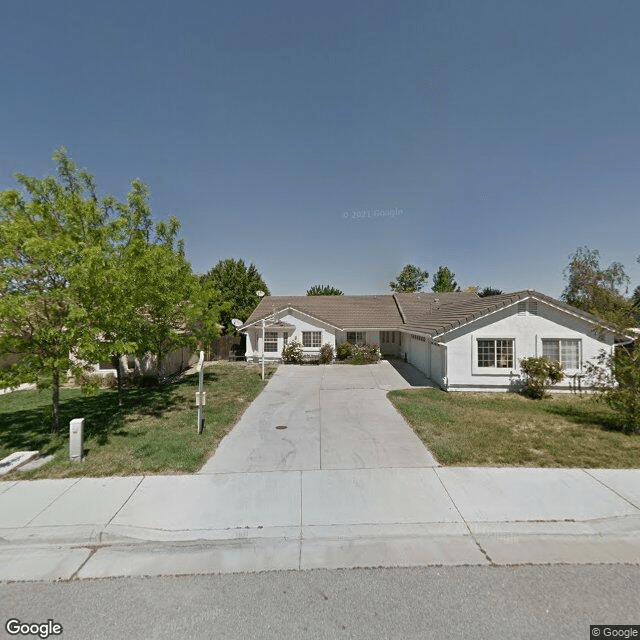
203 Cardinal Way, Paso Robles, CA 93446
To contact a resident: (805) 226-0719
For more information about senior living options: (866) 208-4318
Golden Bear Home Care Services RCFE Costs & Pricing
Golden Bear Home Care Services RCFE offers competitive pricing for its residential care facilities, particularly when compared to the broader landscape of San Luis Obispo County and California as a whole. For semi-private rooms, Golden Bear's monthly cost of $2,300 is significantly lower than the county average of $3,575 and even more advantageous compared to the state average of $3,333. Similarly, the private room option at Golden Bear is priced at $3,000 per month, presenting a favorable alternative to the higher costs seen in both San Luis Obispo County ($4,372) and across California ($3,939). These cost-effective rates reflect Golden Bear's commitment to providing quality care while ensuring that residents have access to affordable housing options in a supportive environment.
| Floor plans | Golden Bear Home Care Services RCFE | San Luis Obispo County | California |
|---|---|---|---|
| Semi-Private | $2,300 | $3,575 | $3,333 |
| Private | $3,000 | $4,372 | $3,939 |
Senior living communities with a similar price nearby
-
from -$125 / mo
Consolidated-Garden Creek At the Village
$2,175 to $3,795 / month21.4 miles away -
from +$200 / mo
Casa De Flores
$2,500 to $4,200 / month18.8 miles away -
from -$300 / mo

Horizon Hills
$2,000 / month10.0 miles away -
from +$400 / mo
Yellow Rose Assisted Living
$2,700 to $3,300 / month9.8 miles away -
from +$200 / mo
Sunrise RCFE 2
$2,500 to $3,000 / month21.4 miles away
Overall Review of Golden Bear Home Care Services RCFE
Cons
 The reviewer felt the level of care was not what they expected or needed.
- Medication was not administered according to the doctor's orders.
- Personal hygiene needs were not properly attended to.
- There were no planned or offered activities.
- The care was offhanded and impersonal.
- They would not recommend the facility.
Review
Golden Bear Home Care Services RCFE in Paso Robles is best suited for seniors who require minimal, largely self-directed assistance and for families who want a straightforward, lower-intensity living arrangement where daily oversight is limited. The setting appears to accommodate residents who can manage most routines on their own and only need occasional help with basic tasks. For residents who rely on steady medication administration, consistent personal hygiene support, or structured daily programming, this community does not appear prepared to deliver the level of care those needs demand. In short, it serves a niche of very light support rather than a comprehensive caregiving solution.
Families should consider alternatives if reliable medication management is essential, if daily hygiene support is non-negotiable, or if a resident benefits from regular, engaging activities and social interaction. The reviews consistently point to gaps in clinical oversight and care engagement, suggesting a mismatch with anyone who requires predictable staff responsiveness or a proactive care plan. Those with safety concerns around medication accuracy or who value a lively calendar of events should look elsewhere to avoid the risk of unmet needs and potential decline.
Two pervasive failures emerged: medications lacking adherence to physician orders and insufficient personal hygiene assistance, compounded by an absence of planned or offered activities. Those issues translated into care that felt offhand and impersonal, eroding dignity and safety. The implications are serious: missed or incorrect medications can lead to health setbacks, while neglected hygiene increases infection risk and discomfort. The lack of meaningful engagement leaves residents socially isolated, with little motivation or structure to maintain wellness. Taken together, these factors make the current setting unsuitable for any resident needing reliable, attentive caregiving.
Because the reviews do not reveal meaningful positives, there is no offset to the core deficiencies. A practical reader should interpret this as a warning: without demonstrable strengths in governance, supervision, and day-to-day care, the facility cannot be trusted to meet basic expectations of a residential care setting. Prospective families should weigh the absence of consistent care benchmarks against other communities that can show clear medication protocols, documented hygiene support, and a robust program of activities. If a move is not urgent, use the comparison window to separate truly capable options from ones that resemble this profile.
During due diligence, adopt a rigorous checklist: obtain current medication administration records and verify alignment with the resident's doctor orders; request direct observation of care routines and hygiene assistance; ask for staffing ratios and turnover rates; review activity calendars and talk with current residents about engagement. Inspect how care plans are developed and updated, and whether a qualified supervisor reviews daily care. Probe the facility’s response to concerns, incident reports, and how family communications are handled. Also verify state licensing status and any inspection notes that bear on quality of care.
Bottom line: this community is likely to disappoint families seeking reliable medication management, consistent personal care, and meaningful daily activity. It is a cautionary choice for anyone with moderate to high care needs. For those evaluating options, start with facilities that demonstrate strong clinical oversight, transparent medications processes, proactive hygiene support, and an active program of resident engagement. Plan a transition if existing care is slipping, and approach the search with a concrete decision timeline to avoid prolonged exposure to subpar care. In the Paso Robles area, alternatives exist that can deliver the dignity, safety, and engaged living that families expect.
 Board and Care Home
 Activities off-site
 Bath tubs
 Devotional services off-site
 Indoor common areas
 Outdoor common areas
 Private
 Respite or short term stays offered
 High acuity care
 Incontinence care
 Medication management
 Kosher
 Intimate 6-resident board-and-care with 24/7 supervision, ADL support, diabetes-friendly meals, and coordinated medical transport.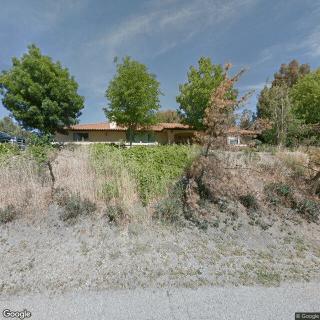

 Understanding Home Health Care: A Comprehensive Guide
 Home Health Care Demystified: A Comprehensive Guide for Families and Caregivers
 Seniors and Modern Transportation: Exploring Uber, Lyft, and Other Ride-Hailing Options