

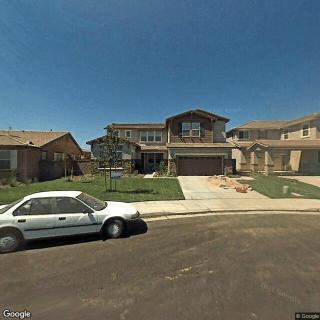
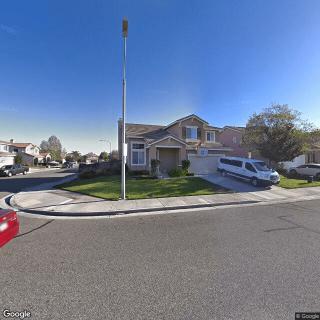
29238 Glencoe Lane, Menifee, CA 92584
For more information about senior living options: (866) 208-4318
Guiding Hands Costs & Pricing
Guiding Hands offers competitive pricing for its accommodations, with monthly costs that reflect both the quality of care and amenities provided. For a semi-private room, residents can expect to pay $3,000, which is slightly above Riverside County's average cost of $2,844 but remains lower than the state median of $3,333. Private rooms are priced at $3,500 - closely aligned with Riverside County's average of $3,474 yet still more affordable than the broader California average of $3,939. For those seeking a studio apartment, Guiding Hands charges $4,000 per month; this is higher than both Riverside County's average of $3,559 and the statewide figure of $4,145. Overall, Guiding Hands strikes a balance between offering quality living arrangements and maintaining a pricing structure that is competitive within both local and state contexts.
| Floor plans | Guiding Hands | Riverside County | California |
|---|---|---|---|
| Semi-Private | $3,000 | $2,844 | $3,333 |
| Private | $3,500 | $3,474 | $3,939 |
| Studio | $4,000 | $3,559 | $4,145 |
Memory care communities with a similar price nearby
-
from -$200 / mo
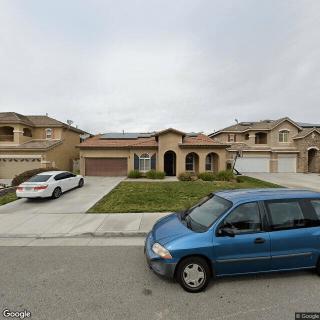
Pebble Brook Senior Home Care
$2,800 to $4,000 / month13.4 miles away -
from +$500 / mo
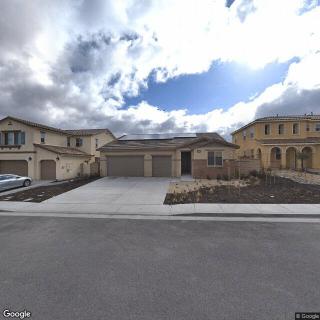
Kun Bai Care
$3,500 to $4,500 / month7.4 miles away -
from -$200 / mo

Bianca's Home Care
$2,800 to $3,400 / month21.5 miles away -
About the same
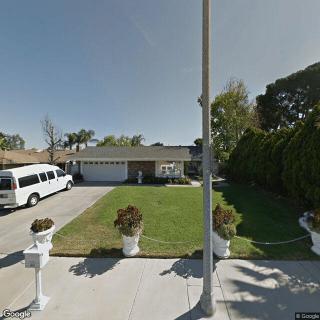
Villa Anne
$3,000 to $4,500 / month23.1 miles away -
from -$500 / mo

Golden Horizon Home I
$2,500 to $2,800 / month20.1 miles away
Overall Review of Guiding Hands
Pros
 The staff member was very concerned about doing a good job and was caring.
- The facility is very clean and nice.
- The reviewer felt a very positive vibe about Guiding Hands.
- The reviewer was highly considering Guiding Hands and seemed likely to choose it.
Cons
 The place has been cited numerous times for health and safety violations and does not ensure guidelines for patients are followed.
- The workers do not follow health and safety guidelines for patients and show no concern for residents.
- The owner controls who speaks to families and allows others to speak on behalf of the facility to prevent family visits.
- The facility does not follow visitation rules or patient rights.
- A parent's meals have not been properly provided for several days, according to hospice, and no one noticed.
- The facility lacks private bedrooms and bathrooms for residents, offering shared spaces and a confusing double-door layout.
Review
Guiding Hands in Menifee is best suited for residents who need close supervision in a small, intimately run setting and are comfortable sharing living spaces. The facility appears to function best for a resident who is highly dependent, potentially bedridden or facing dementia, where the caregiver team can provide hands-on attention in a compact environment. Families seeking a private apartment, a personal bathroom, and the autonomy that comes with independent living will likely find this community insufficient. This is not a place built for privacy or independence; it serves a niche of highly supervised care in a tightly managed, owner-influenced operation.
Those weighing alternatives should consider options that emphasize transparent governance, consistent visitation rights, and clearly defined resident rights, especially for families who expect open access and straightforward communication with staff. If a loved one requires robust privacy, predictable meal service, and uncompromised safety standards, this Guiding Hands location may fall short. Prospective residents who prioritize private accommodations, varied activity programming, or formalized regulatory comfort should look at other, larger facilities with well-documented compliance histories and less owner-dependent decision making.
The strongest positives center on cleanliness and genuine caregiver engagement. Reviewers describe a facility that is well maintained and staffed by people who clearly want to do a good job, with administration that is accessible and responsive in conversations. These elements matter because they lay a foundation for quality daily care and a respectful, attentive atmosphere. Yet, even these strengths do not fully offset the gravity of the most troubling notes, recurrent citations touching health and safety concerns, and a troubling pattern around food delivery and nutrition oversight. In a decision framework, that contrast matters: good day-to-day care can be overshadowed by systemic safety questions and inconsistent adherence to resident rights.
The layout and room configuration further tilt the balance for or against Guiding Hands depending on needs. The facility features two doors and shared, non-private living arrangements, which complicates privacy and convenience for residents who expect a personal suite or a private bathroom. For those with mobility limits or cognitive impairment, the open, door-centric design may be a reasonable compromise, but it becomes a critical drawback for anyone prioritizing dignity, independence, and ease of egress. Families should assess whether this environment aligns with comfort levels around personal space, safety in shared corridors, and the ability to have private family visits without friction.
Rating signals carry real-world implications here. A low overall score, combined with at least one explicit safety concern and a separate account of restricted visitation, signals caution for families evaluating long-term placement. The divergence between a cautious, positive impression from one visitor and the harsher reports from another paints a picture of uneven experience, which is not acceptable for a loved one needing reliable, steady care. Any decision should treat these mixed signals as a red flag for due diligence rather than a casual endorsement.
If Guiding Hands is under serious consideration, a disciplined, methodical due diligence process is essential. Request current state and local inspections, explicit safety and nutrition policies, and staff-to-resident ratios that match the level of care required. Schedule unannounced visits, observe meal service and medication handling, and meet directly with the administrator to gauge transparency and responsiveness. Clarify visitation policies in writing and verify how resident rights are protected in practice. If the answers reveal strong, consistent compliance and a genuinely caring culture, it may be a fit for a highly supervised, privacy-tolerant resident. If not, pursue alternatives that offer private accommodations, stronger safety assurances, and unambiguous family access.
 6 resident community capacity
 Assisted Living
 Board and Care Home
 Memory Care
 Respite Care
 Cats allowed
 Dogs allowed
 Cable or satellite TV
 Dining room
 Fully furnished
 Garden
 Housekeeping services
 Move-in coordination
 Outdoor space
 Private
 Private bathrooms
 Telephone
 Wi-Fi/high-speed internet available
 24-hour supervision
 Activities of daily living assistance
 Ambulatory care
 Assistance with bathing
 Assistance with dressing
 Assistance with transfers
 Diabetes diet
 Diabetic care
 Meal preparation and service
 Medication management
 Special dietary restrictions
 Transportation arrangement (medical)
 Transportation to doctors appointments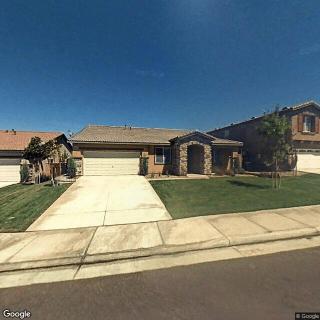



 How and When Medicaid May Cover Assisted Living Costs
 A Detailed Exploration of Assisted Living Medicaid Waivers Across the United States
 Exploring the Contrasts Between Assisted Living and Skilled Nursing