
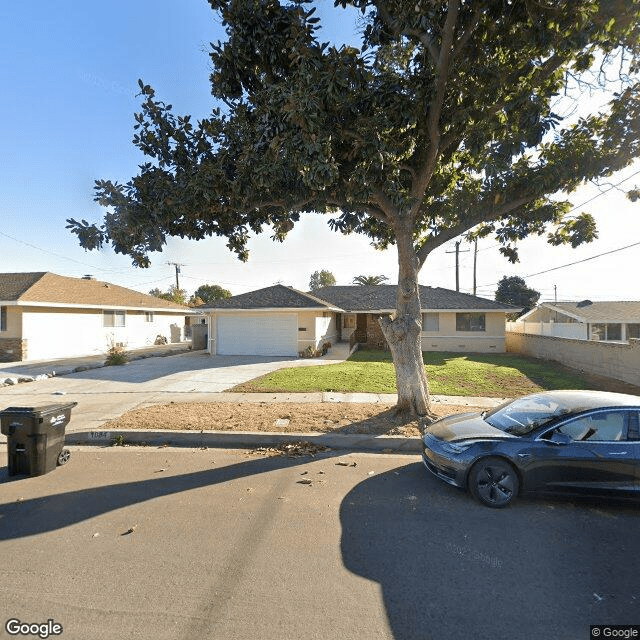
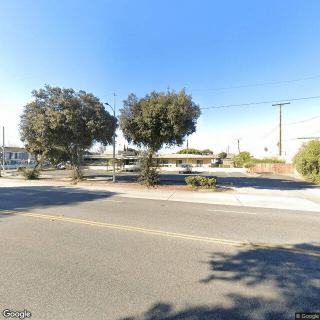
1084 W Grovecenter St, Covina, CA 91722
To contact a resident: (626) 244-9999
For more information about senior living options: (866) 208-4318
A Faithful Home of Covina Costs & Pricing
A Faithful Home of Covina offers competitive pricing for senior living accommodations compared to both Los Angeles County and statewide averages. For a semi-private room, the monthly cost at A Faithful Home is $4,000, which exceeds the county's average of $3,349 and aligns closely with California's overall average of $3,333. When it comes to private rooms, A Faithful Home's charge of $4,500 is slightly above the Los Angeles County average of $4,197 but remains higher than California's state average of $3,939. This pricing structure reflects the home's commitment to providing quality care and services in a nurturing environment while navigating regional cost variations.
| Floor plans | A Faithful Home of Covina | Los Angeles County | California |
|---|---|---|---|
| Semi-Private | $4,000 | $3,349 | $3,333 |
| Private | $4,500 | $4,197 | $3,939 |
Senior living communities with a similar price nearby
-
About the same
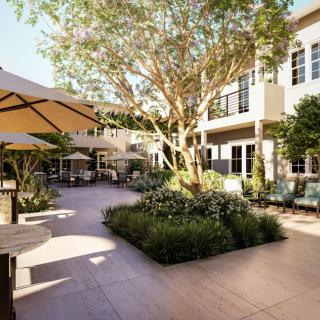
Cadence Brea
$3,995 to $5,500 / month12.6 miles away -
from -$500 / mo
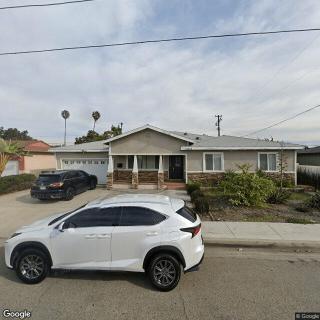
Loving Home Care
$3,500 to $4,500 / month23.4 miles away -
from -$700 / mo

Bella Manor II
$3,300 to $4,290 / month21.6 miles away -
About the same
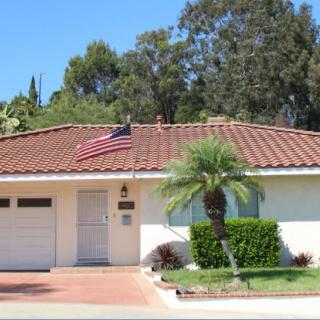
Palomino Residential Care
$4,000 to $6,000 / month13.8 miles away -
from -$500 / mo
Aloha Residential Care
$3,500 to $6,500 / month22.0 miles away
Overall Review of A Faithful Home of Covina
Pros
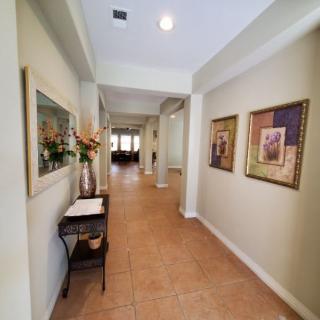
 The home is new, clean, and bright.
- It offers excellent options for person-centered care.
- There is lots of potential for growth and expansion, with great support offered for a lifetime of service.
- It prioritizes female residents, matching the reviewer’s search criteria.
- The reviewer highly recommends it for ambulatory females.
Cons
 The reviewer notes very low occupancy, with only one resident currently.
- The facility has a six-bed option but only one resident, indicating underutilization.
- The stated preference for admitting only females could be perceived as restrictive.
Review
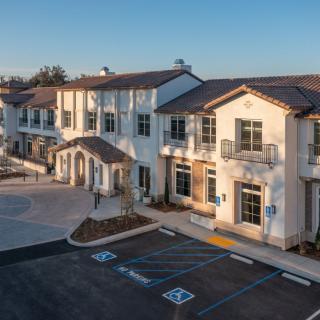
A Faithful Home of Covina is best suited for ambulatory older women who are seeking a tightly run, intimate living experience and who prefer a female-only environment. The home-style setting is new, with bright, clean spaces that reduce potential concerns about upkeep and hygiene. Its six-bed footprint promises a close-knit atmosphere where care can be highly individualized. The single-occupant current status, only one resident so far, signals a frontier-stage operation with room to tailor services as needs emerge. For families prioritizing a lifestyle that feels like a personal residence rather than a clinical facility, this is a compelling fit, particularly when female companionship and a life-long service mindset are paramount.
However, this is not the right pick for every situation. Families with male loved ones or those seeking a mixed-gender living environment will want alternatives. Similarly, if memory care, high-level clinical support, or a broad program of events and peer socialization are non-negotiable, other communities with larger populations and established memory-care tracks may better fit. The current occupancy level also matters: one resident today means social opportunities are limited and programming is just getting started. If stability and ready-made peer networks are priorities, consider options with a more mature resident base.
On the upside, cleanliness and brightness set a high standard from the outset, influencing daily comfort and pride of place. The review highlights excellent options for person-centered care, suggesting care plans that lean into individual preferences rather than a one-size-fits-all approach. A six-bed option signals potential for growth without sacrificing the home-like feel, which is rare in larger facilities. The emphasis on lifelong service aligns with families seeking a partner that sticks with the family through changing needs, not just a short-term care engagement. For ambulatory seniors who want minimal institutional feel, this environment can be a meaningful stepping stone.
These strengths largely offset the main drawback, early-stage occupancy. The intimate scale enables more attentive staffing and flexible scheduling that can adapt as more residents join, ensuring care remains personalized rather than rushed. The new-status also invites proactive involvement in shaping culture, activity ideas, and programming, meaning families can influence what life looks like for residents. The caveat is that until occupancy grows, social programming may be limited and resource commitments might depend heavily on a lean team. Yet for some families, this is exactly the advantage: care that can be tuned to individual rhythms rather than a standard calendar.
Prospective buyers should inquire about the pace and plan for expansion, staffing ratios, and how the facility plans to maintain a high standard with increasing resident numbers. Clarify what 'person-centered' care entails day-to-day, the availability of activities, transportation, dietary options, and how the gender preference is implemented in practice (resident intake, staffing, and guest policies). Ask about compatibility with varying health needs and how quickly the home can accommodate changes in care level. Given the single-resident baseline, assess how to ensure sustained social engagement as the community grows.
In short, A Faithful Home of Covina is a strong match for families prioritizing a feminine, intimate, person-centered setting with a bright, clean environment and a future growth path. It deserves serious consideration for ambulatory females who want a home-like experience with individual attention and a commitment to lifelong service. Alternatives are worth exploring for those needing a male-inclusive setting, more immediate social networks, or established scale and memory-care options. The decision hinges on balancing the appeal of a small, flexible, female-forward home against the need for broader peer interaction and more mature programming as soon as possible.
 Board and Care Home
 Activities on-site
 Cable or satellite TV
 Devotional services on-site
 Handicap accessible
 Indoor common areas
 Outdoor common areas
 Private
 Private bathrooms
 Wheelchair accessible showers
 Wi-Fi/high-speed internet available
 Ontario International (17 miles away)
 Medication management
 Gluten-free
 BBQs or picnics
 Birthday parties
 Forever fit
 Live dance or theater performances
 Live musical performances
 Stretching classes
 Trivia games

 Caring for Those Who Care: Recognizing, Understanding, and Overcoming Caregiver Burnout
 Caregiver Exhaustion: Recognizing the Signs and Restoring Your Well-Being
 Understanding Hospice Care at Home: Comprehensive Services, Key Benefits, and Eligibility