
975 Valley Vista Drive, Camarillo, CA 93010
For more information about senior living options: (866) 208-4318
Mom's Place 3 Costs & Pricing
Mom's Place 3 offers an environment of comfort and care, with monthly costs reflecting the facility's commitment to quality service. For a semi-private room, the cost is $5,800, which is significantly higher than both Ventura County's average of $3,438 and California's state average of $3,333. The pricing for private rooms at Mom's Place 3 stands at $6,500, exceeding the local figure of $4,082 and the statewide average of $3,939. These figures suggest that while Mom's Place 3 positions itself in a premium market segment alongside its high-quality amenities and personalized care services, it does so at a notable price point when compared to regional and state averages.
| Floor plans | Mom's Place 3 | Ventura County | California |
|---|---|---|---|
| Semi-Private | $5,800 | $3,438 | $3,333 |
| Private | $6,500 | $4,082 | $3,939 |
Memory care communities with a similar price nearby
-
from -$805 / mo

Varenita Simi Valley
$4,995 to $8,400 / month19.8 miles away -
from +$500 / mo
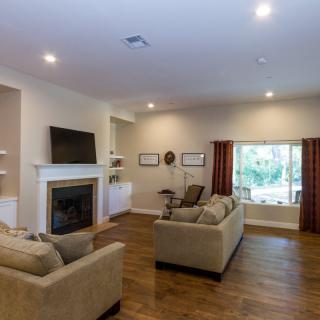
Park Vista at Thousand Oaks
$6,300 to $7,100 / month11.4 miles away -
from -$905 / mo
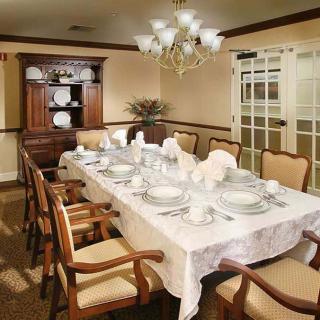
Atria Las Posas
$4,895 to $6,395 / month1.5 miles away -
from -$630 / mo

Meadowbrook of Agoura Hills
$5,170 to $6,930 / month19.9 miles away -
from -$300 / mo

Treacy Villa
$5,500 to $7,500 / month10.7 miles away
Overall Review of Mom's Place 3
Pros
 She found a new spirit when she arrived there.
- She became more engaged.
- She ate much better.
- She loved the caregivers.
- The caregivers were very kind.
Review
Mom's Place 3 in Camarillo is best suited for families seeking an intimate, caregiver-forward setting where a loved one can reconnect with daily purpose, social engagement, and a sense of warmth. The community clearly thrives on personal attention, small-community dynamics, and a philosophy that caregivers matter, an environment where daily interactions and mealtime moments become anchors for improved mood and appetite. It is especially well-muited for seniors who respond to gentle guidance, regular companionship, and a focused, homelike atmosphere rather than a large, impersonal campus.
Two independent accounts describe a striking early impact after arrival: the mother’s spirit felt rekindled, engagement levels rose, and eating improved. In both notes, caregivers stood out as a steady source of kindness and stability, shaping an atmosphere that feels genuinely supportive rather than transactional. Those elements, the consistent warmth of staff, the emphasis on social connection, and the way routines reinforce comfort, are the core strengths that can translate into meaningful improvements in everyday quality of life.
What is missing in the public narrative is as important as what is on display. The review base is small, with no explicit discussion of downsides, leaving questions about medical oversight, level of skilled nursing available on site, and the facility’s capacity to handle medical complexity or memory-care needs. Prospective families should verify staffing ratios, caregiver continuity, whether there is on-site nursing, and what happens if a higher level of medical support becomes necessary. Details about activity variety, transportation, and long-term cost structures also require direct confirmation.
Those positive attributes, the staff warmth, the engaging environment, and the evident attention to nutrition, can offset many uncertainties for families prioritizing daily well-being and companionship. When a loved one responds to gentle, consistent engagement and feels connected to caregivers and peers, the payoff can be substantial: improved appetite, reduced withdrawal, and a more purposeful daily rhythm. In short, the emotional and social dividends highlighted by the positives help counterbalance the lack of breadth in the available information.
For families whose needs extend beyond companionship and nutrition, such as robust clinical oversight, dementia-specific programming, or access to skilled nursing, alternatives should be explored. Larger campuses with formal memory-care wings, more intensive medical staffing, or broader rehabilitation services may align better with those requirements. The Camarillo landscape offers options that provide stronger medical integration or greater specialty programming, which can be decisive for residents with higher care complexity or sudden changes in health.
Actionable decision steps are essential. Schedule a candid tour focused on staffing patterns, caregiver turnover, and the consistency of caregivers during shifts. Inquire about meal plans, dietary accommodations, and the cadence of meaningful daily activities. Confirm the on-site clinical support structure, emergency protocols, and what levels of care are feasible without relocation. Finally, request transparent information on licensing, inspection records, and any trial-stay opportunities to observe daily operations firsthand. When warmth, engagement, and nutrition are the top priorities, Mom's Place 3 warrants serious consideration for families seeking a small, humane setting rather than a large, clinic-like environment.
 6 resident community capacity
 Assisted Living
 Board and Care Home
 Memory Care
 Dogs allowed
 Activities off-site
 Bath tubs
 Beautician on-site
 Cable or satellite TV
 Devotional services off-site
 Dining room
 Fully furnished
 Garden
 Housekeeping services
 Indoor common areas
 Move-in coordination
 Outdoor common areas
 Private
 Private bathrooms
 Respite or short term stays offered
 Telephone
 Wheelchair accessible showers
 Wi-Fi/high-speed internet available
 Oxnard (9 miles away)
 24-hour supervision
 Ambulatory care
 Assistance with bathing
 Assistance with dressing
 Assistance with transfers
 Diabetes diet
 Diabetic care
 High acuity care
 Incontinence care
 Meal preparation and service
 Medication management
 Special dietary restrictions
 Transportation arrangement (medical)
 Transportation to doctors appointments
 Adventist services
 Buddhist services
 Islamic services
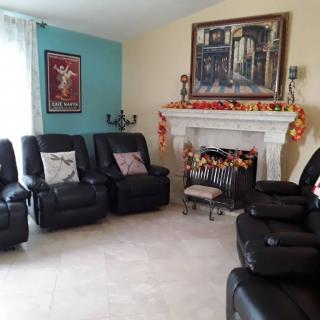
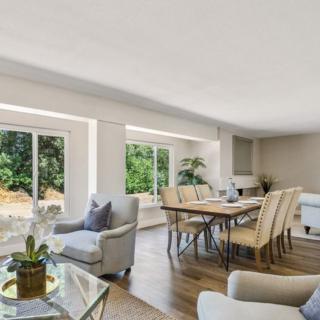
 Guiding Your Journey: Understanding Power of Attorney for Elderly Parents
 22 Remarkable Caregiver Support Groups Available Online and In-Person
 Understanding Medicaid Coverage for Assisted Living: A Comprehensive Guide