
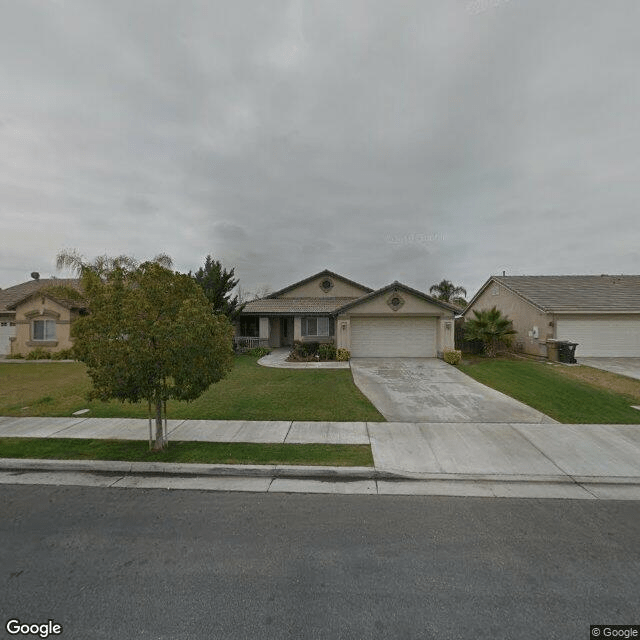
10617 Victoria Falls, Bakersfield, CA 93312
To contact a resident: (661) 717-2006
For more information about senior living options: (866) 208-4318
Evergreen Gardens Costs & Pricing
Evergreen Gardens offers competitive pricing for its residents compared to broader market standards in Kern County and California. For a semi-private room, residents pay $2,000 per month, significantly lower than the county average of $2,887 and the state average of $3,333. Private rooms are also attractively priced at $2,500, which is more economical than both Kern County's average of $3,456 and California's statewide average of $3,939. These cost-effective options make Evergreen Gardens an appealing choice for individuals seeking quality care without the hefty price tag often associated with similar facilities in the area.
| Floor plans | Evergreen Gardens | Kern County | California |
|---|---|---|---|
| Semi-Private | $2,000 | $2,887 | $3,333 |
| Private | $2,500 | $3,456 | $3,939 |
Senior living communities with a similar price nearby
-
About the same
RSFL Care, LLC
$2,000 to $2,600 / month8.3 miles away -
from +$382 / mo
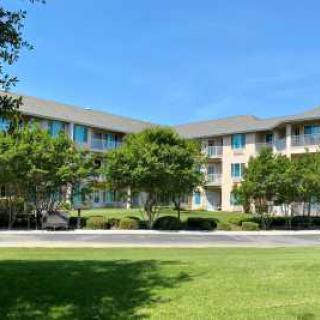
Solstice Senior Living At Bakersfield
$2,382 to $4,302 / month6.1 miles away -
from +$209 / mo
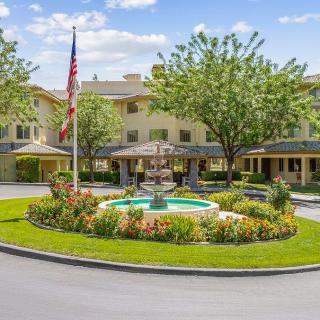
Holiday Columbus Estates
$2,209 to $2,959 / month9.3 miles away -
About the same
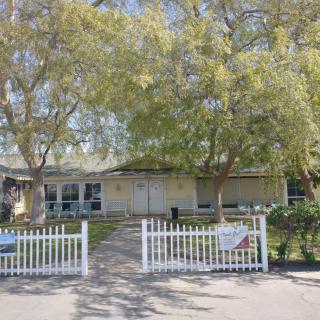
Redwood Bakersfield
$2,000 / month8.3 miles away -
About the same
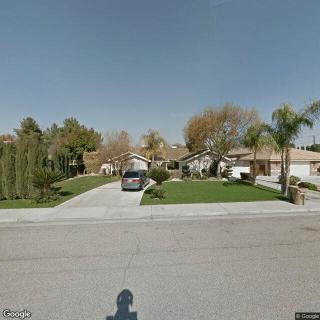
Calloway Gardens
$2,000 to $2,500 / month3.1 miles away
Overall Review of Evergreen Gardens
Pros
 The wedding at this venue was amazing.
- Sherry and Matt are incredible people.
- The venue is stunning.
- The wedding ceremony was perfect.
- The food looks good.
- The couple who runs it are open, friendly, and understanding.
Cons
 The chairs are very uncomfortable for guests who are disabled or larger.
- There should be bigger chairs available.
Review
Evergreen Gardens in Bakersfield is best suited for families prioritizing a warm, boutique environment where owners are visibly involved and the atmosphere centers on hospitality. For seniors and their loved ones evaluating options, the property reads as a highly personalized setting that excels in hosting intimate gatherings and delivering a high-touch guest experience. It shines when the goal is to create meaningful moments with a host who is present, approachable, and responsive. The overall ambiance leans toward beauty and celebration, with dining that earns positive impressions. In practical terms, this is less about traditional residential care and more about an accessible, people-first environment suitable for social time, family events, and transitional planning rather than around-the-clock caregiving.
Those who require continuous daily living support, medical oversight, or mobility accommodations beyond a well-appointed event space should consider alternatives. The reviews consistently point to a couple-run operation that delivers warmth and flexibility, but there is no evidence of licensed caregiving, on-site nursing, or structured eldercare programming. For a resident needing assistance with mobility, bathing, medication management, or fall prevention, a traditional assisted living community with trained staff and safety features would be a more reliable fit. The chairs comment underscores a broader need for accessible design if this space is to double as a daily living environment. In short, Evergreen Gardens functions best as a social hub rather than a complete care solution.
On the pro side, the standout strengths are the palpable hospitality of Sherry and Matt, a setting that feels welcoming and special, and a dining experience that appears well-regarded. The ownership's hands-on approach translates into responsiveness and a sense that guests are valued, which can dramatically reduce stress during events and visits. Those realities partially offset the absence of formal caregiving by delivering a comforting, well-managed atmosphere. However, the lack of dedicated care services and the absence of a formal eldercare routine cannot be offset by charm alone. The trade-off is clear: if daily living needs arise, the venue’s strengths become less relevant and a licensed care context becomes necessary.
Accessibility and comfort for all residents emerge as the main risk. The specific critique about chairs not accommodating larger individuals or those with mobility challenges points to a design issue that matters if daily living or long visits are common. The space excels as a guest-friendly venue, Yet without explicit care offerings, a resident who relies on assistance or safety monitoring may face gaps. Additionally, the information available does not describe staff ratios, medical oversight, emergency readiness, or transportation options, elements central to a true assisted-living decision. Those factors should be clarified before considering Evergreen Gardens as a primary residence.
For families still weighing it, approach with a clear set of questions and a concrete plan. Request a tour focused on accessibility, safety features, and how daily needs would be supported if residents stayed for extended visits. Inquire about any on-site caregivers, nursing availability, and what medical oversight exists, even for non-critical issues. Ask about meal customization, dietary accommodations, and how special events would be coordinated with care routines. Compare Evergreen Gardens to licensed communities that offer structured programming, housekeeping, transportation, and 24/7 staff. Use Evergreen as a social or transitional hub within a broader care strategy, rather than a stand-alone care solution.
Bottom line: Evergreen Gardens delivers a standout, personalized hospitality experience and would be a superb choice for families prioritizing warmth, beauty, and personal attention during events or short, social visits. It is not, however, a substitute for licensed eldercare or ongoing daily living support. Families should consider alternatives that explicitly provide caregiving, safety, and medical oversight if those needs are present. Use Evergreen as a complementary setting, a place to host visits, celebrate milestones, and maintain a sense of normalcy, while aligning with a traditional care community for daily living needs. The right choice hinges on balancing emotional comfort with practical care requirements.
 Board and Care Home
 Private
 Meadows (4 miles away)
 Ten Vital Duties of a Senior Caregiver: A Comprehensive Guide
 9 Stimulating Memory Activities for Seniors: Puzzles, Cards, and Much More
 Managing Nursing Home Expenses After Medicare Coverage Ends