
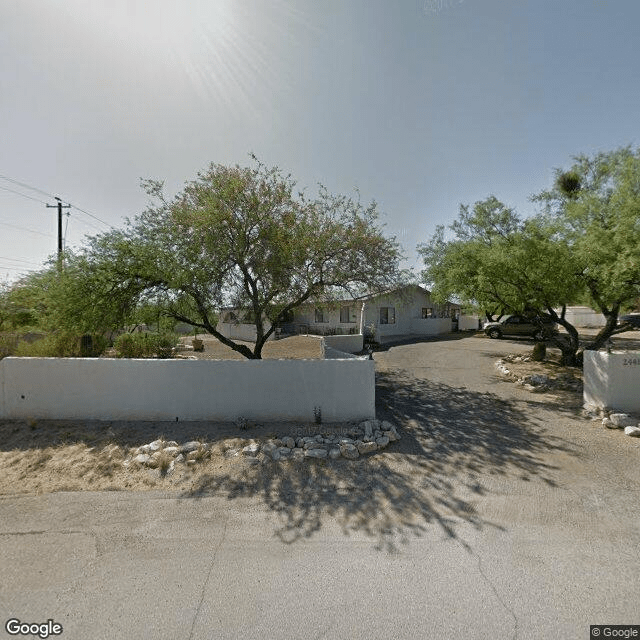
2441 N. Placita Lydia, Tucson, AZ 85749
To contact a resident: (520) 245-7881
For more information about senior living options: (866) 208-4318
Arizona Homestead Assisted Living, Inc. Costs & Pricing
Arizona Homestead Assisted Living, Inc. offers competitive pricing for its private rooms, charging $2,250 per month. This rate is significantly lower than the average costs in Pima County, which stand at $3,332, and even more favorable compared to the statewide average of $3,345 across Arizona. This pricing structure positions Arizona Homestead as an attractive option for families seeking quality assisted living solutions without the financial strain typically associated with such services in the region. The affordability combined with a commitment to care reflects Arizona Homestead's dedication to providing accessible and supportive living environments for its residents.
| Floor plans | Arizona Homestead Assisted Living, Inc. | Pima County | Arizona |
|---|---|---|---|
| Private | $2,250 | $3,332 | $3,345 |
Senior living communities with a similar price nearby
-
About the same
Abuelos At La Canada
$2,200 to $2,800 / month13.1 miles away -
from -$400 / mo

Connie's Manor Home
$1,850 to $2,300 / month15.0 miles away -
About the same
Northwest Assisted Living
$2,300 to $2,500 / month14.3 miles away -
About the same

Gentlemen's Inn I
$2,200 / month2.8 miles away -
from +$250 / mo
Grace Home I
$2,500 to $3,200 / month4.2 miles away
Overall Review of Arizona Homestead Assisted Living, Inc.
Pros
 The owners of Arizona Homestead are hands-on, day-to-day operators who sincerely care for the residents and their staff.
- Since moving in, the client has been well cared for and given loving attention and respect.
- The staff are patient with residents, even when they can be difficult, and redirect their attention to more pleasant activities.
- The reviewer recommends Arizona Homestead without reservation.
- The advocate regularly visits and has ample opportunities to observe the care available to residents, evidencing the facility’s quality.
Cons
 The reviewer states there is no pro-ration for resident death.
- The reviewer notes the quoted price was later said to be incorrect and would be “much more.”
- The reviewer claims the brother may not be qualified to move in.
- They describe the owners as untrustworthy.
- They warn to avoid last-minute revisions and to get everything in writing well in advance.
Review
Arizona Homestead Assisted Living in Tucson is clearest choice for families seeking a small, home-like setting where owners are visibly involved in day-to-day care and where residents, especially those with dementia, receive patient, individualized attention. The community shines for families who prioritize a warm, relational approach over clinical formality, and who value staff who redirect and engage residents with consistent gentleness. It is especially appealing to families who want to know the owners personally and to feel that the care team is building meaningful routines around a loved one’s preferences. In short, this is a good fit for those who want a hands-on, supervision-rich environment rather than a large, impersonal operation.
Those who should consider alternatives are precisely those who require tight price predictability and ironclad, written admissions terms. The reviews reveal real red flags around financial negotiations: last-minute price revisions, quoted rates that shift, and an impression that terms can change after medical details have been reviewed. For families that must see a transparent pricing structure, or who require certainty around hospice admissions and pro-rations if a resident passes away, other communities with more standardized contracts and explicit death-protection policies will be more reassuring. Similarly, if the priority is formal medical oversight and a larger corporate footprint, a different option may reduce the risk of pricing surprises or ad-hoc policy changes.
On the positive side, the pros are substantial and repeatedly borne out by independent observers. A long-time advocate described Arizona Homestead as a place where the care is consistently attentive, with staff who exercise patience and redirect residents as needed, even when dementia presents challenges. The owners are described as hands-on operators who genuinely care about both residents and staff, a combination that translates into reliable daily routines and seen-and-heard generosity in care. A family friend’s observation, reinforced by multiple visits, is that residents receive loving attention and respectful engagement, reinforcing a sense of security for families who cannot be on site every day. For families prioritizing quality, individualized interaction, these pros carry significant weight.
Yet the cons cannot be dismissed. The most troubling themes center on pricing and admissions processes. Two separate accounts describe not only a price quote that later proved inaccurate, but also a suggestion that the resident’s admission would be contingent on factors not fully disclosed in the initial discussion. The shouted caution, avoid last-minute revisions, secure everything in writing, and proceed with skepticism, points to a broader risk: a potential mismatch between care quality and financial terms. For a family planning around budgets or a resident with a complex hospice trajectory, those financial ambiguities can undermine trust and create ongoing stress.
How these elements balance matters. The high-quality, intimate caregiving and demonstrable owner involvement are compelling benefits that can offset many concerns for families who already operate with flexibility around contracts and who can insist on precise, in-writing terms. For a dementia-prone senior or a highly social resident who thrives on personalized activities and direct attention, the care model here offers tangible, meaningful advantages that are difficult to replicate in larger facilities. However, the trade-off is real: if financial predictability, formalized hospice policies, and consistent contract terms are non-negotiable, this community may deliver more stress than reassurance. The decision hinges on whether the value of attentive, individualized care outweighs the risk of unpredictable pricing.
Practical steps for families weighing Arizona Homestead are clear. Seek a fully documented admissions agreement with itemized pricing, including any pro-rating if a resident dies, and a written hospice policy that explains eligibility and care level expectations. Interview the owners and on-site managers with a focus on how they handle price changes, admissions criteria, and ongoing care adjustments. Request references beyond the advocate who already speaks highly, and consider visiting at different times to gauge consistency of care and response times. If the contract cannot be pinned down in writing to the family’s satisfaction, or if the pricing conversation raises more questions than it answers, it is prudent to explore alternatives that offer greater predictability. For families who can navigate a nuanced financial landscape and prize intimate, compassionate care, Arizona Homestead remains a compelling option; for others, a more transparent, policy-driven community may be the safer path.
 Board and Care Home
 Cats allowed
 Dogs allowed
 Private
 Respite or short term stays offered
 Tucson International (13 miles away)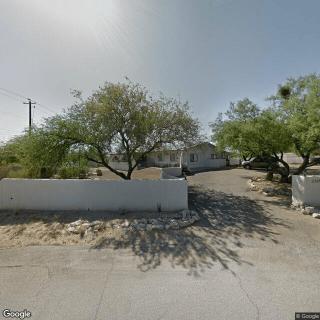





 Exploring Nonmedical Home Care: Understanding Services, Costs, and Financial Approaches
 Engaging Brain Games and Innovative Apps to Keep Senior Minds Active
 Effective Strategies for Keeping Seniors' Minds Active: A Deep Dive into Brain Games and Apps