
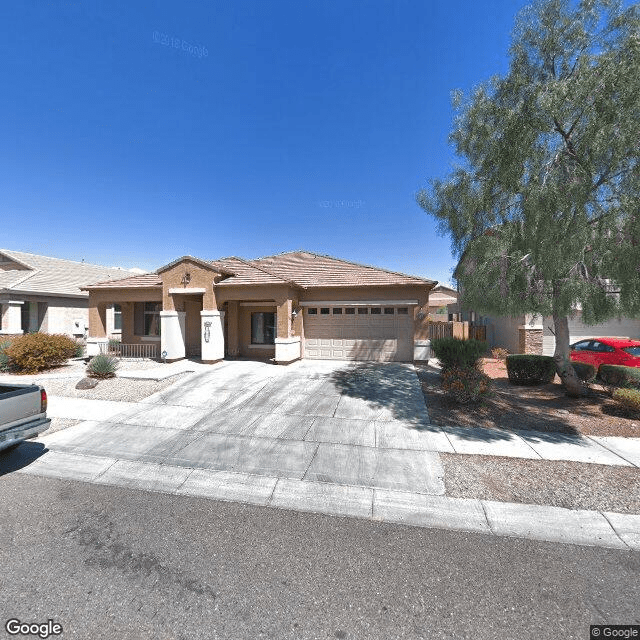
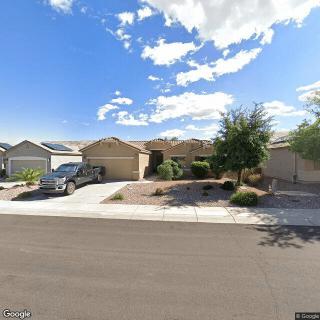
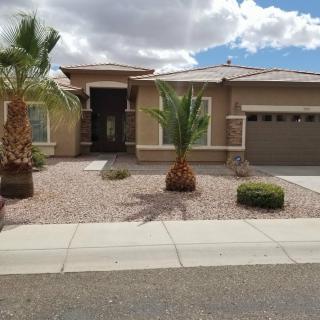
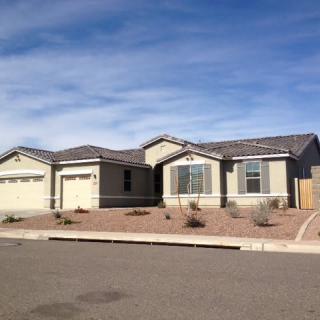
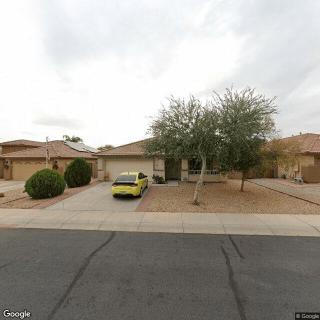
17628 West Pershing Street, Surprise, AZ 85388
For more information about senior living options: (866) 208-4318
Lynne's Assisted Living Costs & Pricing
Lynne's Assisted Living offers competitive pricing for its services, with semi-private rooms available at $2,800 per month, closely aligning with the average costs in Maricopa County at $2,801 and slightly below the Arizona state average of $2,820. For those seeking more privacy, private rooms are priced at $3,000 monthly, which is significantly lower than the county average of $3,318 and the state average of $3,345. This makes Lynne's Assisted Living an attractive option for families looking for quality care without exceeding their budget. The facility's rates reflect a commitment to providing value while ensuring residents receive comprehensive support in a welcoming environment.
| Floor plans | Lynne's Assisted Living | Maricopa County | Arizona |
|---|---|---|---|
| Semi-Private | $2,800 | $2,801 | $2,820 |
| Private | $3,000 | $3,318 | $3,345 |
Assisted Living communities with a similar price nearby
-
from +$100 / mo
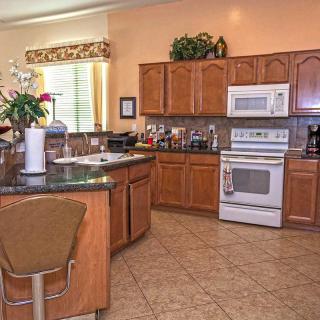
Royal Paradise Care
$2,900 to $3,800 / month5.1 miles away -
from +$200 / mo

Bella Amore Assisted Living
$3,000 / month17.4 miles away -
About the same

Covenant Care Assisted Living Home
$2,850 to $3,705 / month1.9 miles away -
from -$300 / mo
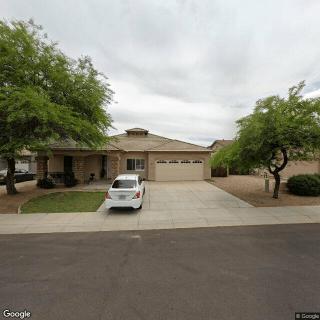
Anc Assisted Living Homes I
$2,500 to $3,500 / month1.6 miles away -
from -$100 / mo

Caring Hearts Senior Care
$2,700 to $3,500 / month3.7 miles away
Overall Review of Lynne's Assisted Living
Pros
 It is very warm, friendly, and has a strong family feeling.
- It is clean, with no odor, and informative.
- It is very close to the reviewer’s home and grandsons.
- The owner is accommodating regarding caregiving needs, including considerations about weight and other caregivers.
- Betty is a lovely woman with compassion, and the love of her job is evident.
Cons
 The reviewer is concerned that the owner is on dialysis and this may be an issue later on.
- The reviewer worries about having to move Anna again.
Review
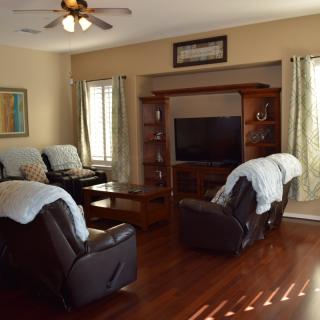
This community is best suited for seniors who crave a warm, home-like atmosphere with a hands-on, family-feel approach to care. Lynne’s Assisted Living appears designed for residents who value personal attention, frequent interaction with a small, intimate staff, and a setting where staff treat every resident like a member of the extended family. The most compelling fit is for families who want to be able to pop in easily, keep caregiving close to home, and rely on a genuinely compassionate host and caregiver team. The proximity to the presenter’s own home and grandkids is a tangible plus for families who prioritize regular visits and visible family involvement in daily routines. In short, this is for seniors who flourish in a tightly woven, person-centered environment rather than a tall, impersonal campus.
The strongest positives center on atmosphere and relationships. The environment is described as very warm and friendly, with a strong sense of family. Cleanliness and odor control are noted as evident positives, reinforcing daily comfort and dignity. Communication comes across as informative, with openness about care plans and daily happenings, which reduces uncertainty for families. The small scale seems to translate into high accessibility to caregivers and a sense of being known by name and story, not just by file. The fact that a dog was previously part of the setting, and that a resident with weight considerations would be accommodated by the owner and other caregivers, signals flexibility and a willingness to tailor arrangements to individual needs. Betty, highlighted as compassionate and devoted, embodies the hands-on care that many families seek in a home-style setting.
However, meaningful caveats accompany the strengths. The most material consideration is the owner’s own health status, specifically dialysis, which raises questions about continuity of oversight over time. While the owner’s willingness to engage other caregivers is reassuring, it underscores a potential vulnerability: care coverage may hinge on the owner’s health and the availability of additional staff, rather than a large, in-house, licensed medical team. The review provides limited detail on medical staffing, emergency protocols, or licensed clinical support, which can be a decisive factor for residents who require predictable, around-the-clock oversight. Also, the small operation may mean fewer formal redundancies or backup plans in an illness or vacation scenario. These factors are not deal-breakers for everyone, but they warrant explicit, upfront discussion.
The key pros offset the main cons in practical ways for the right family. The comfort of a close-knit, caregiver-led environment can compensate for less formal medical infrastructure if the resident’s needs are moderate and well-supported by a personalized care plan. The meaningful daily interactions, transparent communication, and easy-access caregiving improve quality of life and reduce the stress often associated with transitions. Proximity to family and the clear commitment from a compassionate, involved owner can help families feel confident about daily oversight and rapid responsiveness, at least for the near term. Flexibility on weight and pet considerations further broadens suitability for residents who may require adaptable accommodations, which is a meaningful advantage in the market.
For families weighing next steps, several practical questions and checks should guide the decision. Seek explicit confirmation of the care model: what level of medical oversight exists, who supervises medications, and whether a licensed administrator or nurse is available on site, even part-time. Clarify staffing patterns: how many caregivers are on site, what shifts look like, and how long turnover tends to be. Ask how emergency scenarios are managed if the owner is temporarily unavailable due to health or other reasons. Visit to observe daily routines, interactions with Betty and other caregivers, and the response to a non-verbal cue from a resident. Finally, request a clear outline of costs, what is included, and contingency plans if a resident’s needs increase over time, this is essential for families planning long-term.
In the end, Lynne’s Assisted Living stands out for families who prize warmth, personalization, and a home ambiance that makes visits feel natural and meaningful. It is a strong recommendation for seniors who do not require intensive medical supervision and who will thrive with daily, person-to-person attention from a close-knit caregiving team. Those needing robust, hospital-grade oversight, a large staff, or guaranteed continuity independent of the owner’s health should consider alternatives with more formalized medical support and larger resident capacity. The choice should hinge on whether the resident’s health trajectory aligns with a small, family-driven model, and whether the family is comfortable with the owner’s ongoing health situation as a potential factor in day-to-day continuity. If these conditions align, Lynne’s offers a compelling, principled option that can feel less like a transition and more like an inviting, trusted home.
 8 resident community capacity
 Assisted Living
 Board and Care Home
 Dogs allowed
 Activities on-site
 Bath tubs
 Cable or satellite TV
 Devotional services on-site
 Dining room
 Fully furnished
 Garden
 Housekeeping services
 Indoor common areas
 Move-in coordination
 Outdoor common areas
 Private
 Private bathrooms
 Respite or short term stays offered
 Telephone
 Wheelchair accessible showers
 Wi-Fi/high-speed internet available
 24-hour supervision
 Ambulatory care
 Assistance with bathing
 Assistance with dressing
 Assistance with transfers
 Diabetes diet
 Diabetic care
 High acuity care
 Incontinence care
 Meal preparation and service
 Medication management
 Special dietary restrictions
 Transportation arrangement (medical)
 Transportation to doctors appointments
 Christian services
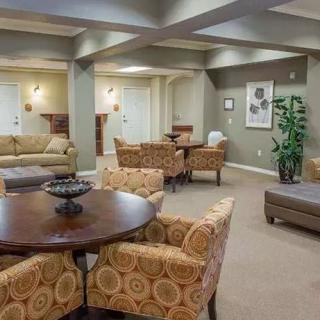
 Vibrant Senior Living: A Comprehensive Guide for Active Older Adults
 When to Transition from Assisted Living to Memory Care: Key Indicators, Steps, and Finding the Right Community
 Assisted Living and Memory Care: Understanding Their Core Differences