
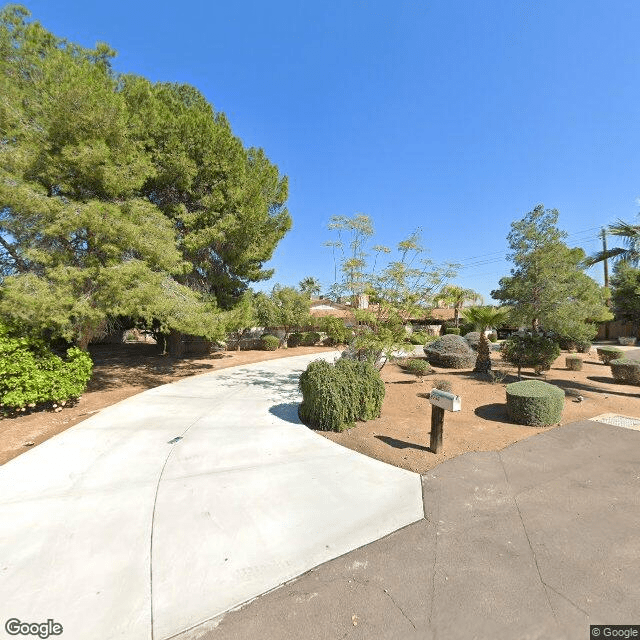
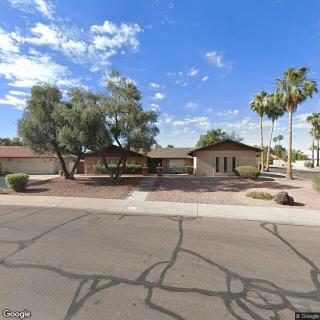
8736 East Joshua Tree Lane, Scottsdale, AZ 85250
For more information about senior living options: (866) 208-4318
Calini's Adult Care Home Costs & Pricing
Calini's Adult Care Home offers competitive pricing for its services, particularly when compared to the broader market in Maricopa County and the state of Arizona. For a semi-private room, Calini's charges $2,200 per month, significantly lower than the county average of $2,801 and the state average of $2,820. Similarly, for a private room, Calini's fee is $2,500, which is more affordable than both the county's average of $3,318 and the state's average of $3,345. This pricing structure positions Calini's as an attractive option for families seeking quality care at a reasonable cost in a region where expenses can often be higher.
| Floor plans | Calini's Adult Care Home | Maricopa County | Arizona |
|---|---|---|---|
| Semi-Private | $2,200 | $2,801 | $2,820 |
| Private | $2,500 | $3,318 | $3,345 |
Assisted Living communities with a similar price nearby
-
from +$425 / mo

The Eldercare Home Of Tempe
$2,625 to $3,412 / month11.1 miles away -
from +$200 / mo
Arabian Views Assisted Living One
$2,400 to $3,200 / month8.2 miles away -
from +$300 / mo
Bella Vista Assisted Living Home
$2,500 to $3,000 / month15.9 miles away -
from +$300 / mo
Coming Home Assisted Living Home
$2,500 to $3,000 / month11.9 miles away -
from -$200 / mo
Angel's Adult Group Home
$2,000 to $3,000 / month16.8 miles away
Overall Review of Calini's Adult Care Home
Pros
 Calini's Adult Care Home is great.
- She is doing fine.
- She likes it there.
- He has been excellent in understanding where she is on the medical scale.
- He has been very tolerant of the toileting challenges, which is a lot of extra work.
- The value is very good compared to where she was at.
- They are very happy with the care she is getting.
- The community is nice.
- The community is very clean and friendly.
- It offers good value and has good caregivers.
- It has been a pretty good experience.
- The place is very nice and well kept.
- It is close to the house.
- The price of 2600.00 was fine for the accommodations.
Cons
 She has dementia and her toileting skills are awful.
- The only thing that they don't offer is a lot of activities.
- John the owner did not want to accept someone whose long term goal is to secure a ALTCS approved home.
Review
Calini's Adult Care Home in Scottsdale is best suited for families seeking a small, homelike environment for a loved one who needs steady daily support, especially when dementia is involved but a highly structured, program-planned setting isn’t essential. The reviews consistently point to a clean, well-kept residence where caregivers deliver personal attention, and where staff show patience handling memory-related challenges and incontinence. This community shines for residents who benefit from predictable routines, close supervision, and a caregiver team that can remain calm and flexible as health needs evolve, rather than for those chasing a bustling activity calendar or a hospital-like pace.
Those weighing alternatives should note a clear fault line: if attention to organized activities, lively social programming, or memory-care-focused programming is a priority, other options may serve better. The owner’s stance about admissions, specifically not wanting residents whose long-term plan is ALTCS, creates a mismatch for families pursuing government-assisted placement or long-term care planning under ALTCS. For seniors who want frequent, structured activities or a facility explicitly designed to accommodate ALTCS pathways, exploring other Scottsdale options would be prudent. In short, the fit tightens once the expectation is a high level of social programming or formal ALTCS alignment.
On the upside, the strongest pros hinge on the intimate, practical strengths of the operation. The home’s size supports a genuinely personal touch, with residents treated in a way that emphasizes continuity and familiarity. Cleanliness and a friendly, steady caregiving presence come through in multiple impressions, and families consistently note good value for the accommodations. The caregiver’s tolerance and attentiveness, especially around dementia-related behaviors and the labor-intensive tasks those behaviors can demand, render daily life more manageable for a loved one and more reassuring for relatives. When these elements work well, they help offset the absence of a full activities schedule by delivering dependable, low-shoulder-risk care.
The main drawbacks are concrete and worth weighing against individual goals. A limited array of organized activities and structured engagement means residents may experience fewer opportunities for socialization, cognitive stimulation, or meaningful outings on a regular basis. For families seeking robust day programs, ample group interaction, or a memory-care milieu built around scheduled enrichment, the current setup may feel underwhelming. The noted policy around ALTCS further narrows suitability for families depending on state-funded long-term care coverage, potentially complicating transitions or affordability for some applicants. In practice, this translates into choosing between a high-touch, low-activity home and a larger community that promises more programming, at the cost of less personalized attention.
In Scottsdale’s landscape, the value proposition stands out for a target client: a loved one who prioritizes consistent, compassionate care in a compact setting over expansive activity rosters or formal ALTCS pathways. The price point is competitive for the level of care described, and proximity to family homes is a practical plus. However, this advantage sharpens only for those who do not require heavy programming or ALTCS-driven placement; for families where the goal is a high-energy social calendar or a memory-care environment with formal subsidies, alternative communities will likely deliver a better match. The decision hinges on the balance between intimate caregiving quality and desired activity intensity.
For families moving forward, a practical next step is to schedule a direct visit focused on real-world routines and staffing. Ask about daily schedules, the caregiver-to-resident ratio during peak hours, and how medication management, toileting assistance, and emergency contingencies are handled in practice. Probe the activity options: whether there are regular in-house programs, outings, or minor enrichment opportunities, and how those remain accessible to residents with limited mobility or cognitive impairment. Clarify the exact scope of services included in the monthly rate and whether any add-ons exist for specialized care. Finally, discuss temperament and progression: how the home plans for advancing dementia, when changes in care needs would trigger a transition, and how that process would be managed if a move becomes necessary. With clear answers to these points, the choice becomes a precise match or a clear call to look elsewhere.
 10 resident community capacity
 Assisted Living
 Board and Care Home
 Respite Care
 Cats allowed
 Dogs allowed
 Cable or satellite TV
 Dining room
 Fully furnished
 Garden
 Housekeeping services
 Move-in coordination
 Outdoor space
 Private
 Telephone
 Wi-Fi/high-speed internet available
 Phoenix Sky Harbor International (10 miles away)
 24-hour supervision
 Activities of daily living assistance
 Ambulatory care
 Assistance with bathing
 Assistance with dressing
 Assistance with transfers
 Diabetes diet
 Diabetic care
 Meal preparation and service
 Medication management
 Special dietary restrictions
 Transportation arrangement (medical)
 Transportation to doctors appointments




 Assisted Living Expenses and Long-Term Care Insurance: A Comprehensive Exploration
 Securing Financial Support for Assisted Living: A Comprehensive Overview
 Social Security Benefits and Assisted Living: Navigating Options Across the U.S.