
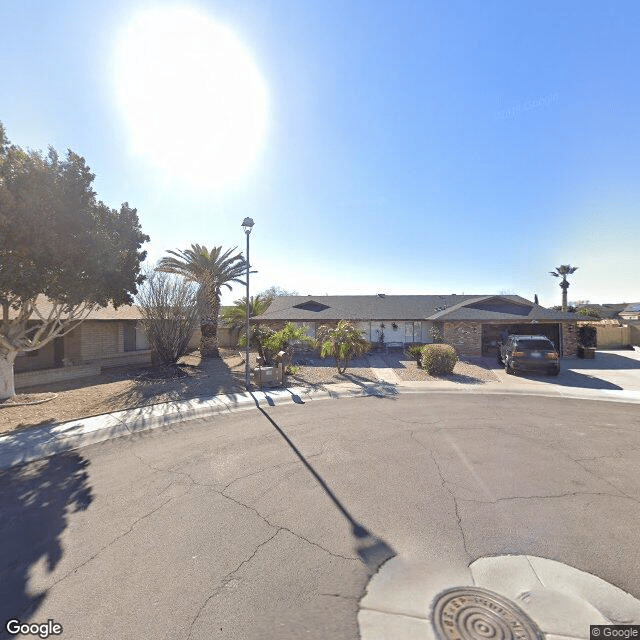
902 East Rosemonte Drive, Phoenix, AZ 85024
For more information about senior living options: (866) 208-4318
Haven Care Home Costs & Pricing
Haven Care Home offers remarkably competitive pricing compared to the average costs in Maricopa County and across Arizona. With a consistent monthly rate of $1,500 for all room types - including studio, one-bedroom, private, and semi-private options - Haven Care stands out as an affordable choice for residents seeking quality care. In contrast, Maricopa County's prices for similar accommodations range significantly higher, with studios averaging around $3,960 and private rooms at approximately $3,318. Even when considering state averages in Arizona, which hover around $3,829 for studios and $3,532 for one-bedrooms, Haven Care Home remains an attractive option for families looking for value without compromising on care. This affordability not only relieves financial pressure but also provides peace of mind knowing that quality services are available at a fraction of the typical costs in the region.
| Floor plans | Haven Care Home | Maricopa County | Arizona |
|---|---|---|---|
| Studio | $1,500 | $3,960 | $3,829 |
| 1 Bedroom | $1,500 | $3,473 | $3,532 |
| Private | $1,500 | $3,318 | $3,345 |
| Semi-Private | $1,500 | $2,801 | $2,820 |
Memory care communities with a similar price nearby
-
from -$105 / mo

Heritage Lane Behavioral - East
$1,395 to $1,750 / month22.2 miles away -
from +$90 / mo

Westminster Village
$1,590 to $2,045 / month10.8 miles away -
from +$150 / mo

Desert Winds
$1,650 to $2,550 / month12.4 miles away -
from -$100 / mo
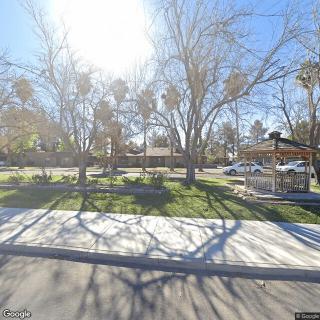
LifeStream at Youngtown
$1,400 to $2,300 / month15.1 miles away -
from +$110 / mo

Sun Valley Lodge
$1,610 to $2,560 / month13.3 miles away
Overall Review of Haven Care Home
Pros
 The home offers amazing care with great staff and an excellent owner.
- The staff treat residents as if they were family.
- They genuinely care for everyone, making it a top choice in the Phoenix area.
- Desert Haven is a blessing to families, with kind and compassionate staff and owner.
- Families have complete peace of mind knowing their loved ones are clean, well fed, and well taken care of.
- The staff are well trained to de-escalate challenging situations.
- Villa Fiore delivers five-star care and wonderful service for loved ones.
- Chris and Desert Haven provide outstanding, compliant care in a safe and comfortable home, and tours come highly recommended.
Cons
 The staff were not following the care requests.
- The staff claimed they could care for the loved one, but were unable to do so.
- The experience was bad.
- The staff would not get the loved one out of bed.
- The staff would not allow visitors to come in during meals.
- The staff would become upset if visitors arrived without calling.
Review
This community is best suited for families seeking a warm, residential environment where residents are treated like family, with hands-on ownership and highly personal attention. It shines for memory-impairment and end-of-life scenarios, as well as short-term recovery and long-term assisted living, when the priority is daily warmth, home-like routine, and clear, compassionate caregiving. The model favors small-care, high-touch care where staff remember names, preferences, and family dynamics, and where ownership is visibly involved in daily operations. For seniors who value stability, personal connection, and a low-key pace over prestige or a bustling campus, this option stands out as a practical, trustworthy choice.
Those who may want to consider alternatives include families needing more clinical rigor or formalized medical oversight. If complex medical management, strict adherence to highly detailed medical protocols, or robust, on-site therapy programming are non-negotiables, larger, more clinical communities may serve better. Also, for families that prioritize highly structured visiting rules, extensive activities programming, or comprehensive transportation and life-enrichment offerings, the intimate setting here can feel limited. A small, home-style setting often means fewer on-site resources; in such cases, a thorough check of what is and isn’t included in care plans is essential.
The strongest pros, compassionate staff, evident owner involvement, and the ability to care for residents with memory or end-of-life needs, often offset many drawbacks, but not all. Families repeatedly highlight staff who are kind, attentive, and deeply invested in residents’ well-being, producing peace of mind that loved ones are cherished. The hands-on leadership suggests consistency in daily routines and a quick, personal response to concerns. Cleanliness, regular meals, and a home-like atmosphere further support a sense of security and dignity. Yet the notable caveat is occasional misalignment between specific care requests and what is delivered; when expectations aren’t fully met, family members may feel the care plan isn’t being followed as requested. In those moments, the positive attributes mostly protect the relationship, but they do not erase the risk of unmet individual needs.
In terms of memory care and end-of-life care, the community’s strengths are particularly meaningful. Reviewers describe dignified, patient-centered support during challenging phases, including hospice-adjacent care that respects comfort and family involvement. When a loved one’s last months or days matter, this setting often provides a reassuring, homelike backdrop where caregivers extend genuine empathy and continuity. The downside, however, is that this same intimate structure can leave care plans vulnerable to gaps if a family’s expectations are not aligned with what the staff can consistently deliver. Prospective residents should confirm that the team’s training and routines map directly to the resident’s specific needs, especially around behavioral management and daily living tasks.
Practical next steps for families are clear. Schedule a guided tour and meet the owner and key staff, then walk through a sample care plan with concrete, written instructions. Request references from recent residents’ families and, if possible, arrange a short respite stay to observe how routines and staff respond to the resident’s needs. Clarify visiting policies, mealtime access, and how family input is incorporated into daily care. Ask about dementia- and behavior-management training, emergency response protocols, and how changes in condition are communicated. A candid discussion about expectations up front will minimize surprises and maximize the likelihood that the home’s strengths translate into real, day-to-day confidence.
Bottom line: Haven Care Home offers a compelling, compassionate option in Phoenix for families prioritizing intimate, person-centered care, particularly for memory care and end-of-life support. The strong, hands-on leadership and devoted staff create a reassuring atmosphere that many families will value highly. Yet the occasional report of care requests not being followed signals the need for careful, explicit alignment between the resident’s plan and daily practice. If that alignment can be established, through written plans, regular updates, and proactive family involvement, this community becomes an excellent match. If strict clinical oversight or a broad activity slate is essential, exploring larger, more clinical alternatives is prudent. An informed visit will reveal whether this home’s heart translates into sustained everyday reliability.
 8 resident community capacity
 Assisted Living
 Board and Care Home
 Memory Care
 Respite Care
 Cats allowed
 Dogs allowed
 Activities off-site
 Bath tubs
 Beautician on-site
 Cable or satellite TV
 Devotional services off-site
 Dining room
 Fully furnished
 Garden
 Housekeeping services
 Indoor common areas
 Move-in coordination
 Outdoor common areas
 Private
 Private bathrooms
 Swimming pool / hot tub
 Telephone
 Wheelchair accessible showers
 Wi-Fi/high-speed internet available
 Phoenix Sky Harbor International (16 miles away)
 24-hour supervision
 Ambulatory care
 Assistance with bathing
 Assistance with dressing
 Assistance with transfers
 Diabetes diet
 Diabetic care
 High acuity care
 Incontinence care
 Meal preparation and service
 Medication management
 Special dietary restrictions
 Transportation arrangement (medical)
 Transportation to doctors appointments




 Understanding Dementia Through Its Seven Stages: A Comprehensive Look at Progression and Expectations
 A Holistic Dementia Care Guide: Effective Strategies for Memory Support
 Memory Care Pathways: A Holistic Guide to Dementia Support