6930 East Granada Street, Mesa, AZ 85207
To contact a resident: (310) 941-9685
For more information about senior living options: (866) 208-4318
Overall Review of Mayfair Assisted Living Home
Pros
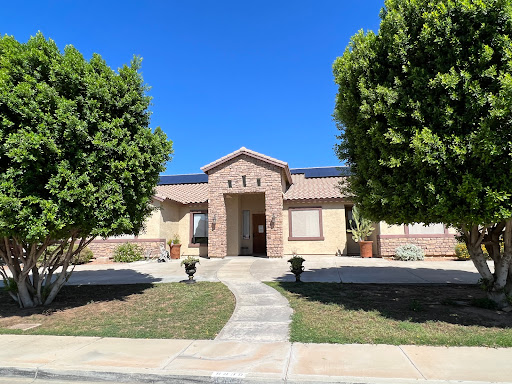
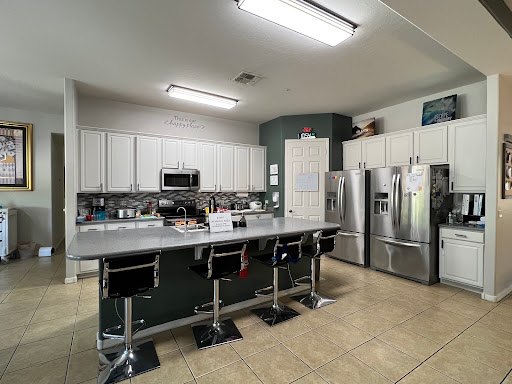
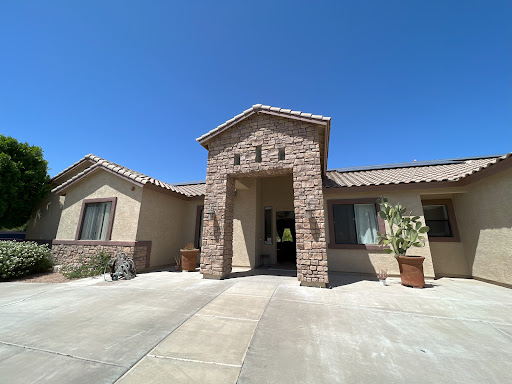
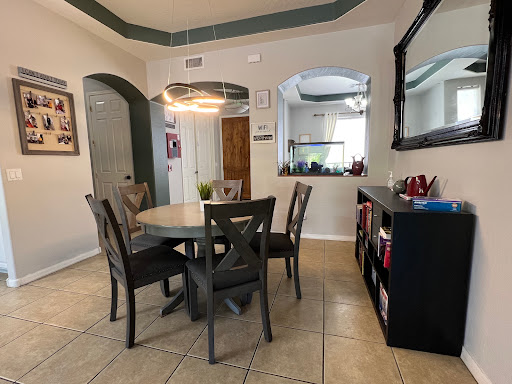
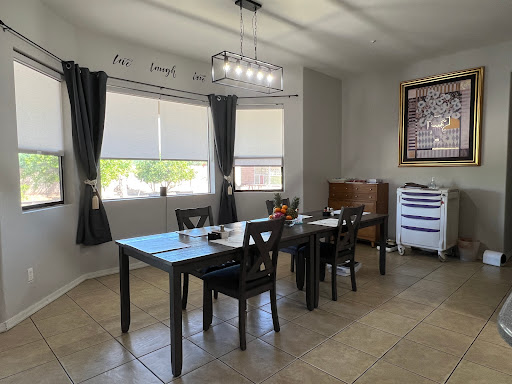
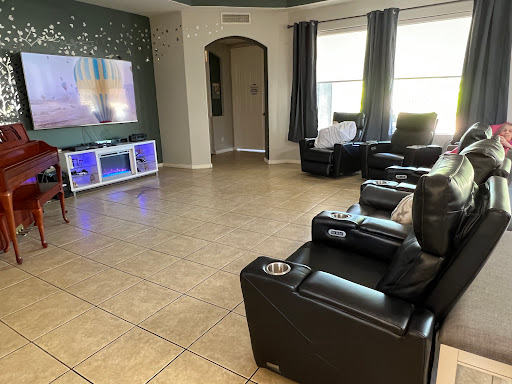
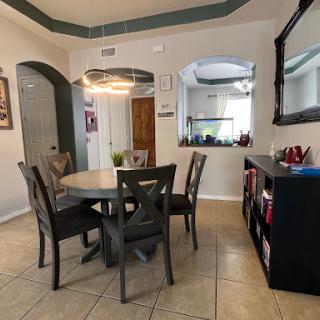
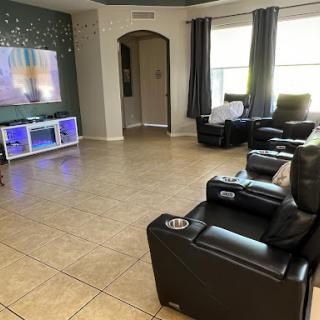
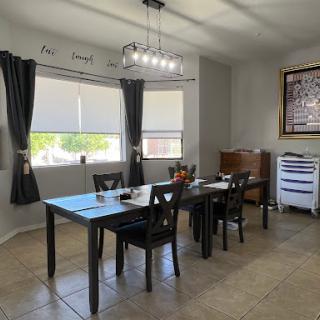
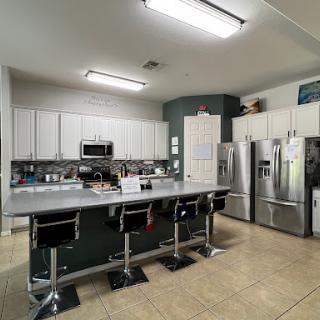
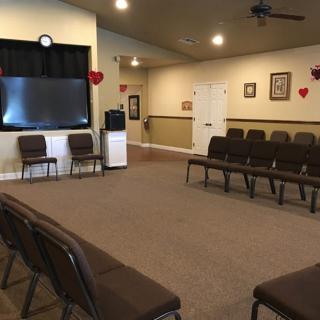
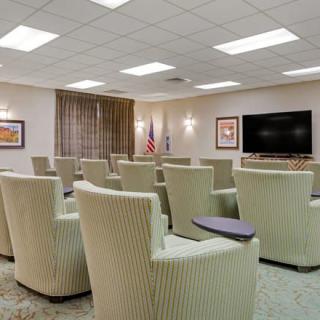
 Mayfair is a beautiful, well-kept home with open spaces and a light, welcoming atmosphere.
- The staff are smiling, friendly, and enjoy their work, and residents look happy.
- The home provides private rooms and a thoughtful layout suitable for assisted living.
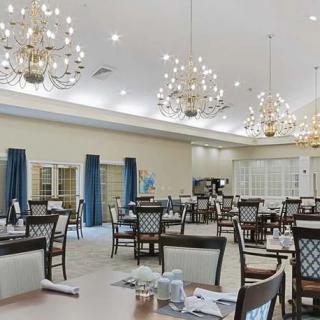
- Meals are prepared on-site, with three meals and snacks each day.
- Cleaning and laundry are taken care of, keeping the home clean.
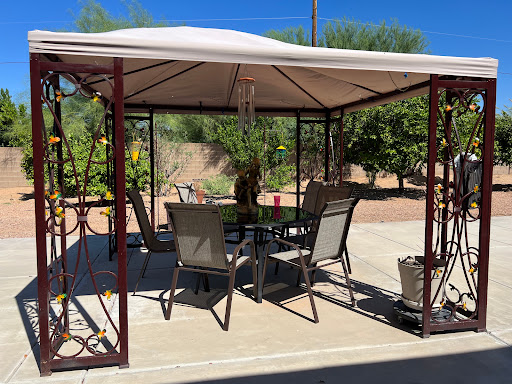
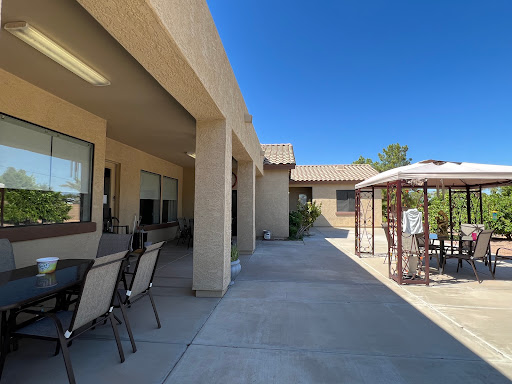
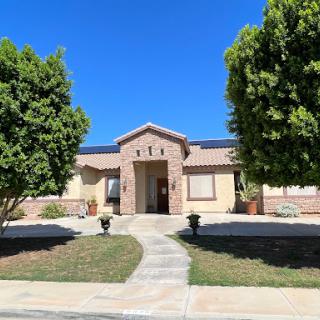
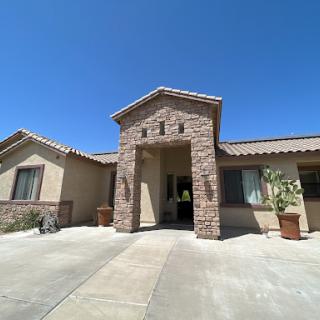
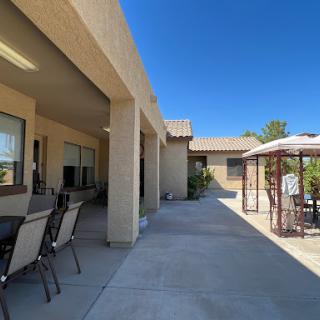
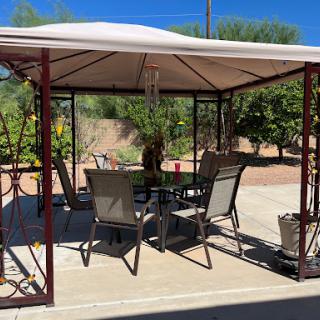
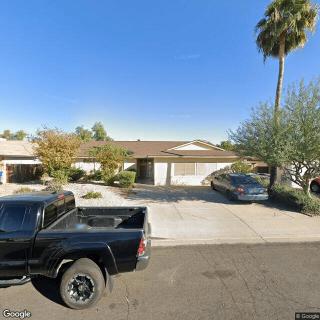
- It has palm trees, a nice front yard, and an enclosed backyard with a patio, grass, and shrubs.
- Birds and nature are enjoyed by residents, who feel spoiled and do better there.
- In-house activities such as exercise, bingo, and games are offered, and a house doctor visits monthly.
- Rooms include private and semi-private options, are medium to large, with windows and accessible bathrooms.
Cons
 The staff seem nice enough, but activities and transport are limited.
- They seldom transport residents.
- They do not do outings.
- The food is only okay.
Review
Mayfair Assisted Living Home in Mesa is best suited for seniors who want a small, home-like setting where care is personal and readily visible. This is a tight-knit group-home feel, with private bedrooms, open common areas, and a calm, domestic rhythm that fits residents who do not require intensive medical interventions. The environment emphasizes cleanliness, accessible design, and straightforward routines, with handrails and bathrooms positioned for easy mobility. Families seeking predictable daily rhythms, home-style meals, and a cheerful, engaged caregiving staff will find the right resonance here. The intimate license, around 10 residents, helps caregivers know names, preferences, and little daily details quickly, which translates into steady, attentive oversight.
Alternatives are worth considering for residents who crave more social variety, frequent outings, or greater clinical oversight. The Mayfair model prioritizes in-house activities and a quiet pace, but reviews across the board point to limited transportation and a relatively narrow activity slate. Those who need more frequent off-site events, scheduled outings, or a broader menu of therapeutic services will likely be happier in a larger community with dedicated activity directors and transport options. For residents with more complex medical needs or those who rely on regular, on-site therapies, it’s prudent to compare settings that emphasize higher-touch medical management and a more expansive calendar of programs.
Pros offset many of the potential drawbacks by delivering warmth and practicality in equal measure. The staff’s apparent cheer and engagement, the bright, clean spaces, and the layout that keeps rooms close to bathrooms all contribute to daily comfort and safety. In-house cooking and housekeeping relieve families from daily chores, while private or semi-private rooms preserve dignity and privacy. The presence of a house doctor on call, paired with licensed caregivers, offers a basic level of medical oversight without the feel of a hospital. Added touches like watching birds and nature elements provide gentle enrichment that can buoy mood and comfort, especially for residents who value a serene, uncomplicated routine. Yet the same strengths illuminate the trade-offs: the small size and lean staff can translate into fewer activity options and limited weekend coverage or transportation, which may leave some residents feeling socially constrained or more dependent on family for excursions.
The facility’s physical footprint reinforces its domestic vibe. Palm trees, a pleasant front yard, and an enclosed backyard with a patio and greenery create a welcoming, low-stress atmosphere. Daily life centers on home-like routines: three meals with snacks, and staff handling cleaning and laundry, which preserves energy for participation in activities. The home is described as clean and well laid out, with open spaces that encourage casual socializing without the bustle of a larger campus. Bathrooms are a mix of private and shared and are equipped for accessibility, a practical consideration for mobility needs. In-house activities such as exercises, bingo, and games exist, but they do not substitute for a robust outings program, which keeps expectations aligned with a simpler, more contained lifestyle.
For families evaluating this option, alignment with the resident’s preference for quiet days and steady companionship matters most. If a resident thrives on a homelike atmosphere and appreciates caregivers who know routine preferences, Mayfair delivers consistently. If, instead, daily excursions, transport to events, or a wider array of programs is non-negotiable, a setting with more extensive programming will likely be a better fit. The monthly house doctor model works for routine checks but may fall short for more complex medical needs, so planning should match current health status and trajectory. Given the limited size, care levels could crest with needs, making it important to discuss potential transitions in advance and ensure a plan for escalation if care requirements rise.
Bottom line: Mayfair Assisted Living Home is a strong choice for families seeking an intimate, well-kept, staff-driven environment where privacy and practical care come first. It offsets some limits with warmth, straightforward logistics, and a predictable routine that minimizes stress. However, for residents who prioritize robust social programming, frequent outings, or intensive on-site medical support, alternatives merit serious consideration. Prospective families should tour during active times to observe caregiver interactions, verify bathroom accessibility, and confirm the cadence of medical oversight. Ask about transport options, the availability of outings, and the level of staff engagement to ensure expectations align with what the community can reliably deliver.
 10 resident community capacity
 Assisted Living
 Board and Care Home
 Respite Care
 Activities on-site
 Cable or satellite TV
 Computer center
 Devotional services off-site
 Dining room
 Fully furnished
 Garden
 Housekeeping services
 Indoor common areas
 Move-in coordination
 Outdoor space
 Resident parking
 Security gate
 Telephone
 Wi-Fi/high-speed internet available
 Phoenix Sky Harbor International (19 miles away)
 24-hour supervision
 Ambulatory care
 Assistance with bathing
 Assistance with dressing
 Assistance with transfers
 Diabetes diet
 Diabetic care
 Meal preparation and service
 Medication management
 Special dietary restrictions
 Transportation arrangement (medical)
 Transportation to doctors appointments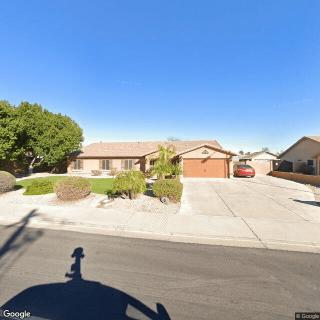



 Beyond the Bingo Hall: 50+ Enriching Activities for Seniors in Assisted Living
 Understanding the Distinctions: Assisted Living and Memory Care Explained
 Guiding Elderly Parents Who Refuse Assisted Living: 6 Practical Steps