
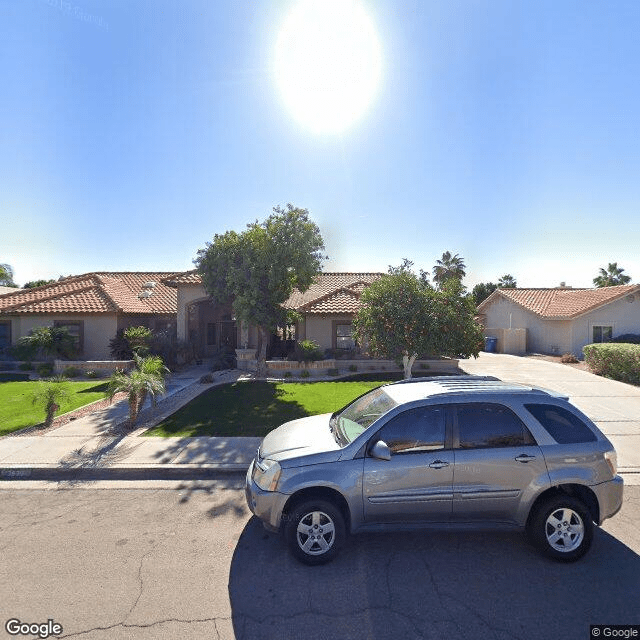
3529 East Downing Circle, Mesa, AZ 85213
For more information about senior living options: (866) 208-4318
Jim And Patti Jones Assisted Living Home III Costs & Pricing
Jim And Patti Jones Assisted Living Home III offers competitive pricing in comparison to both Maricopa County and the broader state of Arizona. For a semi-private room, residents can expect to pay $3,000 per month, which is notably higher than the county's average of $2,801 and slightly less than the state average of $2,820. When it comes to private rooms, the monthly cost increases to $3,500, a figure that is above Maricopa County's average of $3,318 but slightly below Arizona's overall average of $3,345. These costs reflect a commitment to providing quality care and services tailored to the needs of their residents while remaining within a reasonable range compared to local standards.
| Floor plans | Jim And Patti Jones Assisted Living Home III | Maricopa County | Arizona |
|---|---|---|---|
| Semi-Private | $3,000 | $2,801 | $2,820 |
| Private | $3,500 | $3,318 | $3,345 |
Assisted Living communities with a similar price nearby
-
from -$200 / mo

Pinnacle Peak Assisted Living
$2,800 to $3,100 / month20.7 miles away -
from -$375 / mo

The Eldercare Home Of Tempe
$2,625 to $3,412 / month9.2 miles away -
from -$500 / mo
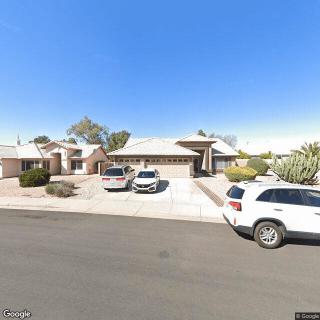
Bella Vista Assisted Living Home
$2,500 to $3,000 / month5.1 miles away -
from +$200 / mo

Evergreen Assisted Living
$3,200 to $7,500 / month16.3 miles away -
from +$500 / mo

The Greenway Manor II
$3,500 to $4,000 / month18.5 miles away
Overall Review of Jim And Patti Jones Assisted Living Home III
Pros
 Patti and her amazing group provide exceptional care that fills families with gratitude.
- Families report that their loved ones are not only well cared for but truly loved by Patti's team.
- If a space is available, prospective families are advised to secure it promptly.
- The facility is run by a wonderful, compassionate family with over 30 years of experience, delivering excellent care.
- Jim and Patty Jones are described as the nicest people who truly care about their residents.
- Patti and Jim's homes are praised for surpassing others, with trusted, caring staff.
Cons
 The reviewer described placing their mother as the hardest decision after caring for her themselves for seven years.
Review
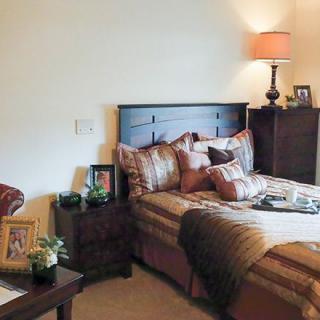
Jim And Patti Jones Assisted Living Home III is best suited for families seeking an intimate, family-run setting where residents are treated as beloved members of a caring household. This community excels for seniors who want constant, personalized attention delivered with warmth and consistency, guided by owners who bring decades of hands-on experience to daily care. The setting is clearly designed for ongoing, daily oversight rather than institutional scale, making it an excellent match for those who prioritize relationships, trust, and a home-like atmosphere over formal medical routine. For families who want a small, stable environment with a strong emphasis on belonging, this option rises to the top.
Those weighing alternatives should consider options with broader medical infrastructure or more formal programming. If a resident requires comprehensive on-site medical management, a larger campus with multiple disciplines, or a memory-care specialization, a conventional assisted-living community or a dedicated memory-care facility may deliver greater breadth of services. Likewise, families seeking extensive social calendars, diversified activity programming, or on-site rehabilitative services might find a bigger community more aligned with those preferences. Acknowledging these realities helps ensure the choice aligns with current and anticipated needs, not just present comfort.
The strongest advantages here are the attributes most directly tied to the relationship-based model: compassionate, attentive care and steady, trustworthy leadership. Residents appear to receive deep, ongoing attention from Jim and Patti, whose personal commitment radiates through the staff and through the warmth extended to families. Reviews consistently highlight the caregiver team as professional, caring, and genuinely invested, with one hospice nurse noting a level of trust and care that surpasses other group homes. The longevity implied by “over 30 years of experience” translates into reliable routines, lowered caregiver turnover, and a predictable sense of security for families and residents alike. In a setting this small, the upside is clear: residents are known, remembered, and treated as integral members of a family.
That intimate care model, however, naturally carries trade-offs. The most notable potential drawback is capacity: limited space and a smaller footprint mean fewer beds and less room for rapid expansion if care needs escalate. With a family-run operation, the on-site medical depth and formal programming of larger facilities may be more constrained, particularly for residents who require specialized therapies or high-acuity supervision. Yet these constraints are effectively offset by the depth of personal connection, the owners’ direct involvement, and the consistently high level of staff reliability. For families prioritizing emotional security, consistency, and an environment with genuine affection, the pros decisively outweigh the practical limits.
Operationally, the community’s strengths show up in daily life as steadiness, responsiveness, and a transparent, hands-on approach. The two-home model suggests a close, low-traffic setting where staff can provide tailored attention and quick access to caregivers. The praise from families, describing residents as feeling like family, and the sense that staff and owners are “unsung heroes”, reflects a culture that prioritizes belonging and dignity over formality. The explicit trust expressed by professionals who encounter the home, such as visiting hospice staff, reinforces that this is a setting where care quality is prioritized and consistently delivered.
For families evaluating this option, the decision boils down to priorities: if an unmatched, home-centered care experience with personal leadership is paramount, Jim And Patti Jones Assisted Living Home III stands out as exceptional. A visit is essential to observe the daily interactions, meet Patti and Jim, and gauge whether a true family atmosphere aligns with the loved one’s preferences. If, instead, the resident’s needs emphasize broader medical management, extensive activity programming, or memory-specific programming on a larger scale, it makes sense to explore alternatives. In either case, this community represents a compelling, highly credible choice for those for whom heartfelt, dependable care is the overriding criterion.
 10 resident community capacity
 Assisted Living
 Board and Care Home
 Cable or satellite TV
 Dining room
 Fully furnished
 Garden
 Housekeeping services
 Move-in coordination
 Outdoor space
 Private
 Telephone
 Wi-Fi/high-speed internet available
 Phoenix Sky Harbor International (15 miles away)
 24-hour supervision
 Activities of daily living assistance
 Assistance with bathing
 Assistance with dressing
 Assistance with transfers
 Diabetes diet
 Meal preparation and service
 Medication management
 Special dietary restrictions
 Transportation arrangement (medical)
 Transportation to doctors appointments

 Comprehensive Supportive Living Arrangements for Adults with Disabilities
 Funding and Affording Assisted Living: A Thorough Overview
 Assisted Living Expenses and Long-Term Care Insurance: A Comprehensive Exploration