

140 West University Drive, Mesa, AZ 85201
For more information about senior living options: (866) 208-4318
Country Grove Costs & Pricing
Country Grove exhibits a notable variation in monthly costs compared to both Maricopa County and the broader state of Arizona. For a studio apartment, residents can expect to pay $5,400, which is significantly higher than the county's average of $3,960 and the state's average of $3,829. The pricing continues to reflect this trend as one-bedroom units at Country Grove are listed at $6,330, outpacing Maricopa County's average of $3,473 and the state's average at $3,532. This pattern persists with two-bedroom units as well, where Country Grove charges $8,280 compared to Maricopa County's $4,112 and Arizona's average of $4,106. These discrepancies suggest that while Country Grove may offer unique amenities or services justifying its higher rates, potential residents should carefully weigh their options against more affordable alternatives within the county and state.
| Floor plans | Country Grove | Maricopa County | Arizona |
|---|---|---|---|
| Studio | $5,400 | $3,960 | $3,829 |
| 1 Bedroom | $6,330 | $3,473 | $3,532 |
| 2 Bedrooms | $8,280 | $4,112 | $4,106 |
Assisted Living communities with a similar price nearby
-
from +$995 / mo
Lending Hand Assisted Living
$6,395 to $11,695 / month8.6 miles away -
from -$400 / mo

American Dream Home
$5,000 / month15.7 miles away -
from +$600 / mo

Lincoln Residential Assisted Living
$6,000 / month11.1 miles away -
from -$900 / mo

McDowell Village
$4,500 to $5,500 / month4.9 miles away -
from -$600 / mo

Sante Of North Scottsdale
$4,800 / month15.6 miles away
Overall Review of Country Grove
Cons
 The facility is described as a money-making racket.
- The people there just sit and watch TV all day.
- There is no rehab provided.
- At night, residents donā€™t have a call button around their necks, so no one would know if they fall out of bed until morning.
- They charged almost $1,000 just to register him.
- The mother and her husband were unhappy; he just wanted to come home.
- After about a week she decided to bring him home.
- She had already paid $4,995 for one month and requested the remainder of her money back for the three weeks she was not there, but they refused to refund any of it.
- The mother is almost 90 years old and needs her money to survive, but the administrator does not care and is in it for the money.
- The reviewer would not recommend this place to anyone for their family member.
Review
Country Grove in Mesa, AZ is best suited for families seeking a very light-touch, short-term option for a senior who does not require rehabilitation or intensive safety oversight and who can tolerate a program that centers more on passive routines than on restorative services. The limited feedback suggests a setting that leans toward custodial care rather than clinical or rehabilitative support. For a loved one who simply needs a place to stay while arrangements are being made, and where daily life centers more on TV and quiet companionship than active engagement, this community may function as a temporary pivot. Yet this suitability collapses quickly for residents who depend on proactive safety features, structured therapy, or meaningful programs designed to maintain function and independence.
Those who should seriously consider alternatives are families with a loved one needing rehabilitation, physical therapy, occupational therapy, or ongoing exercise programs. The absence of any stated rehab services is a critical gap for anyone with mobility or recovery goals. Additionally, seniors at risk of falls who require reliable bedside call systems, responsive staff, and timely assistance will find the reported gaps unacceptable. Finally, anyone prioritizing transparent, customer-focused billing and refunds should view Country Grove with skepticism; the combined impression of aggressive charges and a hard line on refunds suggests a mismatch with expectations for value and fairness.
From the limited positive signals, there is scarcely a counterbalancing offset to the primary concerns. The record offers no substantive advantages beyond a basic accommodation, while the price tag, almost $1,000 to register and about $4,995 for a month, raises questions about value for the level of service delivered. A solitary five-star rating, without details to explain why it stood out, does little to alter the assessment or reassure families seeking reliability, accountability, and predictable care. In practical terms, the few positives vanish against the weight of missing clinical services and questionable financial practices.
The most salient cons are concrete and carry real risk: no rehabilitation offerings, which means progress toward maintaining or regaining function is off the table; a troubling safety gap if a resident experiences a fall or needs immediate help, evidenced by the absence of a call button at night; residents described as spending much of the day watching television rather than being engaged in purposeful activities; and a billing approach that imposes substantial upfront fees with a firm stance against refunding unused days. Taken together, these factors paint a picture of a community where fiscal concerns appear to drive policy more than resident well-being, and where safety and engagement appear to be afterthoughts rather than core commitments.
Decision-makers should demand a rigorous due diligence process before committing. Request a current, detailed care plan that includes available therapies, a real activity calendar, and explicit confirmation of any rehabilitative services. Inspect the on-site safety features, verify the presence and reliability of bedside call systems, and speak with staff about response times and care routines. Obtain a transparent, line-item fee schedule, and insist on a written refund policy with clear timeframes and conditions. Consider negotiating a short trial period or a temporary stay to test fit, and actively compare Country Grove with other Mesa options that demonstrate stronger clinical services, better safety assurances, and more predictable, resident-centered billing.
Ultimately, Country Grove should be treated as a last-resort option when no viable alternatives exist. For families prioritizing safety, rehabilitation-ready care, and transparent economics, exploration of other communities is strongly advised. If proceeding, do so with heightened vigilance: secure a refundable deposit arrangement, demand a precise care plan and activity schedule, and set clear, measurable milestones for reassessment. Prepare to contact independent senior-care advocates or a local ombudsman to validate expectations and to ensure the chosen setting delivers on essential needs. The decision should aim for a residence where care quality aligns with cost, not a scenario where price signals a disconnect between billing practices and resident welfare.
 10 resident community capacity
 Assisted Living
 Board and Care Home
 Respite Care
 Cable or satellite TV
 Dining room
 Fully furnished
 Garden
 Housekeeping services
 Move-in coordination
 Outdoor space
 Telephone
 Wi-Fi/high-speed internet available
 Phoenix Sky Harbor International (10 miles away)
 24-hour supervision
 Activities of daily living assistance
 Assistance with bathing
 Assistance with dressing
 Assistance with transfers
 Diabetes diet
 Meal preparation and service
 Medication management
 Special dietary restrictions
 Transportation arrangement (medical)
 Transportation to doctors appointments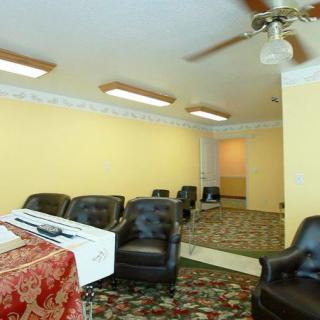
 Caring, attentive staff with a welcoming community, plus good dining and clean, comfortable living spaces.





 Exploring the Contrasts Between Assisted Living and Skilled Nursing
 8 Key Indicators That Suggest It May Be Time to Transition from Assisted Living to Skilled Nursing Care
 Vibrant Senior Living: A Comprehensive Guide for Active Older Adults