
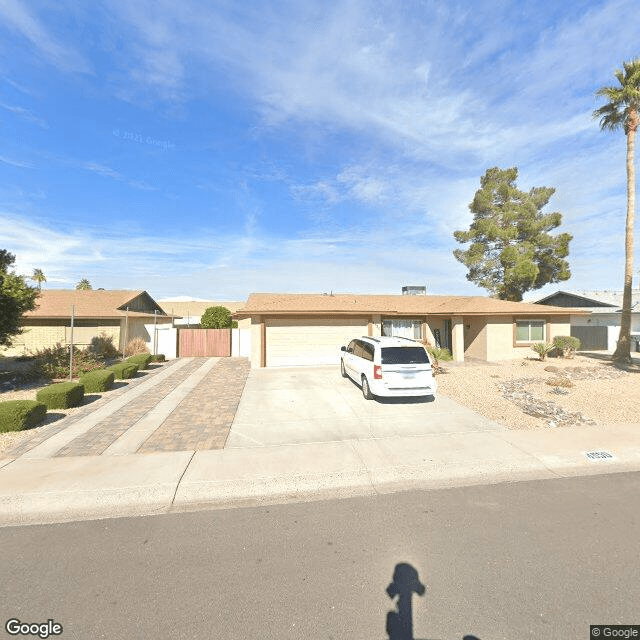
4950 W. Phelps Rd., Glendale, AZ 85306
To contact a resident: (602) 588-7822
For more information about senior living options: (866) 208-4318
Kristal Bell Assisted Living Costs & Pricing
At Kristal Bell Assisted Living, the monthly cost for a private room is $2,500, which positions it as a more affordable option compared to both Maricopa County and the broader state of Arizona. In contrast, the average monthly cost in Maricopa County stands at $3,318, while across Arizona, it reaches approximately $3,345. This significant price difference underscores Kristal Bell's commitment to providing quality care at a competitive rate, making it an appealing choice for families seeking compassionate assisted living services without straining their budgets.
| Floor plans | Kristal Bell Assisted Living | Maricopa County | Arizona |
|---|---|---|---|
| Private | $2,500 | $3,318 | $3,345 |
Senior living communities with a similar price nearby
-
from +$300 / mo

Pinnacle Peak Assisted Living
$2,800 to $3,100 / month15.3 miles away -
from +$125 / mo

The Eldercare Home Of Tempe
$2,625 to $3,412 / month23.5 miles away -
from +$450 / mo
Endeavor AL I
$2,950 to $4,200 / month11.0 miles away -
from +$400 / mo
Royal Paradise Care
$2,900 to $3,800 / month10.7 miles away -
from +$300 / mo
Home of Helping Hands Assisted Living, LLC
$2,800 to $3,500 / month16.3 miles away
Overall Review of Kristal Bell Assisted Living
Pros
 Tundi is the greatest.
- She got Hospice on board and worked with them to adjust meds, a difficult task given his condition.
- She and her husband Ray are compassionate, generous, and good-natured people.
- They receive ten stars, far exceeding the five-star maximum.
- Tundi has the biggest heart.
- She cares for her residents as if they were her own parents.
- Partnering with her has been a joy for years.
- She is highly recommended.
- People love this community.
- The community offers sermons and spiritual music.
- They bring in outside entertainment for the residents.
- It is a smaller community offering more individualized care.
Cons
 The staff were insensitive, disrespectful, and negligent toward the mother after her stroke.
- The facility was not prepared to provide the level of care she needed, despite claims of end-of-life expertise.
- No staff were available between 9 p.m. and 8 a.m., forcing family members to provide comfort care.
- The staff’s responses to concerns were dismissive and even hostile.
- In retrospect, placing the mother in that facility was a poor decision and she should have been moved to hospice or home hospice care.
- Nighttime responsiveness was poor, with times when no one was available to help.
Review
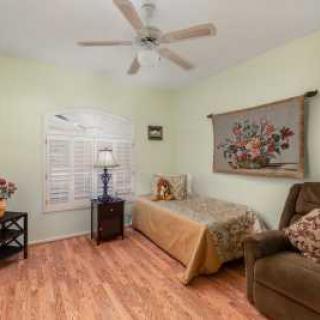
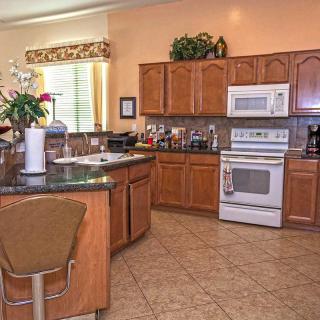
Kristal Bell Assisted Living in Glendale is best suited for families seeking a small, intimate setting where residents are treated like family and care is deeply personalized. The operation centers on the hands-on leadership of Tundi and Ray, whose approach translates into a home-like environment, predictable routines, and a culture that prioritizes compassion, respect, and spiritual comfort. This community appeals to families who value frequent, open access to staff, a quieter pace, and programming that blends familiar activities with religious or spiritual elements. It is especially well-matched to elders with moderate needs who thrive on close caregiver relationships and a strong sense of belonging rather than a clinical, institutional atmosphere.
The strongest practical advantages begin with size and visibility. The compact footprint allows staff to know residents well and to customize daily care with a level of attentiveness that larger facilities often struggle to sustain. Families consistently report that the owners and caregivers treat residents as if they were their own relatives, creating a trust-rich, low-stress environment. The homey ambiance matters, too: tasteful decor, a calm rhythm to daily life, and an ongoing menu of spiritual programming and in-house entertainment keep residents engaged without feeling overwhelmed by a sterile, impersonal setting. The ability to drop by and be welcomed without a bureaucratic hurdle contributes to a sense of security for families managing ongoing medical and social needs.
Care quality in medically complex situations is another meaningful strength when care teams are aligned with hospice or palliative needs. Several accounts highlight that Tundi and her team coordinate with hospice and adjust medications in concert with medical professionals, an essential capability for late-stage conditions like Parkinson’s or Lewy body disease. The staff’s commitment to comfort and dignity shows in comments about care delivered with genuine warmth and a focus on residents’ well-being. For families navigating end-of-life or progressive illness, that practical, hands-on collaboration translates into real peace of mind: care feels personalized, and medical management is not outsourced to distant protocols but integrated with day-to-day life at the facility.
Yet the picture comes with meaningful caveats. Nighttime responsiveness emerges as the most frequently cited weakness. In multiple reviews, concerns center on limited staff coverage after hours, with residents sometimes waiting for help or lacking immediate assistance. That reality matters most for residents with higher acuity, mobility challenges, or conditions requiring rapid response. The seriousness of one negative account, where a family describes insensitive and unprepared care after a stroke and a dismissive staff reaction, cannot be dismissed. Although such experiences are not universal, they reveal a real risk profile: reliability and speed of nighttime care are not on par with what some families expect in around‑the‑clock arrangements. This underscores a potential operational gap that can be unacceptable for those with severe or unpredictable medical needs.
Still, the recurring thread across many reviews is a strong alignment between family values and the care delivered. The small, faith‑friendly community format, coupled with engaged owners and a warm staff culture, can offset some gaps by enabling flexible scheduling, direct access to leadership, and rapid adjustments to care plans during daytime hours. The hospice-friendly stance and proactive medication management demonstrate a practical clinical capability, particularly for progressive conditions managed with professional oversight at home. For families prioritizing spiritual nourishment, social connection, and intimate, daily check-ins, Kristal Bell often delivers an experience that outperforms larger, more impersonal facilities.
Decision-makers should map this community to the specific needs of their loved ones. Kristal Bell stands out as a compelling option for seniors who want a home‑like atmosphere, clear personal attention, and a faith-forward culture, with comfortable routines and visible caregiver warmth. It is less suitable for those requiring around-the-clock skilled nursing, robust night staffing, or highly specialized medical management in a tightly controlled setting. Prospective families should schedule a tour, speak with current residents’ families, and observe nighttime operations to gauge response times and staffing levels. Verify care plans for stroke recovery, mobility limitations, and end‑of‑life support, and probe whether nighttime gaps have narrowed with any recent staffing changes. With a 4.4 rating from seven reviews and a majority of five‑star comments, Kristal Bell earns trust where the fit squarely aligns with its intimate, compassionate model, and the decision should hinge on whether that model matches the loved one’s acuity and the family’s tolerance for nocturnal risk.
 Board and Care Home
 Dogs allowed
 Cable or satellite TV
 Indoor common areas
 Outdoor common areas
 Private
 Respite or short term stays offered
 Wi-Fi/high-speed internet available
 Phoenix Sky Harbor International (17 miles away)
 Ambulatory care
 Diabetic care
 High acuity care
 Incontinence care
 Medication management
 Low / no sodium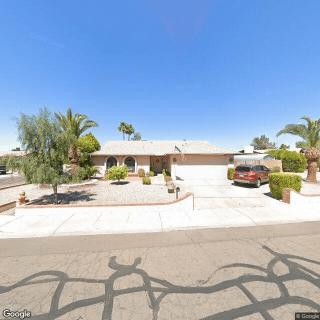

 6 Crucial Ways an Elder Law Attorney Assists Families
 Navigating the Tax Landscape of Caregiving: Credits, Deductions, and Beyond
 Highly Beneficial Low-Impact Exercises for Senior Living Residents