
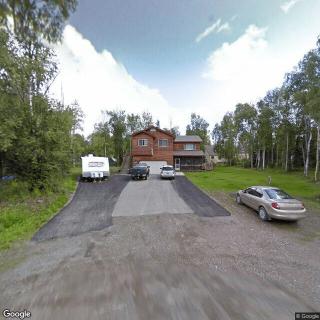
1460 Mulchatna Drive, Wasilla, AK 99654
For more information about senior living options: (866) 208-4318
Overall Review of Home On Mulchatna
Pros
 The team delivered amazing customer service and helped the family.
- They provide absolutely amazing customer service with great attention to detail.
- They are experienced, knowledgeable, friendly, and easy to work with.
- Lori Leahy and her team did thorough leg work and achieved a smooth closing.
- They secured a great deal on 38-plus acres with a seamless closing thanks to the Alyeska Title partnership.
- Natasha was responsive and went above and beyond to make the selling process easy.
- Shannon Parberry did a truly amazing job selling the home and is incredibly knowledgeable and connected.
- Chavonne Cutright is great.
- Tanya Hegg is thorough, precise, fair, and professional.
- Sam did a great job helping build the home and was always available to assist.
- The Alaska Built team is friendly, professional, and great to work with.
- They were very helpful in selling homes.
- Clients love these people.
Cons
 Marnice was apathetic toward their renting interests, unresponsive to texts and calls, and abrupt and rude, resulting in a disappointing experience.
- The marketing was described as unprofessional and as taking advantage of others’ misfortunes to promote the business.
- A realtor failed to show up for a scheduled appointment and did not cancel, which was deemed very unprofessional.
- Amy Sirmans was criticized for poor communication and failing to handle issues, leaving the reviewer wary.
- The agency was accused of having no respect for families or veterans.
- Brittany was called devious and advised to change professions.
- Drones near active airstrips were criticized, implying disapproval of that practice.
Review
This community is best suited for families that prize a service-forward culture in Wasilla, where responsive, hands-on staff and a straightforward care process can translate into real peace of mind. When a facility’s front-line team demonstrates accessibility, clear communication, and attention to details, families feel supported through the move, the transition, and daily routines. For seniors who want predictable, practical help, where questions are answered promptly and problems addressed without unnecessary drama, this setting can deliver tangible reassurance and a smoother daily experience.
Those weighing alternatives should consider the realities of Wasilla’s assisted-living landscape. If a larger campus with expansive programming, broader memory-care options, or more specialized services is a priority, or if a resident requires turnkey marketing clarity and consistently professional applicant handling, other providers may be a better fit. The strongest options in the area tend to align with higher staffing ratios and more formalized care teams, and families with very particular care needs or expectations for ongoing, systematized communication may find better alignment elsewhere.
The primary positives here revolve around service ethos and process reliability. When staff are proactive, easy to reach, and detail-focused, families experience less friction during move-in and better day-to-day coordination of care plans, scheduling, and follow-through. That kind of culture can offset the most common frictions that families encounter, misunderstandings about cost, delays in communications, or gaps in transitions between move-in and ongoing support. In environments where staff ownership and responsiveness are consistent, the benefits compound: fewer headaches, smoother problem-solving, and a clearer path to adjusting care as needs evolve.
Yet the landscape is not without caveats. The most important warning signs involve inconsistency in responsiveness and a pattern of abrupt or delayed communication. When messaging or calls go unanswered, or when staff turnover creates uncertainty about who is handling specific tasks, the trust built during the housing-selection phase can fray. Families should probe for reliability: who oversees inquiries, how quickly questions are answered, and what hands-on steps are taken to keep residents’ routines stable. A facility that cannot demonstrate dependable communication risks undermining the very sense of security that families seek.
From a decision-making standpoint, key questions should center on access, transparency, and continuity of care. What is the typical response time for routine questions and urgent needs? How are care plans documented, updated, and shared with family members? What are the exact inclusions and exclusions in pricing, and how are modifications handled if care needs escalate? How is staff continuity managed to preserve relationships and reduce reorientation for residents? A disciplined operator will provide clear, written policies on move-in readiness, daily schedules, and the escalation path for concerns, along with a trail of references from current families.
In the end, this community earns its best recommendation for families who value a practical, service-centric approach and are comfortable with a system that can stay consistently responsive. The strongest cases come from settings where staff demonstrate reliable accessibility, straightforward processes, and a track record of following through on promises. If those elements align with priorities, versus a desire for expansive amenities or aggressively marketed guarantees, this Wasilla option stands a solid chance of delivering the steady, human-centered care that families need to feel confident about a loved one’s daily life. For those who require more perimeter or polish in marketing, or whose care needs demand a larger, more resource-rich campus, exploring alternatives remains a prudent step.
 3 resident community capacity
 Assisted Living
 Board and Care Home
 Cable or satellite TV
 Dining room
 Fully furnished
 Garden
 Housekeeping services
 Move-in coordination
 Outdoor space
 Telephone
 Wi-Fi/high-speed internet available
 24-hour supervision
 Activities of daily living assistance
 Assistance with bathing
 Assistance with dressing
 Assistance with transfers
 Diabetes diet
 Meal preparation and service
 Medication management
 Special dietary restrictions
 Transportation arrangement (medical)
 Transportation to doctors appointments

 Understanding the True Cost of Assisted Living in 2025: A Comprehensive Guide
 Understanding Medicaid Coverage for Assisted Living: A Comprehensive Guide
 How and When Medicaid May Cover Assisted Living Costs