

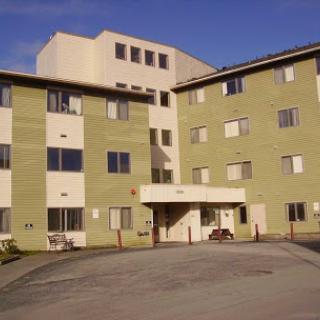
1915 E Rezanof Dr, Kodiak, AK 99615
To contact a resident: (907) 486-3281
For more information about senior living options: (866) 208-4318
Overall Review of Providence Kodiak Island Medical Center
Pros
 The doctors and nurses were friendly and reassuring.
 - They got to the root of the issue quickly.
- The hospital is described as the best, with nurses who are angels.
- PKIMC has a great group of caregivers aligned with the Providence mission and core values.
- There are good people across different medical specialties.
Cons
 The nursing leadership is corrupt.
Review
This medical center in Kodiak is best suited for families and older adults who prioritize rapid, compassionate hospital care within a Providence-aligned mission and are comfortable with a smaller, community-focused setting. PKIMC tends to appeal to those who want a friendly ER experience, responsive bedside care, and nurses and physicians who seem genuinely engaged in the patient’s well-being. When emergency needs arise or specialized medical input is required, the staff’s evident dedication and the facility’s mission-driven culture can provide real reassurance.
For those weighing alternatives, the obvious caveat is leadership and consistency. A subset of reviews flags concerns about nursing leadership, and a couple of 1-star voices hint at systemic or procedural issues that can color a patient’s experience. Families who depend on consistently steady leadership, uniform care across shifts, and predictable interactions with the same clinicians may find these expectations unmet at times. In scenarios where ongoing, stable physician teams and robust administrative follow-through are non-negotiable, exploring other options, especially facilities with a longer track record of uniform leadership, would be prudent.
The strongest pros at PKIMC are clear: a genuinely compassionate care culture and a staff body that appears closely aligned with the Providence mission. The positive comments describe a group of caregivers who communicate well, demonstrate kindness, and stay focused on the patient’s needs. In the ER, patients report timely assessment and a practical, problem-solving approach that seeks the root cause of the issue rather than treating symptoms alone. Across departments, many clinicians are described as being engaged, professional, and supportive, which can translate into shorter anxiety periods for patients and families facing hospital stress.
Those benefits, however, don’t fully erase the downsides noted by critics. The most substantive concern centers on leadership dynamics within the nursing team, which can matter greatly in critical care settings or during complex care transitions. When leadership is perceived as inconsistent or misaligned, it can affect communication, flow, and confidence in the care plan. Additionally, the reality of different doctors across various specialties, while common in many hospital systems, can create gaps in continuity of care. For families managing multiple chronic conditions or needing a single, clearly defined care trajectory, this variability may complicate coordination and follow-through.
The practical takeaway is to weigh the demonstrated warmth and mission alignment against the potential for variability in leadership and clinician assignment. PKIMC’s strengths make it a persuasive choice for acute episodes, urgent evaluations, and situations where a hospital team shows up with empathy and purpose. It also benefits from the local Kodiak context, where proximity and personal attention can matter as much as clinical breadth. To mitigate downsides, prospective patients should proactively ask about the hospital’s patient advocacy resources, how care coordination is handled across shifts, and what mechanisms exist to ensure consistent communication when different specialists become involved. For families who want a hospital presence that feels mission-driven and personal, PKIMC can be an excellent fit; for those requiring unwavering, uniform leadership across all encounters, it may be wise to compare with other regional options before making an enrollment or care decision.
 Kodiak (6 miles away)

 Caregiver Exhaustion: Recognizing the Signs and Restoring Your Well-Being
 Understanding Hospice Care at Home: Comprehensive Services, Key Benefits, and Eligibility
 Understanding the Full Cost of 24/7 In-Home Care: A Detailed Overview