

1979 Gurley Pike, Gurley, AL 35748
To contact a resident: (256) 776-3649
For more information about senior living options: (866) 208-4318
Regency Manor Specialty Care Assisted Living Costs & Pricing
Regency Manor Specialty Care Assisted Living offers competitive pricing for its services in comparison to both Madison County and the broader state of Alabama. For instance, a studio at Regency Manor is priced at $2,400 per month, significantly lower than the county average of $3,239 and the state average of $3,279. Similarly, their one-bedroom units are available for $3,400, which is more affordable than the Madison County rate of $3,719 and slightly higher than the state average of $3,417. The semi-private room option also reflects this value; while it costs $3,400 at Regency Manor, it is notably less than Madison County's $4,086 and just above Alabama's average of $3,495. Overall, Regency Manor provides an appealing choice for families seeking quality assisted living care that aligns with economic considerations.
| Floor plans | Regency Manor Specialty Care Assisted Living | Madison County | Alabama |
|---|---|---|---|
| Studio | $2,400 | $3,239 | $3,279 |
| 1 Bedroom | $3,400 | $3,719 | $3,417 |
| Semi-Private | $3,400 | $4,086 | $3,495 |
Memory care communities with a similar price nearby
-
About the same

Regency Assisted Living
$2,400 to $4,500 / month12.1 miles away -
from +$300 / mo
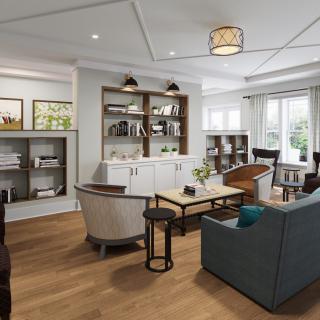
Madison Crossings
$2,700 to $5,560 / month23.1 miles away -
from -$215 / mo

Heritage Memory Care
$2,185 to $3,250 / month23.0 miles away -
from +$95 / mo
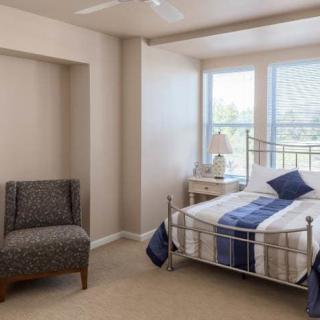
Merrill Gardens At Madison
$2,495 to $4,545 / month21.3 miles away -
from -$117 / mo

Redstone Village
$2,283 to $3,348 / month14.1 miles away
Overall Review of Regency Manor Specialty Care Assisted Living
Pros
 The staff is very nice.
- The atmosphere is homey.
- It is very affordable.
- It was a keeper.
Cons
 They were not sure they could afford it.
Review
Regency Manor Specialty Care Assisted Living in Gurley is best suited for seniors who value a warm, home-like setting and a staff that comes across as genuinely caring. The standout positive note in the available evaluation is a staff team described as very nice, paired with a homey atmosphere that can ease the stress of transitioning to assisted living. For families weighing options, Regency Manor presents itself as a compact, approachable choice where attentive service and a domestic feel can matter as much as the care plan itself. The community appears designed for residents who want daily interactions that feel personal rather than clinical, with affordability playing a key role in the equation. When the goal is to preserve a sense of familiarity while receiving practical assistance, Regency Manor makes a compelling argument.
Those who should consider alternatives are typically families facing more complex or higher-acuity needs. If the anticipated care trajectory includes frequent medical oversight, specialized memory support, or rapid escalation in services, it is prudent to compare communities with more expansive care tiers and larger staffing capacity. Additionally, if clear, predictable pricing is a priority and ongoing affordability is not fully settled, exploring facilities with transparent fee structures, detailed long-term cost projections, and potential financial aid options becomes essential. In short, Regency Manor shines for a certain emphasis on atmosphere and approachable pricing, but may not be the best match for families seeking highly specialized or aggressively budgeted care plans.
The primary pros, a friendly, engaged staff and a homey environment, are meaningful counterweights to potential downsides. A caring, accessible team can significantly reduce the stress of daily routines, ensure smoother transitions, and foster trust between residents and caregivers. The homey atmosphere reinforces comfort and daily livability, which matters for mood, cohesion with other residents, and overall satisfaction. These positives mesh with the stated affordability to create a compelling value proposition for families prioritizing warmth and personal attention. However, the single testimonial also injects a caution: affordability feels tentatively solid but not entirely assured, urging prospective residents to obtain comprehensive price quotes, understand what is included in base rates, and confirm whether any future increases or service add-ons might erode the budget.
In practice, the combination of friendly staff and a domestic setting can translate into tangible advantages like better daily rhythms, simpler routines, and a sense of belonging, factors that often distinguish a good assisted living experience from a merely adequate one. The reviewer’s impression of “homey” living plus affordability signals that Regency Manor can deliver lower-stress days and predictable, manageable expenses relative to competing options. Yet the value depends on keeping costs transparent and aligned with ongoing needs. Without a robust, written pricing structure and a clear pathway to stay within budget as care requirements evolve, the initial appeal can diminish over time.
For families taking steps to make a decision, several practical moves are essential. Schedule a guided tour during multiple times of day to observe staff interactions, talk with administrators about care dimensions, and assess the dining and common areas firsthand. Request a detailed, itemized pricing sheet that separates base room/board from assistance levels, medications, and any ancillary services. Inquire about long-term cost stability, potential increases, and available discounts or financial aid options. Also, probe the facility’s capacity for escalated care, emergency protocols, and how transitions to higher levels of care would be handled within the same campus or network.
The bottom-line recommendation is to consider Regency Manor as a strong match for families prioritizing a genuine, person-centered staff approach and a clearly home-like living environment within an affordable framework. It is notably well-suited for seniors who want to minimize the hospital feel and maximize daily comfort, provided the price structure is transparent and sustainable over time. Those with more demanding medical needs, tighter budget certainty, or a preference for expansive on-site amenities should rigorously compare with other options that explicitly address ongoing affordability and higher-care capabilities. In the end, Regency Manor offers a practical, unpretentious choice for the right family, one that rewards visits, careful cost scrutiny, and honest conversations about long-term care trajectories.
 Assisted Living
 Memory Care
 Activities on-site
 Devotional services off-site
 Indoor common areas
 Huntsville International (23 miles away)
 Ambulatory care
 Diabetic care
 Meals provided




 Understanding Dementia Through Its Seven Stages: A Comprehensive Look at Progression and Expectations
 Safeguarding Your Memory Through the Golden Years: Eight Ways to Preserve Cognitive Health
 Comprehensive Insights into Activities of Daily Living (ADLs) and Their Assessment